
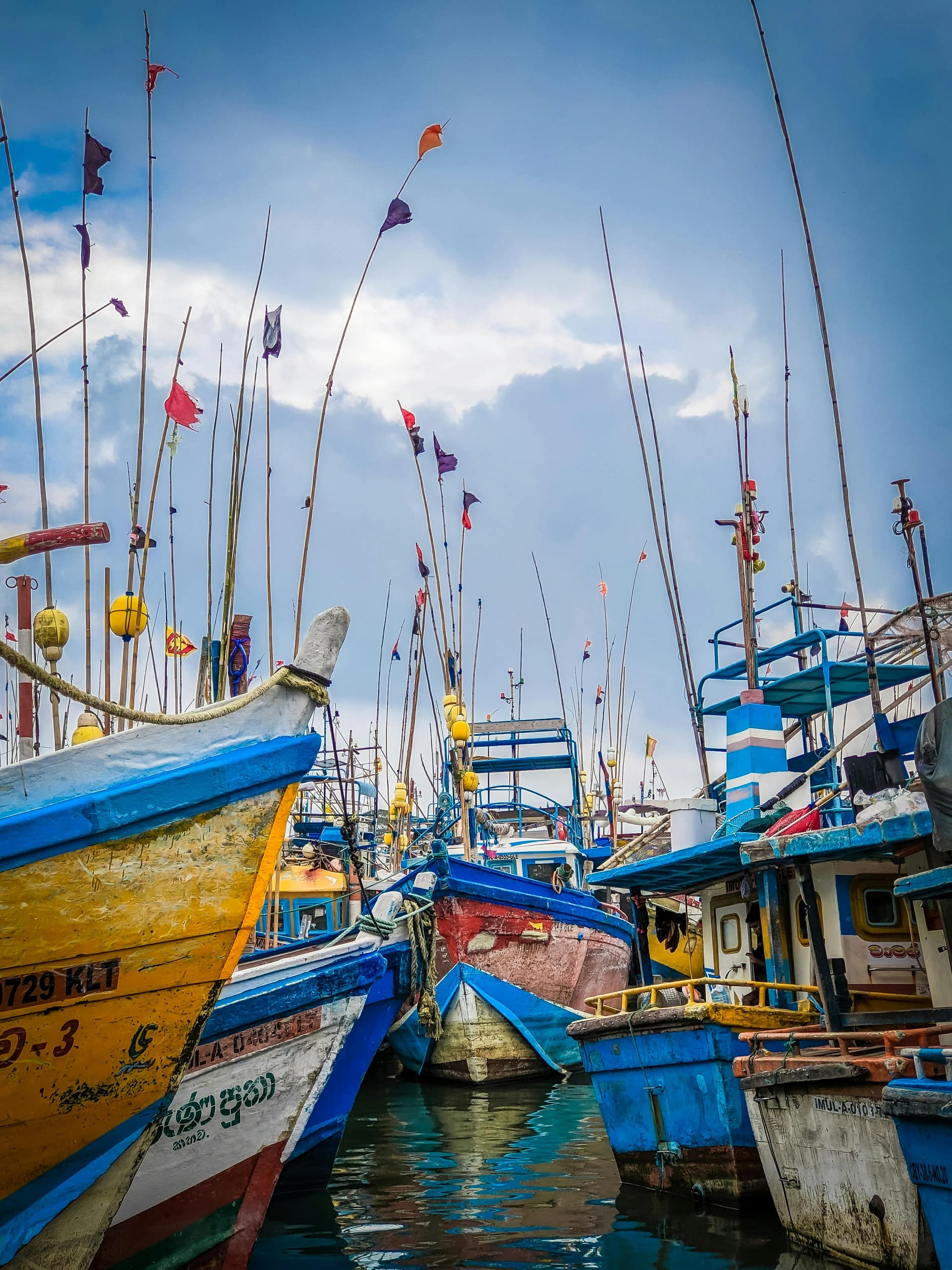
Quick answer
The best places to visit along Sri Lanka's south coast are Galle Fort, Unawatuna and the Japanese Peace Pagoda on Rumassala, the Koggala and Ahangama stilt-fishing coast, Mirissa for whales, Matara and Dondra Head, the giant seated Buddha at Wewurukannala, the Hummanaya blowhole, Mulkirigala rock temple, Kalametiya lagoon and the red cliffs of Ussangoda. Bentota's Bawa gardens and Ambalangoda's mask workshops open the route in the west. The coast runs roughly 200 kilometres from Bentota to Kirinda, and four to five days covers its best stops comfortably.
Key takeaways
- Sri Lanka's south coast runs roughly 200 kilometres from Bentota to Kirinda, with the A2 coast road linking every town on it.
- Galle Fort, a UNESCO World Heritage Site since 1988, is the single place on the south coast that deserves a full day.
- Three rock and cave temples, Yatagala near Galle, Weherahena at Matara and Mulkirigala north of Tangalle, are the south coast's least visited major sights.
- The Hummanaya blowhole near Tangalle throws spray up to roughly 25 to 30 metres, and is most powerful in the May to September monsoon swell.
- The south coast is calmest from roughly December to April, but its temples, museums and inland forests work in every month.
Where Sri Lanka's south coast begins and ends
Sri Lanka's south coast is usually taken to start at Bentota, about 65 kilometres south of Colombo, and to end near Kirinda, at the edge of Yala National Park. Between the two, the A2 coast road runs roughly 200 kilometres through Hikkaduwa, Galle, Weligama, Matara, Tangalle and Hambantota, with the sea on one side for most of the way.
The character of the coast changes from west to east. The western stretch is wet, green and busy, with resort hotels and the railway alongside the road. Past Matara the land dries, the towns thin out, and from Hambantota onwards the scrub and lagoons of the dry zone take over. The best places to visit sit along that whole gradient, not only on the famous middle section.
The best places to visit along the south coast, west to east
The places below are the ones most worth building a south coast trip around, listed in the order the coast road meets them. Several are single sights that need an hour, and a few deserve a day. Each has its own page in this series, and the beaches themselves are covered in a separate guide.
A first trip rarely fits all of them. Choose two or three from each end of the coast, and give Galle Fort the most time, since it is the one place on the list that rewards an overnight stay inside the walls.
- →Brief Garden and Lunuganga, Bentota: the gardens of the brothers Bevis and Geoffrey Bawa.
- →Ambalangoda: the island's mask-carving town, with workshops and a small museum.
- →Galle Fort: the 17th-century Dutch fort, ramparts, lighthouse and lanes.
- →Rumassala and the Japanese Peace Pagoda: a white stupa on the headland above Unawatuna.
- →Koggala: the Martin Wickramasinghe Folk Museum and boat trips on Koggala Lake.
- →Mirissa and Weligama: whales offshore, surf and the Kushtaraja Gala rock carving.
- →Matara and Dondra Head: the Star Fort, Weherahena temple and the southernmost lighthouse.
- →Wewurukannala Vihara, Dikwella: a seated Buddha of roughly 50 metres.
- →Hummanaya blowhole and Mulkirigala rock temple, around Tangalle.
- →Kalametiya lagoon and Ussangoda: birds at dawn and red cliffs above the sea.
The rock temples most visitors drive past
The south coast's temples are its most overlooked places to visit. Yatagala Raja Maha Viharaya, a few kilometres inland from Unawatuna, is a monastery built among granite boulders with a reclining Buddha and old murals. Weherahena at Matara has a tunnel of painted Jataka stories beneath a huge seated Buddha.
Mulkirigala, roughly 16 kilometres north of Tangalle, is the finest of them: a rock rising about 200 metres from the paddy fields, with cave shrines on five terraces linked by several hundred steps. Wewurukannala at Dikwella is the most dramatic, its giant Buddha visible from the main road. Each of the four needs one to two hours and modest clothing.
- →Yatagala: boulders, monkeys and a quiet reclining Buddha near Galle.
- →Weherahena: an underground gallery of painted stories at Matara.
- →Wewurukannala: the giant seated Buddha and a hall of vivid hell scenes.
- →Mulkirigala: cave temples and the best view inland on the whole coast.
Lagoons, forest and cliffs away from the sand
The south coast's nature lies mostly a short drive inland or at its dry eastern end. Kottawa and the larger Kanneliya Forest Reserve, both within about an hour of Galle, are lowland rainforest with endemic birds and streams. Koggala Lake, close to the beach, has mangrove islands reached by small boat.
East of Tangalle, Kalametiya lagoon is a bird sanctuary best seen by canoe at dawn, and Ussangoda National Park is a plateau of red earth above the sea, tied in local legend to the Ramayana. Bundala National Park, beyond Hambantota, adds flamingos in the northern winter and leads straight on to Yala.
- →Kottawa and Kanneliya: rainforest walks, best early, with leech socks in wet months.
- →Koggala Lake: islands, cinnamon peeling and birds by boat.
- →Kalametiya: herons, kingfishers and waders, with a dawn canoe.
- →Ussangoda: red soil, low scrub and long views over a turtle-nesting beach.
How many days the south coast needs
The best places along Sri Lanka's south coast fit into four to five days without rushing. Two days cover Galle Fort and the stretch to Mirissa. A third adds Matara, Wewurukannala and the Hummanaya blowhole, and a fourth or fifth reaches Mulkirigala, Kalametiya and Ussangoda, or turns back west to Bentota and Ambalangoda.
Driving times are short on the map and slower on the road. The coast road crawls through every town, so most travellers use the Southern Expressway for long hops and the coast road only between nearby stops. Allow about an hour from Galle to Mirissa, and roughly 45 minutes from Mirissa to Dikwella.
When to go and how to plan the route
The south coast is calmest and driest from roughly December to April, when the sea is good for swimming and whale-watching boats run from Mirissa. From May to September the south-west monsoon brings rain and rough water, but the temples, museums, forests and Galle Fort all remain worth visiting, and the Hummanaya blowhole is at its most powerful.
The easiest south coast routes use one or two bases rather than a new hotel every night, with a driver who knows which stops to take before the heat and which to leave for late afternoon. Linking the coast to Yala in the east or to the hill country through Ella is the most common way to fit it into a longer trip.
- →Base one: Galle or Unawatuna for the western half.
- →Base two: Tangalle or Mirissa for the eastern half.
- →Add Yala or Udawalawe at the eastern end, or the hills via Ella.
Frequently asked questions
What are the best places to visit on the south coast of Sri Lanka?
The highlights are Galle Fort, Unawatuna and Rumassala, Koggala, Mirissa, Matara and Dondra Head, Wewurukannala Vihara, the Hummanaya blowhole, Mulkirigala rock temple, Kalametiya lagoon and Ussangoda. Bentota's Bawa gardens and Ambalangoda's mask workshops are the best stops at the western end of the coast.
How many days do you need for the south coast of Sri Lanka?
Four to five days covers the best places at a comfortable pace, with two bases. Two days is enough for Galle Fort and the stretch to Mirissa, and a week allows beach days between the sights. Add a night or two if Yala or Udawalawe is part of the same trip.
What is the best time to visit Sri Lanka's south coast?
Roughly December to April is the best time, when the south-west is dry and the sea is calm. May to September brings the south-west monsoon, with rain and rough seas, though inland sights remain open. The east coast is at its best in those months instead.
Is the south coast of Sri Lanka worth visiting beyond the beaches?
Yes. Galle Fort is one of the best-preserved colonial forts in Asia, and the coast also has rock temples at Mulkirigala and Yatagala, a giant Buddha at Dikwella, rainforest at Kanneliya, lagoon birdlife at Kalametiya and a large blowhole near Tangalle, all within a short drive of the sand.
Where should I stay to see the south coast of Sri Lanka?
Two bases work best. Galle or Unawatuna suits the western half, from Bentota to Weligama, and Tangalle or Mirissa suits the eastern half, from Matara to Ussangoda. One base in Mirissa can reach most places by day, but drives to both ends become long.
How far is Galle from Tangalle?
Galle is roughly 75 to 80 kilometres from Tangalle. The drive takes about one and a half to two hours by the coast road, or a little less using the Southern Expressway for part of the way. Mirissa sits roughly halfway between the two towns.
Does Lankan Stays & Trails arrange south coast sightseeing?
Yes. Lankan Stays & Trails arranges private, driver-guided days along the south coast, from single outings such as Mulkirigala and the blowhole to four or five day routes linking Galle, Tangalle and Yala, timed around the heat and the season.