
Quick answer
Sri Lanka's Cultural Triangle is the historic heartland between Anuradhapura, Polonnaruwa, and Kandy, holding the island's greatest concentration of heritage, much of it UNESCO-listed. Its highlights are the rock fortress of Sigiriya, the golden cave temples of Dambulla, the ancient ruined capitals of Anuradhapura and Polonnaruwa, and Kandy's Temple of the Tooth. Most travellers base in Habarana or Sigiriya for two to four nights to explore it, ideally early in the day to beat the heat.
Key takeaways
- The Cultural Triangle is Sri Lanka's heritage heartland, much of it UNESCO-listed.
- Highlights: Sigiriya, Dambulla, Anuradhapura, Polonnaruwa, and Kandy.
- Base in Habarana or Sigiriya for two to four nights.
- Visit early to beat the dry-zone heat; cover shoulders and knees at sites.
- It pairs naturally with hills, wildlife (Minneriya), and the rest of the island.
What is the Cultural Triangle?
The Cultural Triangle is the area roughly bounded by the ancient capitals of Anuradhapura and Polonnaruwa and the hill capital of Kandy. Within it lies the densest concentration of Sri Lanka's history: royal cities, monasteries, reservoirs (tanks), temples, and art spanning over two millennia, with several UNESCO World Heritage Sites.
It's the cultural counterweight to the island's beaches and wildlife, and an essential part of most itineraries.
Sigiriya & Dambulla
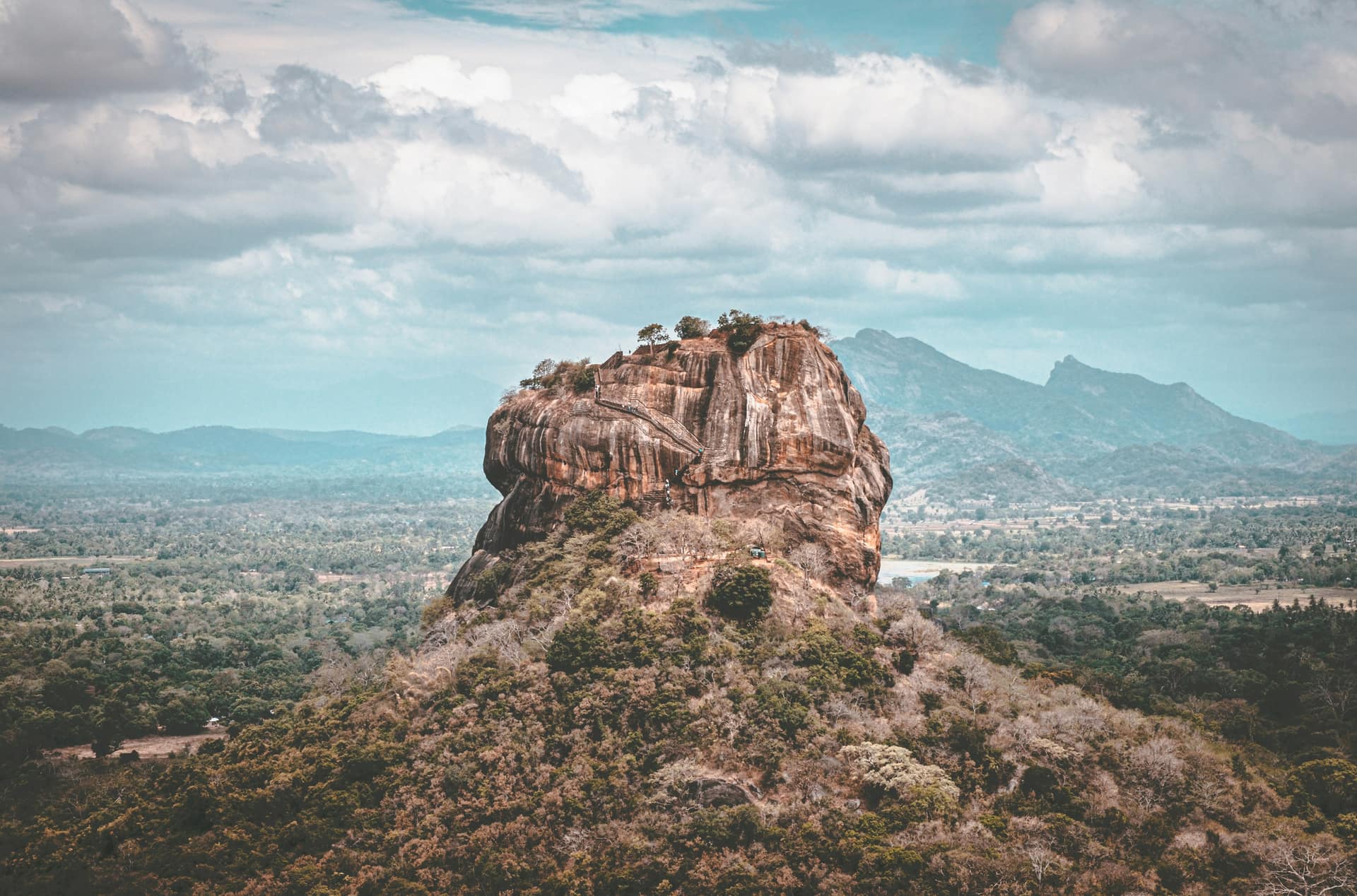
Sigiriya, the 'Lion Rock', is the showpiece: a 5th-century palace-fortress atop a sheer granite monolith, reached past frescoes and a giant lion's paws, with sweeping views from the summit. Climb it early to beat the heat and crowds. Nearby Dambulla's Royal Cave Temple shelters centuries of Buddha statues and vivid painted ceilings beneath an overhanging rock.
Together they make the Triangle's most popular day, often from a Habarana or Sigiriya base.
- →Sigiriya: 5th-century rock fortress with frescoes and views
- →Dambulla: golden cave temples of statues and murals
- →Climb Sigiriya early; nearby Pidurangala offers the classic view of it
Anuradhapura & Polonnaruwa
Anuradhapura, the island's first great capital, sprawls with colossal dabagas (stupas), monasteries, and the sacred Sri Maha Bodhi tree, best explored by bicycle in the cool hours. Polonnaruwa, the better-preserved second capital, packs its royal ruins and the serene rock-carved Buddhas of Gal Vihara into a compact, cyclable site.
These ancient cities reward unhurried, early visits and a good guide to bring the stones to life.
Kandy: the sacred city
At the Triangle's southern point, Kandy, the last royal capital, holds the Temple of the Tooth (Sri Dalada Maligawa), Sri Lanka's most sacred Buddhist shrine, around a serene lake. Its evening puja is a moving experience, and the city is the gateway between the Cultural Triangle and the hill country.
Many itineraries flow Cultural Triangle → Kandy → tea country in one natural arc.
Planning your Cultural Triangle visit
Base in Habarana or Sigiriya for two to four nights to cover Sigiriya, Dambulla, and the ancient cities without long transfers, then move to Kandy. Start sightseeing early to beat the heat, dress modestly for the religious sites, and consider adding the Minneriya elephant Gathering (July–September) which lies right here.
Lankan Stays & Trails plans the Triangle with expert guides and sensible pacing, linked to hills, wildlife, and coast. See our Sigiriya, Anuradhapura, and Polonnaruwa guides, or share your dates.
Frequently asked questions
What is the Cultural Triangle in Sri Lanka?
It's the historic heartland between the ancient capitals of Anuradhapura and Polonnaruwa and the hill capital of Kandy, holding Sri Lanka's greatest concentration of heritage, including Sigiriya, Dambulla, the ancient cities, and the Temple of the Tooth, much of it UNESCO-listed.
What are the main sites in the Cultural Triangle?
The rock fortress of Sigiriya, the cave temples of Dambulla, the ancient ruined capitals of Anuradhapura and Polonnaruwa, and Kandy's Temple of the Tooth, plus the Minneriya elephant Gathering nearby in season.
Where should I stay to visit the Cultural Triangle?
Habarana or Sigiriya make ideal central bases for two to four nights, putting Sigiriya, Dambulla, and the ancient cities within easy reach, before moving on to Kandy at the Triangle's southern point.
How many days do you need for the Cultural Triangle?
Two to four days lets you see Sigiriya and Dambulla, at least one ancient city (Anuradhapura or Polonnaruwa), and Kandy without rushing. Add more time if you want both ancient cities and the Minneriya safari.
When is the best time to visit the Cultural Triangle?
It's in the dry zone and workable much of the year, with the driest months roughly December to April. Visit sites early in the day to beat the heat, and consider July to September for the nearby Minneriya elephant Gathering.
Does Lankan Stays & Trails plan Cultural Triangle trips?
Yes, we plan the Cultural Triangle with expert guides, central bases, and sensible early-start pacing, linked seamlessly to the hills, wildlife, and coast. Share your dates for a tailored heritage itinerary.