
Quick answer
The Esala Perahera is a grand Buddhist procession held in Kandy over about ten nights around July or August (the dates shift yearly with the lunar calendar), honouring the sacred tooth relic of the Buddha kept at the Temple of the Tooth. Each night grows larger, building to the climactic Randoli Perahera, with Kandyan dancers, drummers, fire-twirlers, whip-crackers, and dozens of ceremonially decorated elephants. Book accommodation and roadside seating months ahead, as Kandy fills completely.
Key takeaways
- Held in Kandy over ~10 nights around July–August; exact dates move each year.
- Honours the sacred tooth relic at the Temple of the Tooth (Sri Dalada Maligawa).
- Each night escalates, climaxing in the Randoli Perahera on the final nights.
- Features Kandyan dancers, drummers, fire, whip-crackers, and decorated elephants.
- Book hotels and reserved seating months in advance, as Kandy sells out.
What the Esala Perahera is
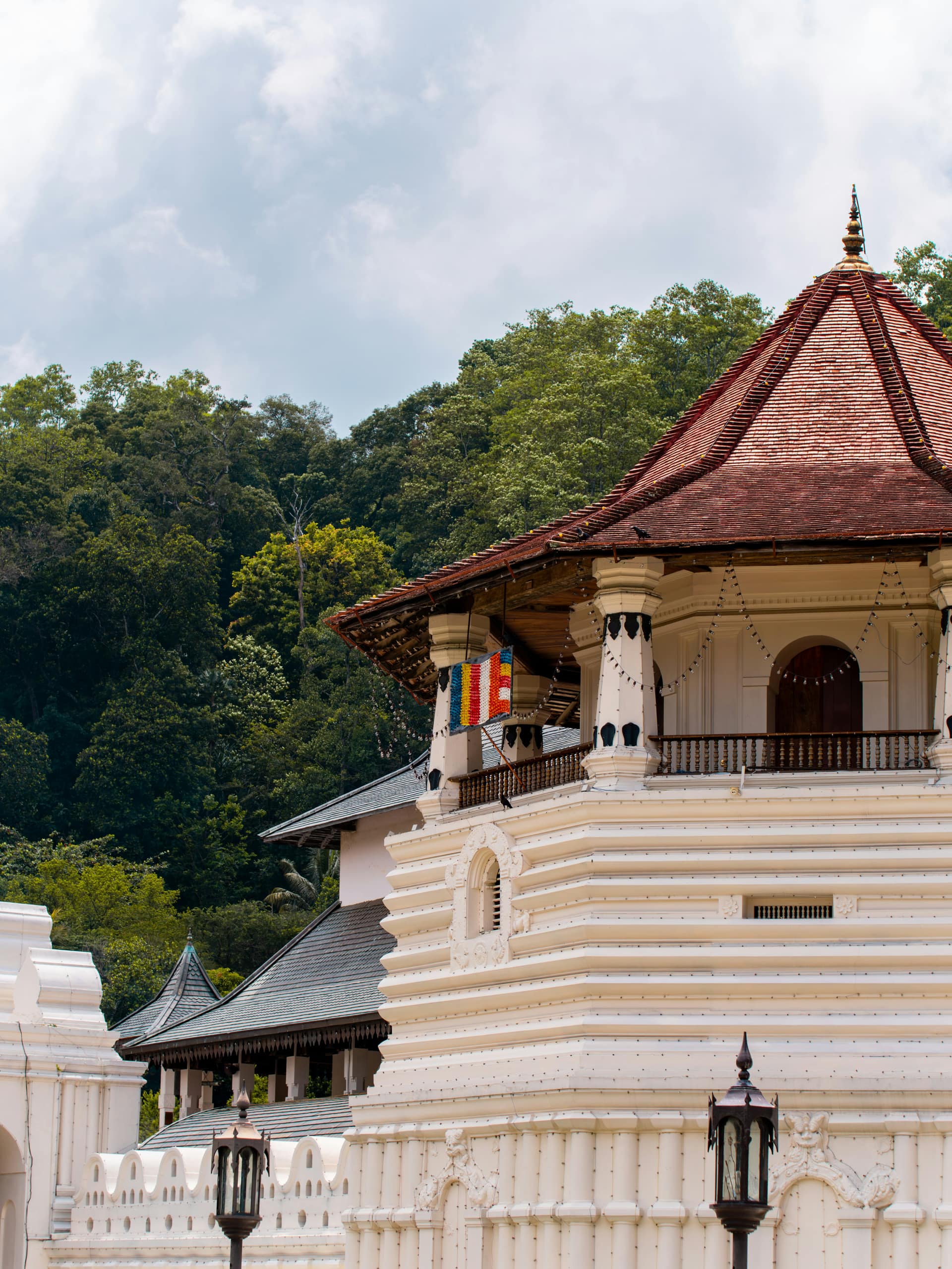
The Esala Perahera is a centuries-old procession that pays homage to the sacred tooth relic of the Buddha, enshrined in Kandy's Temple of the Tooth. It combines the temple's ritual with four devale (shrine) processions, creating a river of light, sound, and movement through the old royal capital.
It is at once a religious observance and a dazzling cultural spectacle, deeply meaningful to Sri Lankans and unforgettable for visitors who come with respect.
How the ten nights build
The festival grows over roughly ten nights. It opens with the Kumbal Perahera (the first five nights), modest at first, then swells into the Randoli Perahera (the final nights), the grandest and most elaborate, with the largest gathering of elephants and performers.
The procession concludes with a daytime water-cutting ceremony. If you can, see one of the later Randoli nights for the full spectacle.
- →Kumbal Perahera: the earlier, building nights
- →Randoli Perahera: the final, grandest nights
- →Concludes with a dawn water-cutting ceremony
- →Later nights are the most elaborate, and the busiest
What you'll see
Expect whip-crackers clearing the way, fire-ball twirlers, ranks of Kandyan dancers and thunderous geta bera drummers, flag bearers, and the centrepiece: tuskers and elephants robed in illuminated costumes, one carrying a replica of the sacred relic casket.
It's loud, hypnotic, and moving. Bring patience: processions start after dark and run for hours.
How to see it (seating & etiquette)
Roadside spots fill early, and reserved seating in balconies and stands along the route is the comfortable way to watch, so book it well ahead through a hotel or operator. Arrive early, dress modestly, and keep walkways clear.
Out of respect, don't use flash near the elephants, and follow stewards' directions. Some travellers feel uneasy about the elephants' role; choosing not to attend is valid, and you can experience Kandy's culture year-round at the Temple of the Tooth's evening puja instead.
Planning a Perahera trip
Confirm the year's dates (set by the lunar calendar) before booking flights, and reserve Kandy accommodation and seating months ahead. The city fills completely. Build in a rest day, as nights run late.
Lankan Stays & Trails arranges Perahera viewing with reserved seats and pairs it with the Cultural Triangle and hill country. See our Kandy destination guide for the city year-round, or share your dates for a festival itinerary.
Frequently asked questions
When is the Kandy Esala Perahera in 2026?
The Esala Perahera runs for about ten nights around July or August, with exact dates set by the lunar calendar each year. Confirm the dates well ahead and book accommodation and seating months in advance.
What is the Esala Perahera?
It's a grand Buddhist procession in Kandy honouring the sacred tooth relic of the Buddha, combining temple ritual with Kandyan dancers, drummers, fire-twirlers, and ceremonially decorated elephants over roughly ten escalating nights.
How do I get tickets or seating for the Perahera?
Reserved seating in roadside stands and balconies along the route is booked ahead through hotels or tour operators. Free roadside spots fill very early. We can arrange comfortable reserved seats as part of an itinerary.
Which night of the Perahera is best to see?
The later Randoli Perahera nights are the grandest, with the most elephants and performers, but also the busiest. Any night is impressive; the final ones are the full spectacle.
Is the Esala Perahera suitable for everyone?
It's a late-night, crowded event, so plan rest and supervise children. Some visitors are uncomfortable with the elephants' role; opting out is fine. You can experience Kandy's culture year-round at the Temple of the Tooth's evening puja instead.
Does Lankan Stays & Trails arrange Esala Perahera trips?
Yes, with reserved seating, respectful guides, and pairing to the Cultural Triangle and hills. Share your travel dates and we'll confirm the festival timing and arrange your viewing.