
Quick answer
A private whale-watching charter fits day 6 of a luxury 7-day Sri Lanka itinerary, leaving Mirissa harbour at about 6am between roughly December and April. The boat is yours, usually a motor yacht or sailing catamaran for two to ten guests, and the trip lasts four to six hours. Blue whales, sperm whales and spinner dolphins are the main sightings. Charters cost from roughly US$400 to US$1,500 for the boat. Sightings are likely in season and never guaranteed.
Key takeaways
- Whale watching off Mirissa runs from roughly December to April, with the calmest seas from January to March.
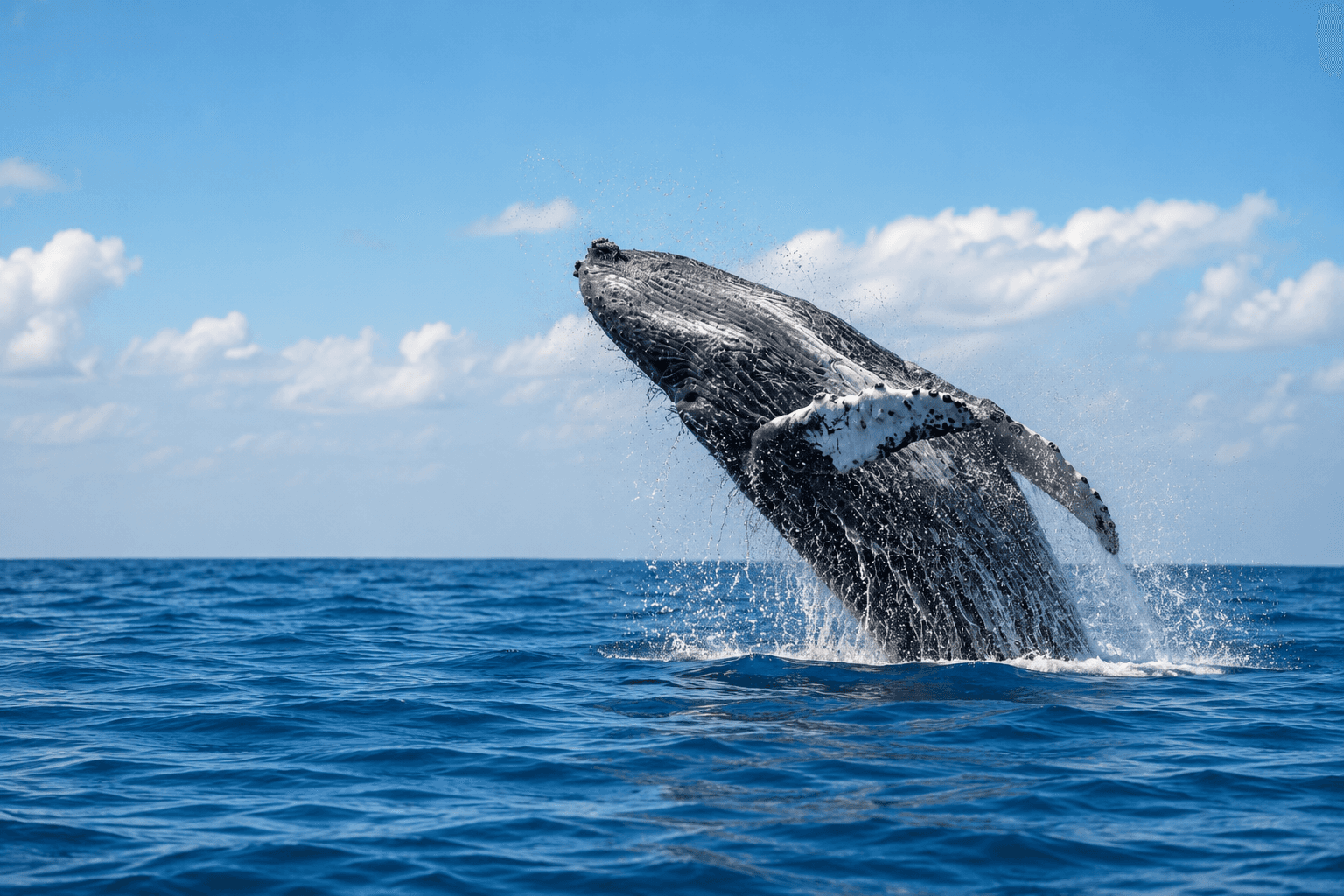
- Blue whales off southern Sri Lanka can exceed 25 metres in length.
- Boats travel 10 to 30 kilometres offshore, and trips last four to six hours.
- A private charter from Mirissa costs from roughly US$400 to US$1,500 for the whole boat.
- Sri Lankan regulations require boats to stay at least 100 metres from whales.
Why the south coast for whales
A private whale-watching charter on a luxury 7-day Sri Lanka itinerary exists because of geography. South of Dondra Head, the island's southernmost point, the continental shelf drops away within a few kilometres of the shore, and a major shipping lane and a whale feeding ground share the deep water beyond.
Blue whales are present for much of the year, but the sea allows comfortable trips only from roughly December to April. Outside those months the south-west monsoon brings a heavy swell, and responsible operators stop sailing.
What a private charter gives you
A private charter gives you space and control. Shared boats from Mirissa carry 40 to 100 passengers on two decks, and all of them move to one rail when a whale surfaces. On a chartered yacht or catamaran, there are a handful of people and a clear view.
You also decide the shape of the morning. Stay longer with a pod of dolphins, turn back early if someone is unwell, or ask for breakfast at anchor in Weligama Bay on the way home. The crew typically includes a skipper, a deckhand and sometimes a marine naturalist.
- →Shade, a proper toilet and room to lie down.
- →A cool box, breakfast and fresh fruit on board.
- →No scrum at the rail when a whale blows.
How the morning runs
The morning starts early. You leave the hotel at about 5.30am and the harbour by 6am, as the fishing fleet comes in. The first hour is a steady run south into open water, often with spinner dolphins riding the bow wave.
Whales are found by looking for the blow, a column of spray up to nine metres high. A blue whale surfaces several times over a few minutes, then lifts its tail and dives for 10 to 20 minutes. You are back in harbour between 10am and noon.
- →5.30am: leave the hotel.
- →6am to 7.30am: run offshore.
- →7.30am to 10am: searching and watching.
- →11am: back ashore, pool by noon.
Seasickness and the limits of comfort
A private boat is still a small boat on the Indian Ocean. Even in February, the swell off Dondra can be a metre or more, and roughly one passenger in four feels unwell. A catamaran is more stable than a single-hulled yacht, which helps.
Prepare the night before. Eat lightly, avoid alcohol, and ask a pharmacist about motion sickness remedies before you travel. On board, stay outside, watch the horizon and keep to the stern. If you know you suffer badly, a morning by the pool is no failure.
- →Choose a catamaran over a single hull if you are prone to seasickness.
- →Eat a light breakfast and skip alcohol the night before.
- →Stay on deck near the stern and watch the horizon.
Responsible whale watching
Whale watching off Mirissa has a mixed record. Some skippers race each other to a sighting, approach from the front and cut across the animal's path. Sri Lankan regulations set a minimum distance of 100 metres and limit the number of boats near a whale, but enforcement at sea is patchy.
A charter lets you set the standard. Tell the skipper at the dock that you want a slow, side-on approach and no chasing, and that you would accept a more distant view. Good crews work this way already and will be glad to be asked.
Booking and the back-up plan
Private boats in Mirissa are few, and the best are reserved weeks ahead for January to March. Book before you travel, and stay within 15 to 20 minutes of the harbour on the night before so that the alarm is bearable.
Lankan Stays & Trails keeps day 6 flexible where it can, moving the charter to the morning of day 7 if the sea is poor and the flight is late. If the coastguard closes the harbour, the day becomes a villa day, and the charter fee is refunded or moved.
Frequently asked questions
Is private whale watching worth it in Mirissa?
For comfort and a calmer experience, yes. A private boat avoids the crowding of shared vessels, lets you choose how long to stay and gives the crew time to approach whales carefully. It costs several times as much, and sightings are the same animals.
How much does a private whale watching boat cost in Sri Lanka?
From roughly US$400 to US$1,500 for the whole boat, depending on its size and type, the number of guests and what is included. Motor yachts and sailing catamarans are at the upper end. Shared trips cost about US$40 to US$70 a person.
When is the best time to see blue whales in Sri Lanka?
Off Mirissa, from roughly December to April, with January to March the calmest and most reliable months. Off Trincomalee on the east coast, the season runs roughly May to September. Sightings depend on the sea and the day.
How likely am I to see a whale in Mirissa?
In peak season, the chance of seeing a whale on a given morning is high, commonly put at around 80 to 90 per cent between January and March. Dolphins are seen on most trips. No operator can guarantee a sighting.
How long is a whale watching trip from Mirissa?
Four to six hours on most days, leaving at about 6am and returning between 10am and noon. The length depends on how far offshore the whales are. A private charter can turn back earlier if guests prefer.
Can children go on a private whale watching boat?
Yes, and a private boat is easier with children than a shared one, with shade and room to move. The trip is still long and can be rough. Children of about eight and over generally cope best, and life jackets in child sizes should be confirmed.