
Quick answer
The most common culture shock moments Swiss visitors report in Sri Lanka are dense, informally organised traffic with constant horn use, visibly older and less uniformly maintained infrastructure than Switzerland's, and hospitality that feels more direct and personal than the reserve most Swiss social norms assume. None of it reflects danger or disorder, it reflects a country with a different relationship to order, maintenance and personal space. Most Swiss visitors describe the adjustment as short, typically two to three days, and often name exactly these differences among their favourite parts of the trip by the end.
Key takeaways
- Traffic density and constant horn use, a courtesy signal rather than aggression, is the first adjustment most Swiss visitors notice, usually easing within two to three days.
- Sri Lanka covers roughly 65,600 square kilometres, about one and a half times the land area of Switzerland, yet its infrastructure and pace vary far more from region to region than Switzerland's does.
- Public infrastructure, pavements, road surfaces, building maintenance, is visibly less uniform than the Swiss standard, without this signalling that a place is unsafe or in decline.
- Hospitality in Sri Lanka is often more direct and personal than Swiss social reserve assumes: personal questions from strangers, insistence on an extra portion, or a spontaneous conversation are common.
- Active Buddhist and Hindu temples require shoulders and knees covered and shoes removed, a stricter dress standard than almost any Swiss cultural or religious site expects of visitors.
A different relationship with order
Switzerland's public life runs on visible, consistent systems: trains that depart on the minute, clearly marked lanes, buildings maintained to a uniform standard regardless of the canton. Sri Lanka's systems work, but they are looser and more improvised, and that gap is the real source of culture shock for most Swiss visitors, more than any single dramatic event.
This shows up first in traffic: tuk-tuks, buses, cars and pedestrians share road space more directly than Swiss traffic discipline allows, with far less reliance on marked lanes or strict right-of-way. It looks disorderly before it reads as functional, and most Swiss visitors stop finding it stressful within two or three days once the underlying logic becomes visible.
- →Horn use in Sri Lankan traffic is a courtesy and awareness signal, not an expression of frustration the way it can read in Switzerland.
- →Tuk-tuks weave to fill gaps rather than driving recklessly; it looks riskier than it typically is with an experienced driver.
- →A private driver-guide removes the need to navigate this directly, which many Swiss visitors find reassuring for the first few days.
Infrastructure that looks different, not worse
Pavements, road surfaces and building exteriors in Sri Lanka are visibly less uniform than the Swiss standard, and it is worth naming this directly rather than glossing over it: cracked kerbs, patched roads and older buildings are normal here in a way they rarely are even in a modest Swiss town. This is a genuine difference in maintenance culture and resourcing, not a sign of neglect or risk.
Away from this, Sri Lanka's ancient sites, Sigiriya, Polonnaruwa, Anuradhapura, are maintained with real care as heritage assets, and top-tier hotels and private itineraries deliver a polish that closes the gap considerably. The contrast is sharpest in ordinary street-level infrastructure, which is exactly the part a first-time visitor sees first.
- →Road surfaces and pavements are noticeably less uniform than in Switzerland, particularly outside Colombo and major towns.
- →Heritage and archaeological sites are generally well maintained and actively conserved, a different standard to everyday street infrastructure.
- →A private driver-guide and well-chosen accommodation smooth out most of this variability across a trip.
Direct hospitality versus Swiss reserve
Swiss social norms tend to value a measure of distance with strangers, particularly on first meeting. Sri Lankan hospitality leans the other way: personal questions from someone you have just met (where are you from, are you married, how many children), a genuine insistence on an extra portion at a meal, or a spontaneous conversation on a train are all common and come from real warmth rather than intrusion.
Most Swiss visitors describe this as one of the most memorable parts of the trip once they stop measuring it against the more reserved social distance common at home. It rarely requires more than a friendly, direct response in return.
Dress and temple etiquette
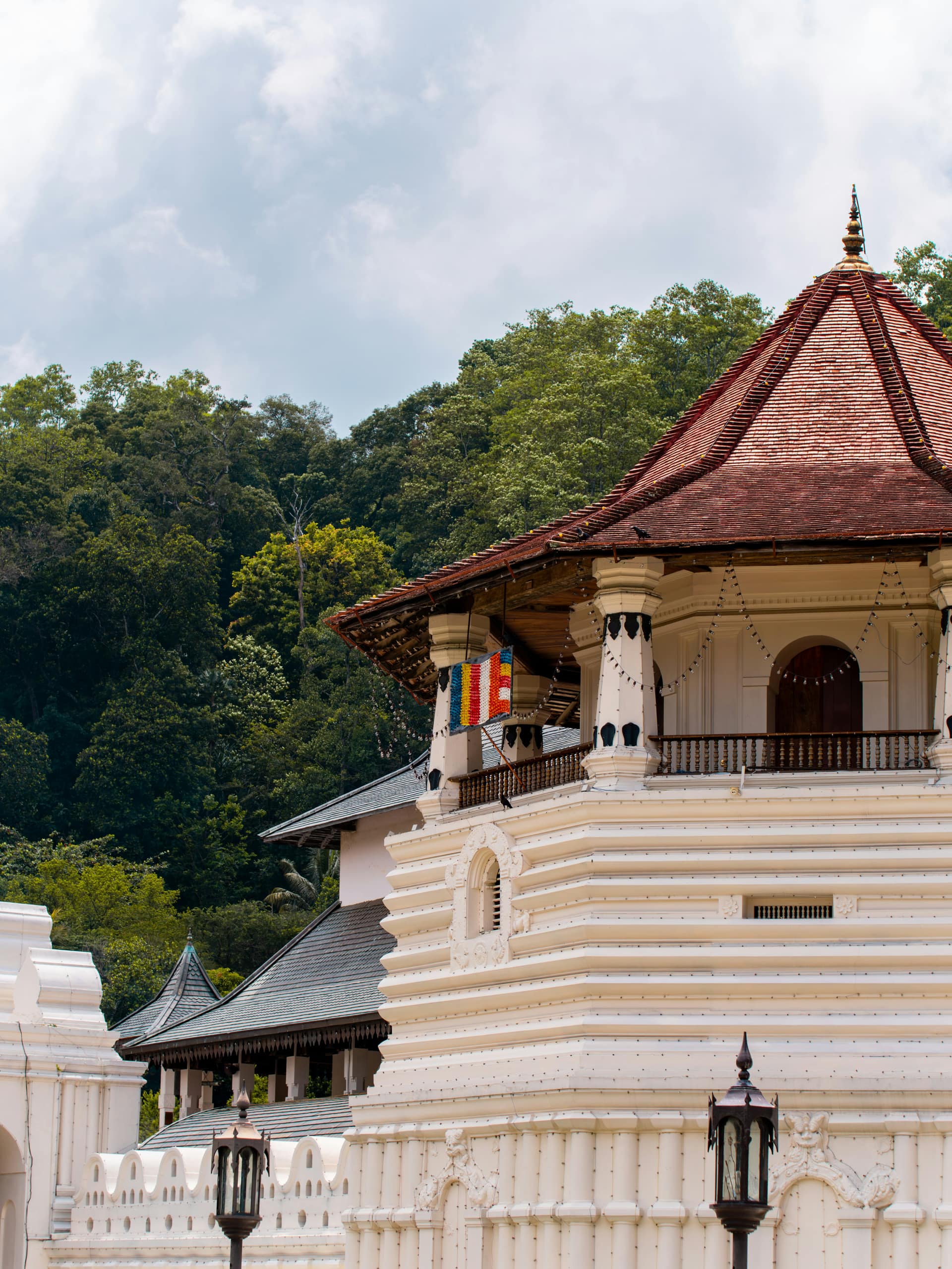
Active Buddhist and Hindu temples expect shoulders and knees covered and shoes, and often hats, removed before entering, a stricter standard than almost any Swiss museum, cathedral or cultural site asks of visitors. Some temples also expect visitors not to turn their back on a Buddha statue for photographs.
Carrying a light scarf or shawl and slip-on shoes makes it straightforward to manage several temple visits in one day without changing outfits between stops.
- →Cover shoulders and knees, and remove shoes (and often hats) before entering active temples.
- →Avoid turning your back to a Buddha statue for photographs; ask locally if unsure.
- →Slip-on shoes and a light scarf make repeated temple visits in a single day considerably easier.
Settling in
None of these adjustments require special preparation beyond knowing they are coming. Most Swiss visitors report the initial unfamiliarity fading within two or three days, replaced by genuine enjoyment of exactly what felt disorienting on arrival, particularly the traffic and the directness of hospitality.
A private driver-guide helps considerably here, translating context in real time, why the horn sounded, what a fair local price looks like, which shortens the adjustment period noticeably compared with working it out alone.
Planning around it
Building a slower first two or three days into the itinerary, rather than a packed schedule from day one, gives this adjustment room to happen naturally instead of colliding with a demanding day of sightseeing.
Lankan Stays & Trails builds private, driver-guided itineraries for Swiss travellers with exactly this pacing in mind, so the early unfamiliarity has space to settle before the trip's more demanding days.
Frequently asked questions
Is Sri Lanka overwhelming for Swiss visitors?
It can feel intense for the first two or three days, mainly from traffic density and less uniform infrastructure than Switzerland's, but almost all Swiss visitors describe it settling into something genuinely enjoyable well before the trip ends.
Why does traffic in Sri Lanka look so different from Switzerland?
Tuk-tuks, cars, buses and pedestrians share road space more directly than Swiss traffic discipline allows, and horns are used constantly as a courtesy signal rather than aggression. It looks more disorderly than it functions in practice, and most visitors adjust within a couple of days.
Is Sri Lankan infrastructure worse than Switzerland's?
It is different rather than worse: road surfaces, pavements and building exteriors are visibly less uniform than the Swiss standard, reflecting a different maintenance culture and resourcing, while heritage sites and top-tier hotels are maintained with real care.
What should Swiss visitors wear at Sri Lankan temples?
Shoulders and knees covered, and shoes removed before entering. Some temples also expect visitors not to turn their back to a Buddha statue for photographs. Carrying a light scarf and slip-on shoes makes multiple temple visits in one day easier.
How long does it take to adjust to Sri Lanka's pace from Switzerland?
Most Swiss visitors report adjusting within two to three days. The initial unfamiliarity around traffic, infrastructure and direct hospitality tends to become part of the trip's rhythm well before it is time to fly home.
Is Sri Lankan hospitality intrusive for Swiss visitors?
It can feel more direct than Swiss social reserve at first, personal questions from strangers or an insistence on an extra portion at a meal, but it comes from genuine warmth. A friendly, direct response is usually all that is needed.
How big is Sri Lanka compared with Switzerland?
Sri Lanka covers roughly 65,600 square kilometres, close to one and a half times the land area of Switzerland (roughly 41,285 square kilometres), which is part of why regional character and infrastructure vary more across the island than across Swiss cantons.