
Quick answer
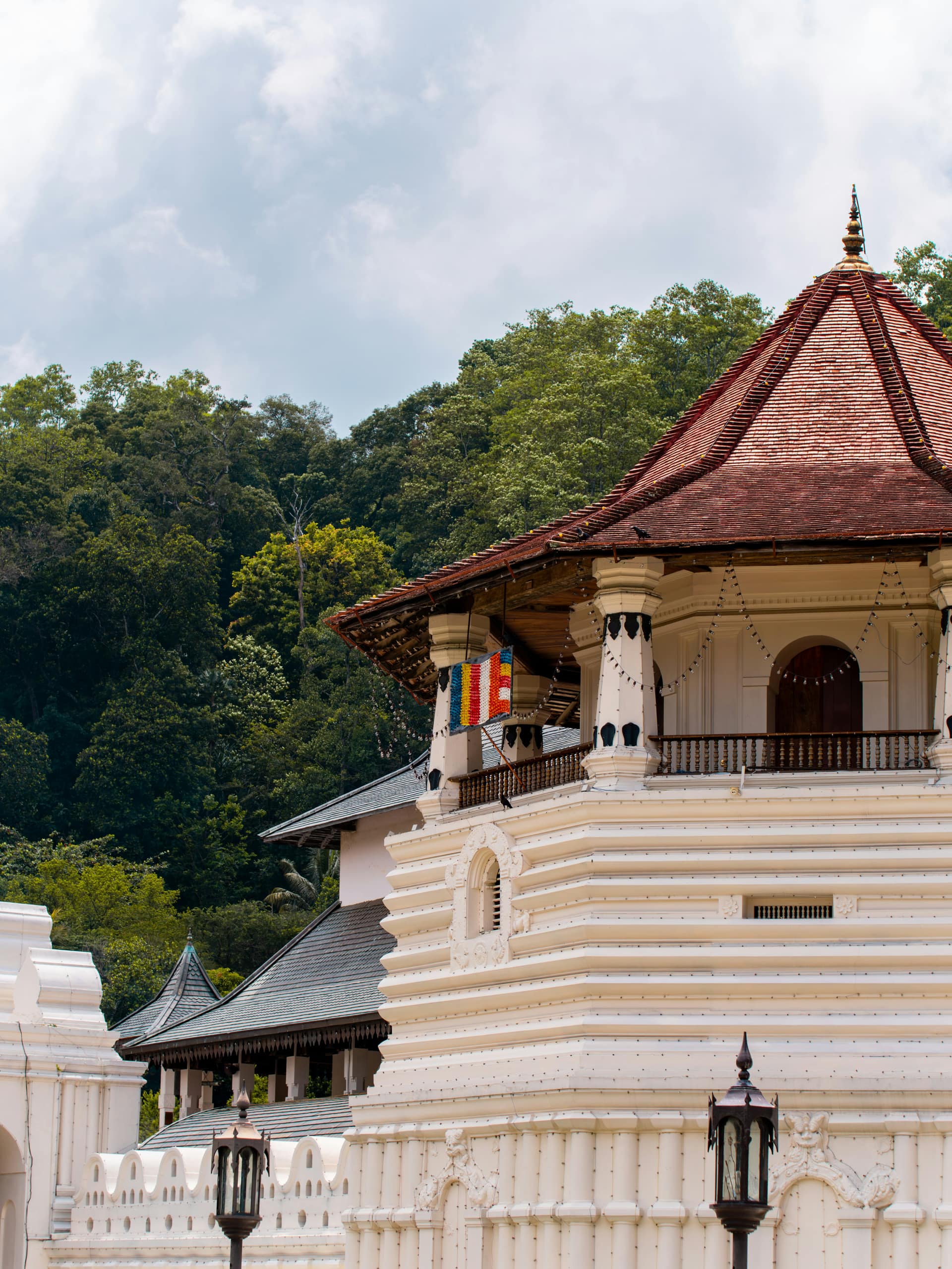
The Temple of the Tooth (Sri Dalada Maligawa) in Kandy is Sri Lanka's holiest Buddhist shrine, housing a sacred tooth relic of the Buddha. Visitors come especially for the daily puja (offering) ceremonies, held in the morning, midday, and evening, when drumming announces the opening of the inner shrine. It's a UNESCO-listed site within the former royal palace complex; modest dress (shoulders and knees covered) and bare feet are required, and a foreigner entry ticket applies. Allow an hour or two and time your visit to a puja.
Key takeaways
- Sri Dalada Maligawa houses a sacred tooth relic of the Buddha, Sri Lanka's holiest shrine.
- Daily puja ceremonies (morning, midday, evening) are the highlight.
- Modest dress and bare feet are required; a foreigner ticket applies.
- It sits within the UNESCO-listed royal palace complex by Kandy lake.
- Time your visit to a puja, and allow one to two hours.
The significance of the tooth relic
The sacred tooth relic, brought to Sri Lanka in the 4th century, became a symbol of sovereignty: whoever guarded it was said to hold the right to rule. It found its final home in Kandy, the last independent kingdom, and the temple that shelters it remains the focus of Buddhist devotion and national identity.
The relic itself is never displayed; it rests within a series of nested golden caskets in the inner shrine, revealed only in spirit through the daily ceremonies.
The puja ceremony
The heart of a visit is the puja, held three times daily (typically early morning, around midday, and in the evening), when ceremonial drumming and horns fill the temple and the inner shrine's doors are opened for offerings of flowers. The evening puja is the most atmospheric and popular.
Arrive ahead of the ceremony time to find a spot, and expect crowds and queues. This is a living, active place of worship, not a museum.
- →Three daily pujas: morning, midday, evening
- →Drumming announces the opening of the inner shrine
- →Evening puja is the most atmospheric
- →Arrive early to find a place
Tickets, dress code & etiquette
A foreigner entry ticket is required (a separate rate, subject to change, so confirm the current fee), and security checks apply at the entrance. Dress modestly with shoulders and knees covered, remove shoes and hats, keep your voice low, and never pose with your back to Buddha images.
Photography is generally allowed in many areas but be discreet and respectful, especially during the puja and around worshippers.
The complex and around Kandy
Beyond the shrine, the complex includes museums, audience halls, and shaded courtyards worth exploring. Outside, the temple sits beside Kandy Lake, a short stroll from the town, and pairs with the Royal Botanical Gardens at Peradeniya, a Kandyan dance performance, and a viewpoint over the city.
During the July–August Esala Perahera, the temple is the centre of the island's grandest festival.
Planning your visit
Time your visit to a puja (the evening one if you can), dress appropriately, and allow an hour or two. Kandy is the gateway between the Cultural Triangle and the hill country, so the temple slots naturally into a cross-island route.
Lankan Stays & Trails arranges a respectful, well-timed temple visit with an expert guide, plus the wider Kandy experience. See our Kandy and Cultural Triangle guides, or share your dates.
Frequently asked questions
What is the Temple of the Tooth in Kandy?
It's Sri Lanka's holiest Buddhist shrine (Sri Dalada Maligawa), housing a sacred tooth relic of the Buddha. Historically a symbol of sovereignty, it sits within Kandy's former royal palace complex by the lake and is a UNESCO World Heritage site.
What are the puja times at the Temple of the Tooth?
Puja (offering) ceremonies are held three times daily (typically early morning, around midday, and in the evening), announced by drumming when the inner shrine opens. The evening puja is the most atmospheric. Confirm exact times locally, as they can vary.
What is the dress code for the Temple of the Tooth?
Cover your shoulders and knees, remove shoes and hats, and dress modestly. Carry a scarf or sarong, keep your voice low, and never pose with your back to Buddha images. It's an active place of worship.
Is there an entry fee for the Temple of the Tooth?
Yes, foreign visitors pay an entry ticket (a separate rate from locals), bought at the site, with security checks at the entrance. The price is periodically updated, so confirm the current fee before you go.
Can you see the actual tooth relic?
No. The relic is never displayed. It rests within nested golden caskets in the inner shrine, which is opened during the puja ceremonies for offerings, but the tooth itself is not shown to visitors.
Does Lankan Stays & Trails include the Temple of the Tooth?
Yes, we arrange a respectful, well-timed visit (often to the evening puja) with an expert guide, as part of the wider Kandy and hill-country experience. Share your dates for a tailored plan.