
Quick answer
Whale watching in Sri Lanka with kids is best for children of about eight and over who are comfortable on boats. Trips leave Mirissa at about 6 to 6.30am between roughly December and April and last four to six hours on open ocean, with blue whales, sperm whales and dolphins the main sightings. From roughly May to September, boats run from Trincomalee on the east coast, often for shorter trips. Choose a licensed operator with child-sized life jackets and a no-chasing policy.
Key takeaways
- Blue whales off southern Sri Lanka can exceed 25 metres in length, longer than two buses end to end.
- Whale-watching trips from Mirissa typically last four to six hours and travel 10 to 30 kilometres offshore.
- The whale-watching season runs roughly December to April at Mirissa and roughly May to September at Trincomalee.
- Seasickness is the most common reason children dislike whale watching, and swell is usually lowest from January to March.
- Sri Lankan regulations require boats to keep at least 100 metres from whales, further for blue whales.
Is your child ready?
Whale watching in Sri Lanka with kids depends on temperament more than age. The trip involves an early start, a long ride out on a rolling sea, a wait, and then perhaps ten minutes of whale. A child who can sit through a three-hour safari can usually manage it.
Eight is a sensible guideline for the open-ocean trips from Mirissa. Younger children are carried on most boats, but there is little shade or space to move, and a seasick five-year-old cannot be taken home early. Babies and toddlers should stay ashore with one parent.
- →Under 5: not recommended.
- →5 to 7: only for calm days and children who have enjoyed boats before.
- →8 and over: most enjoy it.
What you see, honestly
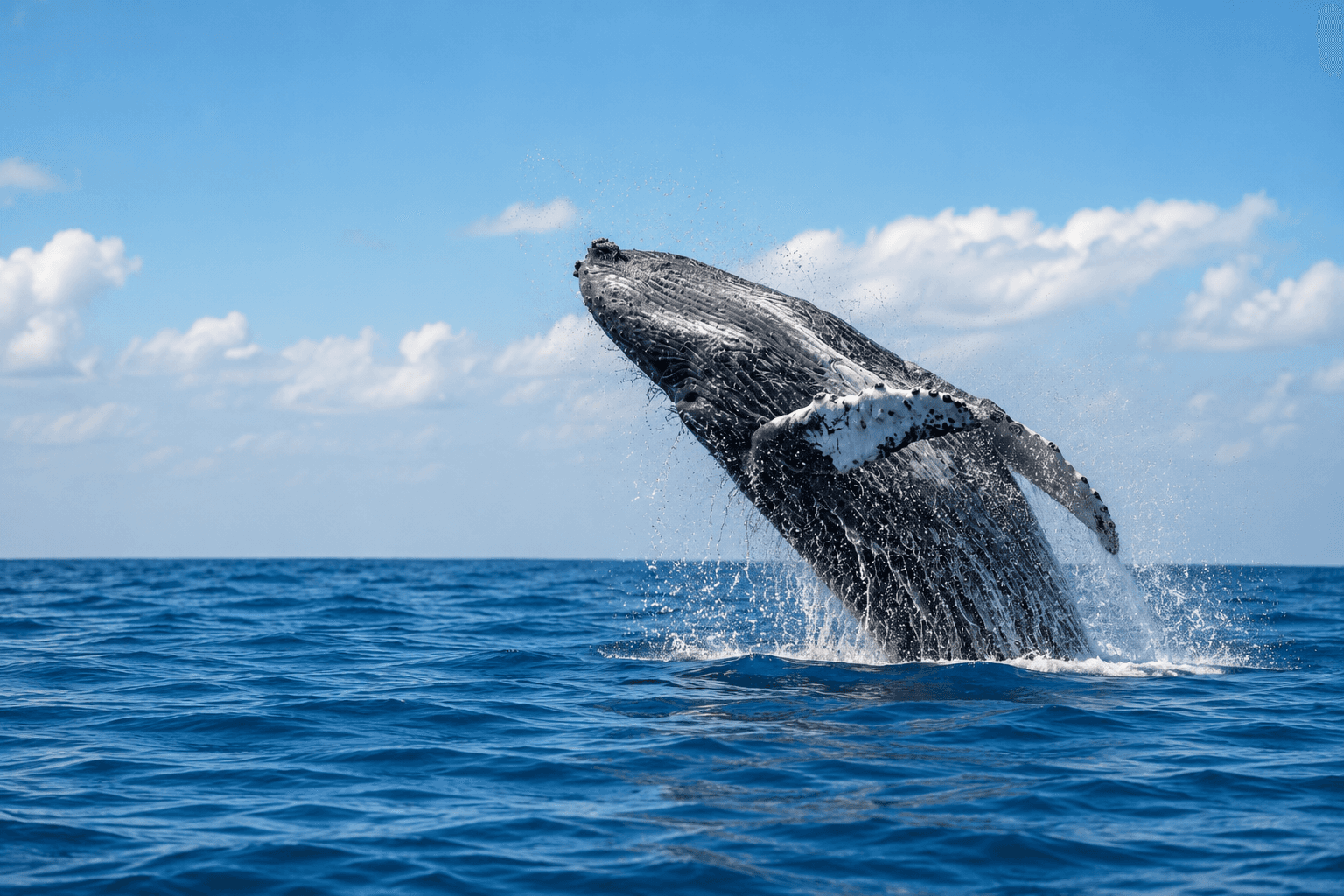
Sightings off Mirissa are good in season, with whales found on most trips between January and March. What children see is a long blue-grey back rolling at the surface, a spout up to nine metres high and, with luck, a tail lifting as the whale dives.
Whales do not leap on request. Blue whales rarely breach, and a sighting may be 100 metres or more away. Spinner dolphins, which travel in pods of hundreds and ride the bow wave, are often the part children enjoy most. Flying fish and turtles add to the tally.
Seasickness and comfort
Seasickness decides whether whale watching is a pleasure. The sea south of Mirissa is open Indian Ocean with a steady swell, and boats sit rocking while they wait. Ask your doctor before travel about a remedy suitable for your children's ages, and give it before boarding.
Comfort helps as much as medicine. Sit children on the lower deck near the middle of the boat, facing forward, in fresh air, with eyes on the horizon. A light breakfast is better than none. Most operators hand out tablets, ginger sweets and a packed breakfast.
- →Eat a small, plain breakfast.
- →Sit low and central, in the shade.
- →Bring water, hats, sunscreen and a change of top.
Choosing a boat and an operator
Operators at Mirissa vary widely. Larger double-deck boats are steadier and have toilets, which matters with children. Small fast boats reach the whales sooner but ride harder. Ask how many passengers are carried, whether there is shade, and whether life jackets come in children's sizes.
Responsible conduct is the other test. Good skippers approach slowly from the side, keep the legal distance, cut the engine and leave after a few minutes. Poor ones race other boats and crowd the animal. Lankan Stays & Trails books only operators with a record of the former.
- →Insist on a life jacket that fits each child, worn throughout.
- →Prefer a boat with a toilet and a shaded lower deck.
- →Avoid any operator offering swimming with whales.
Mirissa or Trincomalee
Mirissa is the main whale-watching port, on the south coast, with the best chance of blue whales from roughly December to April. Its drawback is the long run out, since the deep water lies some way from shore.
Trincomalee, on the east coast, has its season from roughly May to September, with March and April also productive. A deep submarine canyon lies close to the harbour, so trips can be shorter, often three to four hours. That makes it the gentler option for families in the middle of the year.
Alternatives when the answer is no
Alternatives to whale watching keep everyone happy when a child is too young or too queasy. Dolphin watching at Kalpitiya, on the north-west coast, runs in calmer water from roughly November to March. On the south coast, a boat trip on Koggala Lake or the Madu River is flat, shaded and short.
On the family 10-day route, whale watching takes the morning of day nine and is easiest from a base at Mirissa. From Unawatuna the harbour is 45 minutes to an hour away, meaning a 5am start. Many families split up, with one parent and the older children going to sea.
Frequently asked questions
What age can children go whale watching in Sri Lanka?
There is no fixed legal age for whale watching in Sri Lanka, and operators set their own rules. Around eight and over is a sensible guideline for the four to six-hour trips from Mirissa. Shorter trips from Trincomalee can suit slightly younger children.
Is whale watching in Mirissa safe for kids?
Whale watching in Mirissa is safe for kids on a well-run, licensed boat with proper life jackets. The main problems are seasickness, sun and boredom. Choose a larger boat, a calm day and an operator that limits passenger numbers.
Will my child get seasick whale watching?
Many children feel some seasickness whale watching off Mirissa, since the boats travel well offshore in ocean swell. January to March is usually calmest. A remedy approved by your doctor, a light breakfast and a seat low in the boat all help.
How long is a whale watching trip in Sri Lanka?
A whale watching trip from Mirissa usually lasts four to six hours, leaving at about 6 to 6.30am and returning by midday. Trips from Trincomalee are often three to four hours. The length depends on how quickly whales are found.
Are whales guaranteed on a trip from Mirissa?
Whales are not guaranteed, though sightings are frequent from December to April and most reliable from January to March. Some operators offer a free second trip if no whale is seen. Dolphins are encountered on a large share of outings.
Is Mirissa or Trincomalee better for whale watching with children?
Trincomalee is often easier with children because the whales can be closer to shore, making trips shorter. It operates roughly May to September. Mirissa has the bigger reputation and suits December to April. The season of your holiday usually decides.