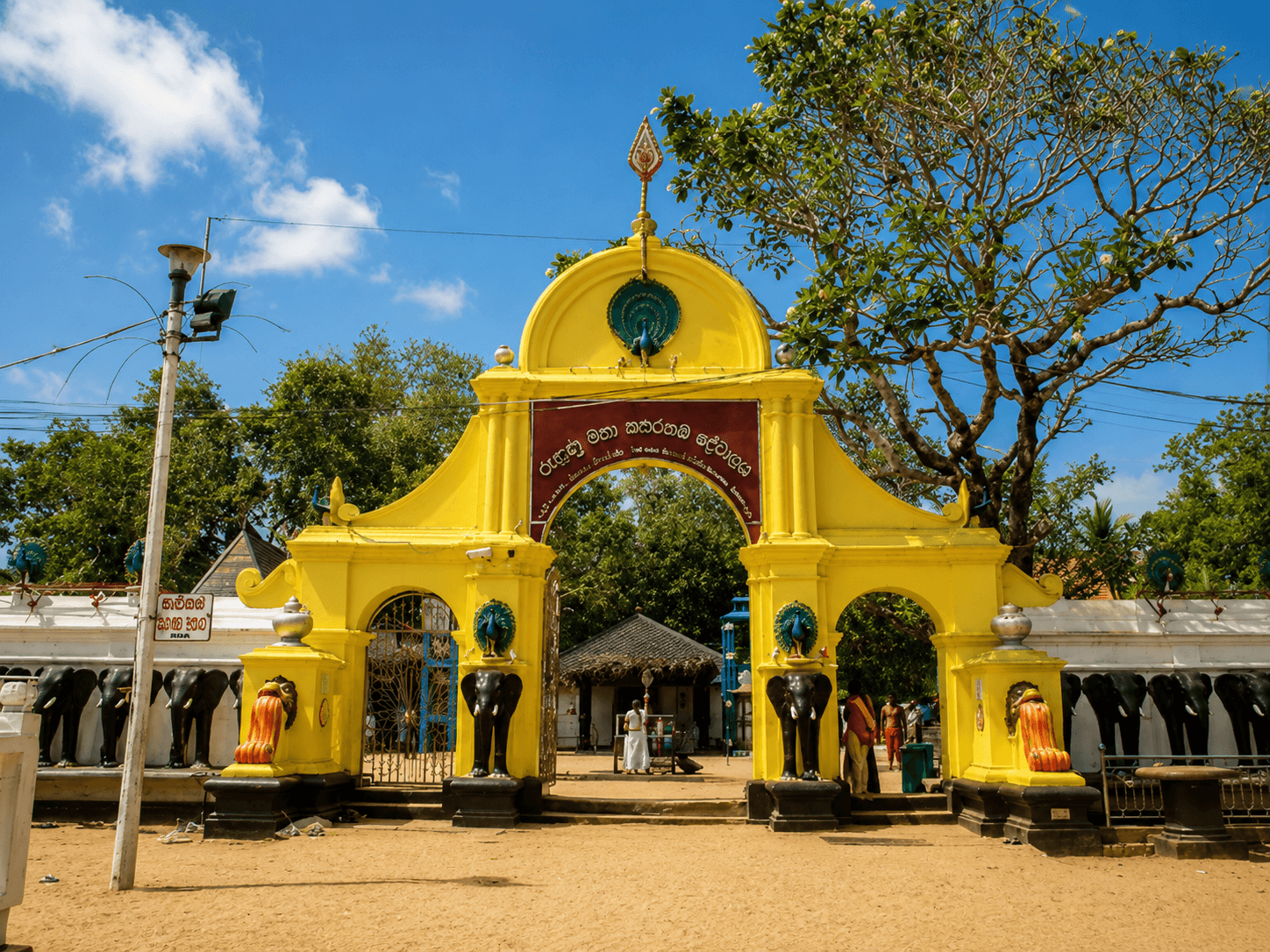
Quick answer: what is Kataragama?
Kataragama is a sacred multi-faith pilgrimage town in southeastern Sri Lanka, centred on the Ruhunu Maha Kataragama Devalaya dedicated to the god Kataragama (Murugan/Skanda). Pilgrims of several faiths attend the evening puja, bathe in the Menik Ganga, and join the famous Esala festival (around July–August). It sits close to Yala, so many travellers combine a safari with an evening of devotion. Dress modestly and visit respectfully.
Region: Deep South · Sri Lanka · Typical overnight low ~23°C (long-term climate norm)
Top experiences in Kataragama
- Attend the evening puja at the Ruhunu Maha Devalaya
- Witness multi-faith devotion shared by Buddhists, Hindus, Muslims, and Vedda
- See the Kiri Vehera dagoba near the temple complex
- Experience the Esala festival's processions and rituals (seasonal)
- Pair an evening of devotion with a Yala safari nearby
- Walk to the Menik Ganga, where pilgrims bathe before worship
Why Kataragama is unlike anywhere else
Few places capture Sri Lanka's religious pluralism like Kataragama, where shrines and rituals of multiple faiths share one sacred precinct. For travellers, an evening here is a window into living devotion rather than a sightseeing stop.
Its location near Yala and the deep-south parks makes it a natural pairing with wildlife, letting you balance a dawn safari with a contemplative dusk.
The evening puja and sacred precinct
As dusk falls, pilgrims carry offerings of fruit and lotus to the Maha Devalaya for the evening puja, drums sound, and oil lamps multiply. The nearby Kiri Vehera dagoba adds a Buddhist focus to the complex.
This is active worship space: dress modestly, remove shoes where directed, keep voices low, and follow steward guidance, especially during busy poya and festival evenings.
- Evening puja is the most atmospheric daily moment
- Cover shoulders and knees; remove shoes in shrine areas
- Pilgrims bathe in the Menik Ganga before worship
- Photography may be restricted near inner shrines
The Esala festival and the Menik Ganga
Around July or August, the Kataragama Esala festival brings weeks of processions, fire-walking, and acts of devotion that draw pilgrims from across the island. It is intense and crowded (spiritually extraordinary, logistically demanding), so book far ahead if your trip aligns.
Year-round, the Menik Ganga ('river of gems') beside the town is where pilgrims bathe to purify before entering the shrines.
Best time to visit Kataragama
Kataragama can be visited year-round as an evening stop, but the Esala festival (around July–August) is the dramatic peak. Pair timing with the Yala safari season (roughly February to July) for a combined trip.
- Esala festival (Jul–Aug): spectacular but very crowded
- Year-round: evening puja is the daily highlight
- Combine with Yala's drier safari months (Feb–Jul)
- Poya (full moon) days draw extra pilgrims
- Evenings are cooler and more atmospheric than midday
How to get to Kataragama
Kataragama lies in the deep south near Tissamaharama, about 20 to 30 minutes from the Yala safari gates and roughly five to six hours from Colombo by road. Most travellers arrive as part of a Yala or south-coast itinerary.
- →From Yala/Tissamaharama: about 20–40 minutes
- →From Colombo: roughly 5–6 hours by road
- →From Ella: about 3–4 hours
- →Usually combined with a Yala safari stay
Practical tips for Kataragama
- Dress modestly; carry a scarf or sarong
- Visit for the evening puja for the fullest experience
- Remove shoes and keep voices low in shrine areas
- Book accommodation far ahead during the Esala festival
- Carry small change for offerings and parking
- Pair with a dawn Yala safari for an efficient deep-south day
Mindful travel in Kataragama
This is a place of genuine devotion, so observe with humility, avoid intrusive photography of worshippers and rituals, and follow stewards during festivals. Respect the sanctity of the Menik Ganga and the shrine precinct.
Lankan Stays & Trails uses guides who interpret the town's multi-faith traditions with care and channels spending to local services rather than exploitative attractions.
Frequently asked questions about Kataragama
What is Kataragama famous for?
Kataragama is a sacred multi-faith pilgrimage town centred on the Ruhunu Maha Kataragama Devalaya. Buddhists, Hindus, Muslims, and Vedda communities worship here, especially at the evening puja and during the dramatic Esala festival.
Can tourists visit Kataragama temple?
Yes, visitors of all backgrounds are welcome when dressed modestly and behaving respectfully. The evening puja is the most atmospheric time; follow steward guidance and remove shoes in shrine areas.
When is the Kataragama Esala festival?
The Esala festival usually falls around July or August, set by the lunar calendar, with weeks of processions and rituals. It's spectacular but very crowded, so book accommodation far in advance if your trip aligns.
How far is Kataragama from Yala?
Only about 20 to 40 minutes from the Yala safari gates and Tissamaharama. Many travellers combine a dawn Yala safari with an evening of devotion in Kataragama.
What should I wear in Kataragama?
Modest clothing covering shoulders and knees, with easy-to-remove shoes and a scarf or sarong. White is common among devotees but not required for visitors.
Does Lankan Stays & Trails include Kataragama?
Yes, typically paired with Yala safaris or on Ramayana-trail and deep-south routes, with guides who explain the town's traditions respectfully. Share your dates for a tailored plan.
Plan your Kataragama journey
Tell us your dates, fitness level, and travel style. Our Colombo team will craft a mindful Cultural Triangle itinerary with ethical partners.