
Quick answer
Day 9 of this 12-day Alps-to-beach itinerary is the first full day on the south coast, spent settling into a genuinely different climate, roughly 28 to 32°C after the cool hill country, and, season and weather permitting, taking a blue whale watching boat trip typically run roughly November to April out of Mirissa. Sightings are never guaranteed and depend on sea conditions on the day, so this stays a hopeful highlight rather than a fixed promise.
Key takeaways
- South coast daytime temperatures typically run roughly 28 to 32°C with high humidity, a substantial shift from the roughly 16 to 20°C of the preceding hill country days.
- Blue whale watching trips out of Mirissa typically run roughly November to April, the strongest window for calmer seas and clearer sightings, though results vary year to year.
- A typical whale watching excursion departs early morning, roughly 6am to 7am, and runs for 3 to 4 hours, since whales are more often sighted before the wind picks up later in the day.
- Sightings are never guaranteed on any given trip, and operators vary in their approach to distance and time spent following pods, worth asking about when booking.
- Seasickness is a genuine consideration on open-water whale watching trips, and preparing with medication or a light breakfast in advance is worth planning ahead of the day.
A genuinely different climate from the hills
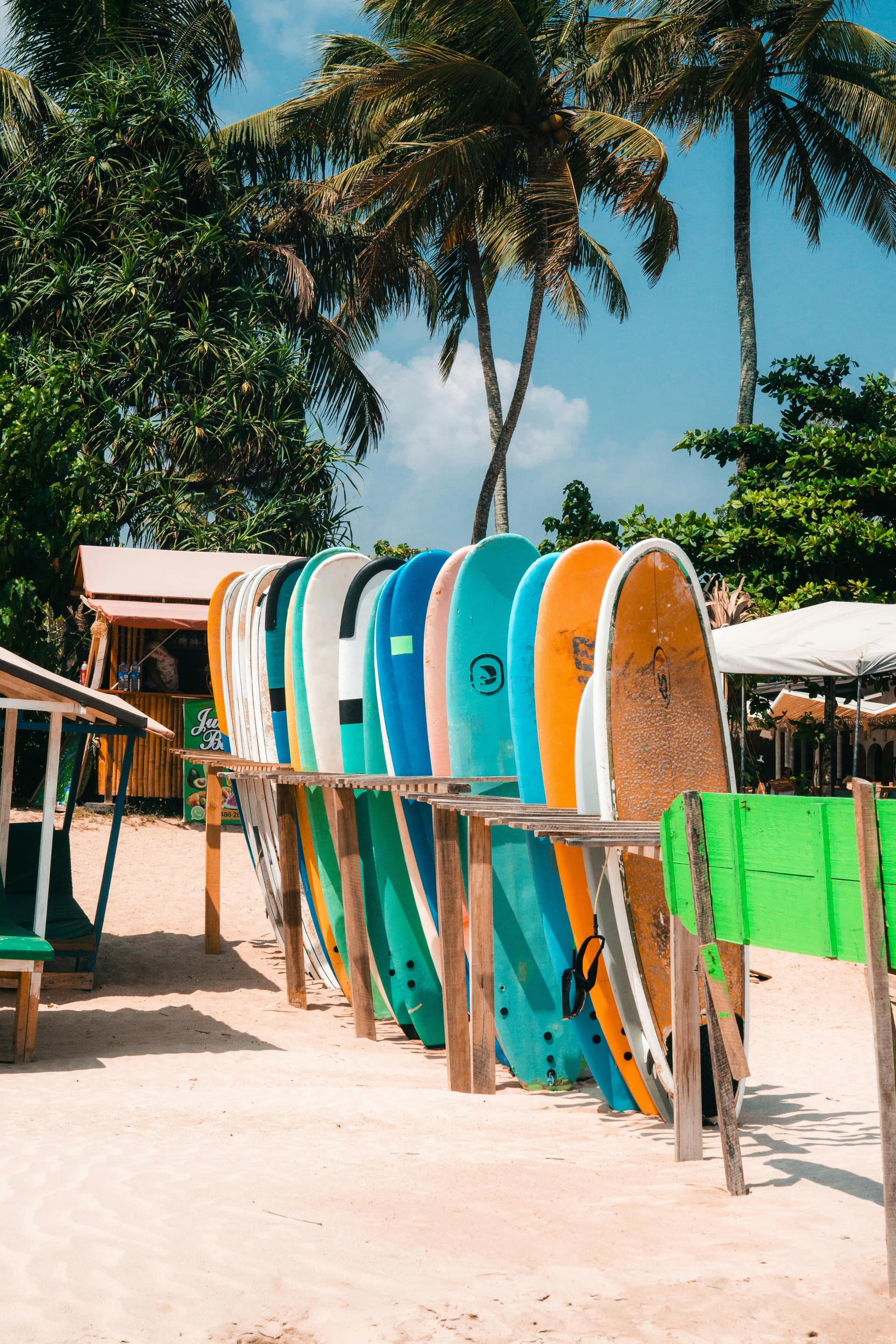
Day nine opens in a climate that feels almost unrelated to where the itinerary spent the previous four days. South coast daytime temperatures typically run roughly 28 to 32°C with noticeably high humidity, a substantial jump from the cool, sometimes misty 16 to 20°C of Nuwara Eliya and Ella. For most travellers this is a welcome change, warm sea air, bright light and the sound of the ocean rather than mist over tea terraces.
Adjusting to the heat is generally quick, but it is worth taking the first morning at an easy pace rather than immediately overexerting in direct sun, particularly for anyone who found the hill country's cooler air comfortable enough to have gotten used to it. Sunscreen, a hat and steady hydration matter more here than almost anywhere else on the route.
The sound of the day also changes noticeably, waves rather than birdsong or the low hum of a tea factory, and the pace of life along the coast follows a slower, tide-driven rhythm compared with the more structured mornings of the earlier itinerary. Fishing boats heading out early and returning by mid-morning are a common sight along both Mirissa and Unawatuna's shorelines.
- →South coast daytime temperatures: roughly 28 to 32°C with high humidity.
- →A substantial jump from hill country temperatures of roughly 16 to 20°C.
- →Take the first morning at an easy pace while adjusting to the heat.
Blue whale watching: season and realistic expectations
Blue whale watching trips out of Mirissa are one of the south coast's best-known draws and a major reason many travellers choose this particular stretch of coastline, and the strongest season for them typically runs roughly November to April, when sea conditions are generally calmer and sightings more consistent. Outside this window, trips may still run but conditions and sighting odds are generally less favourable, so it is worth checking current seasonal advice locally before booking if travelling near the edges of this range.
It is worth being upfront that sightings are never guaranteed on any single trip, regardless of season. Blue whales, along with sperm whales and dolphins that are also sometimes seen on these trips, are wild animals following their own patterns, and a responsible operator will say as much rather than promising a sighting.
The waters off Mirissa sit close to a deep continental shelf, which is part of why whales are drawn relatively near to shore compared with some other whale watching destinations worldwide, keeping the boat journey to the sighting grounds shorter than it might otherwise be. This proximity is one of the genuine advantages of basing the excursion here rather than elsewhere on the south coast.
- →Strongest season: roughly November to April, for calmer seas and more consistent sightings.
- →Species sometimes seen: blue whales, sperm whales, and dolphins.
- →No sighting is ever guaranteed; treat the trip as a hopeful highlight, not a fixed promise.
What a typical whale watching trip involves
Boats typically depart early, roughly 6am to 7am, and the excursion generally runs for 3 to 4 hours, timed for the calmer morning conditions before wind and swell tend to pick up later in the day. An early alarm is worth it, both for the better odds of calm water and cooler temperatures at the start of the trip, and coffee or tea is generally available on board or from a stall near the harbour before boarding.
Operators vary in boat size, group size and their approach to how closely and how long they follow a pod once spotted, and it is worth asking these questions when booking rather than assuming all trips are equivalent. Life jackets, sun cover and, on some boats, a basic breakfast or snacks are standard, but it is worth confirming what is included before the day.
A responsible operator will also maintain a respectful distance from any whale or pod encountered, following guidelines designed to avoid stressing the animals, rather than crowding in for a closer photograph. Choosing an operator with a visible commitment to this kind of practice is worth prioritising over one advertising the cheapest fare.
Practical preparation for the trip
Open water can be genuinely rough even in the calmer season, and seasickness is a real consideration for anyone not used to boat travel. Taking motion sickness medication in advance if prone to it, eating a light breakfast rather than a heavy one, and sitting toward the middle or back of the boat where the motion is generally less pronounced are all details worth planning ahead for.
Sun exposure on open water is stronger than it feels, given the breeze and reflected light off the sea, so reapplying sunscreen partway through the trip and wearing a hat that will not blow off are both genuinely sensible precautions worth taking seriously.
- →Consider motion sickness precautions in advance if not used to boat travel.
- →A light breakfast rather than a heavy one before departure is generally more comfortable.
- →Reapply sunscreen partway through the trip; sun exposure on open water is stronger than it feels.
The rest of day nine
With the whale watching trip generally finishing by late morning, the remainder of day nine is unstructured, a swim, lunch by the beach, or simply resting after the early start. This marks the beginning of the itinerary's deliberately least-scheduled stretch, a contrast to the more programmed pace of the Cultural Triangle and hill country days.
For travellers choosing Unawatuna over Mirissa, or travelling outside the whale watching season, day nine can instead open with reef snorkelling or simply settling into the beach and village at an easy pace, which is covered in more detail as day ten's main activity on this itinerary.
A short walk along the beach in the late afternoon, once the strongest heat has passed, is a pleasant way to close out the day, and both towns have a reasonable choice of casual restaurants serving fresh fish and seafood, generally the standout meal option along this stretch of the route.
Booking the trip
Booking a whale watching trip a day or two ahead through your accommodation or a local operator is generally straightforward, though it is worth confirming the departure time the evening before, since early departures sometimes shift slightly with tide or weather conditions. Confirm current pricing and any weather-related cancellation policy before paying in full, since sea conditions can change the trip's overall viability on fairly short notice.
Lankan Stays & Trails coordinates this excursion as part of the south coast stretch, choosing operators based on group size and safety record rather than simply the lowest price, given how much variation exists between boats running the same route. Pickup from accommodation is generally included in the price, one less logistical detail to organise on an already early and fairly demanding morning.
Frequently asked questions
When is the best time for blue whale watching in Mirissa?
Roughly November to April is generally the strongest window, offering calmer seas and more consistent sightings. Trips can run outside this period too, but conditions and sighting odds are typically less favourable.
Are whale sightings guaranteed on these trips?
No, sightings are never guaranteed on any single trip, even in peak season. Blue whales, sperm whales and dolphins are sometimes seen, but a responsible operator will always describe this as a possibility rather than a promise.
How long does a whale watching trip take?
A typical trip departs early, roughly 6am to 7am, and runs for 3 to 4 hours, timed around the calmer morning sea conditions before wind and swell tend to increase later in the day.
Is whale watching in Sri Lanka rough on the stomach?
It can be for anyone prone to seasickness, since open water conditions vary even in the calmer season. Taking precautions in advance and eating a light breakfast rather than a heavy one both help.
How much does the temperature change on the south coast compared with the hills?
Substantially. South coast daytime temperatures typically run roughly 28 to 32°C with high humidity, compared with roughly 16 to 20°C in the hill country days just before it on this itinerary.
What if I am travelling outside whale watching season?
Trips may still run outside the roughly November to April window, but with less favourable odds. Reef snorkelling or an unstructured beach day are reasonable alternatives if whale watching is not the priority.