
Quick answer
Day 10 of the 14-day Sri Lanka itinerary begins with an optional dawn safari in Yala National Park, from around 5.30am to mid-morning, then drives roughly two and a half to three hours west along the south coast via Tangalle and Matara to Mirissa. You arrive in the early afternoon for a first swim and sunset on the beach, at the start of three nights on the coast.
Key takeaways
- The dawn safari is optional; morning is often the best time for leopards and birds in Yala.
- Tissamaharama to Mirissa takes roughly two and a half to three hours along the south coast.
- Dondra Head, the southernmost point of Sri Lanka, has a tall lighthouse right beside the route.
- Arriving in Mirissa by early afternoon leaves time for a swim, a rest and sunset on the beach.
- Day 10 begins the slowest stretch of the trip: three nights at Mirissa and one in Galle Fort.
Day 10 of the 14-day itinerary at a glance
Day 10 of the 14-day Sri Lanka itinerary has a choice at the start and a beach at the end. You can take a second jeep into Yala at first light or sleep in after the previous afternoon's safari; either way, the coast is only a short drive away.
The drive west is one of the most pleasant on the route: flat, coastal, and broken by fishing towns and lagoons. It sets up the gentle rhythm of the last four days of the trip.
- →Around 5.30am: optional dawn safari in Yala, returning mid-morning.
- →Late morning: breakfast, check-out and depart Tissamaharama.
- →Early afternoon: stops at Tangalle or Dondra Head on the way.
- →Mid-afternoon: arrive in Mirissa and check in.
- →Evening: the beach at sunset and dinner by the sea.
Should you take the dawn safari in Yala
A dawn safari in Yala National Park is often the best drive of the day. Animals are active in the cool, light is soft, and leopards are frequently seen moving between resting places. If you did not see one on day 9, it is worth the early start.
If the afternoon drive went well, sleeping in is a perfectly good choice, and a late breakfast by the Tissa Wewa reservoir is its own pleasure. Decide the evening before, so your jeep can be arranged.
- →Take the dawn drive if leopards are a priority and you missed one on day 9.
- →Skip it if you are tired, travelling with young children or already happy with your sightings.
- →Birders should almost always go: mornings are the best time for birdlife.
The coast road from Tissamaharama to Mirissa
The coast road from Tissamaharama to Mirissa runs roughly two and a half to three hours via Hambantota, Tangalle and Matara, with sea views and fishing harbours along much of it. It is an easy drive, and short stops fit in without strain.
Near Dondra, the tall white lighthouse marks the southernmost point of Sri Lanka, and nearby Tangalle has some of the south coast's quietest beaches. Your driver will suggest a lunch stop depending on timing.
- →Tangalle: long, quiet beaches and a relaxed fishing town.
- →Hummanaya blowhole near Kudawella: impressive when the swell is up.
- →Dondra Head lighthouse: the island's southernmost point.
- →Matara: a busy town with a Dutch-era fort.
Arriving in Mirissa
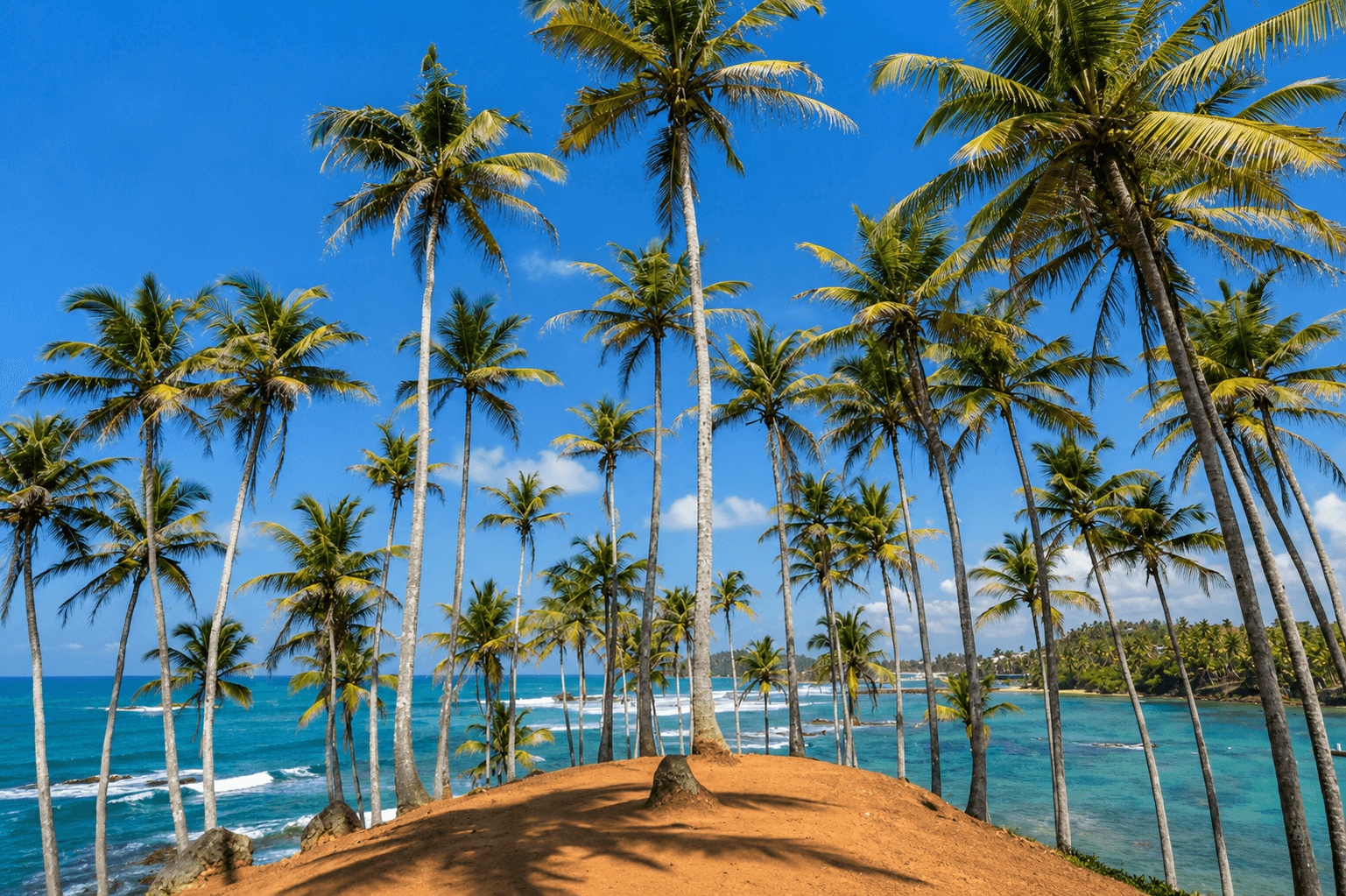
Mirissa is a crescent of sand on the south coast, lined with palms and small hotels, with a working fishing harbour at one end. In the December to April season this route is built for, the sea is generally calm and the beach is at its best.
The first afternoon is best spent doing very little: a swim, a rest in the shade and a walk along the sand at sunset. Parrot Rock, a small outcrop reachable at low tide, is a short walk from the main beach and a pleasant first-evening viewpoint.
Beach safety on your first coastal day
Sri Lanka's south coast is beautiful but has strong currents in places, even in the calm season. Swim where locals swim, watch for red flags and ask your hotel about conditions. Avoid swimming after drinking or after dark.
Sea turtles are sometimes seen close to shore. Watch from a distance, never touch or feed them, and avoid any operator that offers turtle handling. These habits matter on the coast, just as they did in Yala.
Planning day 10 of the 14-day route
Decide on the dawn safari the evening before and book your jeep through your hotel or driver. Pack swimwear and sun protection somewhere easy to reach, so you can head for the beach as soon as you arrive in Mirissa.
Lankan Stays & Trails times the day 10 drive around the safari and suggests a lunch stop on the way. Day 11 of this series covers whale watching from Mirissa.
Frequently asked questions
How long is the drive from Yala to Mirissa?
Roughly two and a half to three hours from Tissamaharama to Mirissa, along the coast via Hambantota, Tangalle and Matara. With a lunch stop and a visit to Dondra Head, allow closer to four hours. The road is flat and easy.
Is a morning safari in Yala better than an afternoon one?
Both have strengths. Mornings are cooler, often better for leopards and birds, and have softer light. Afternoons suit travellers arriving from Ella, as on day 9. Doing both, as the 14-day route allows, gives the best overall chance of good sightings.
What is there to see between Yala and Mirissa?
Tangalle's quiet beaches, the Hummanaya blowhole near Kudawella, Dondra Head lighthouse at the island's southernmost point, and Matara's small Dutch-era fort. Most travellers choose one or two stops rather than all of them.
Is Mirissa good for swimming?
In the December to April season, generally yes, with calmer water in the sheltered parts of the bay. Currents can still be strong in places, so swim near others, watch for flags and ask your hotel about conditions. From May to September the sea is usually rough.
Should I stay in Mirissa or somewhere else on the south coast?
Mirissa suits whale watching and has a lively but relaxed atmosphere. Weligama suits beginner surfers, Unawatuna suits travellers who want Galle nearby, and Tangalle suits those seeking quiet. The 14-day route uses Mirissa because it is the main whale-watching harbour.
Can I see turtles in Mirissa?
Sometimes, close to shore or while snorkelling in calm conditions. Watch from a distance and never touch, feed or chase them. Avoid hatcheries or operators that offer handling. Responsible observation is the only ethical way to enjoy them.