
Quick answer
On day 6 of a 7-day Sri Lanka itinerary, spend the day around Mirissa on the south coast, either on a whale-watching boat trip, which typically leaves around 6 to 7am and lasts roughly four to six hours in the season from about December to April, or on a full beach day. Coconut Tree Hill, Secret Beach and a sunset at Parrot Rock fill the afternoon. This is the only day of the week without a transfer.
Key takeaways
- Whale watching off Mirissa runs roughly December to April, with blue whales the main attraction.
- Boats typically leave around 6 to 7am and spend roughly four to six hours at sea; seasickness is common.
- Mirissa's main beach is usually calm for swimming in the December to April season, with rougher water from May.
- Coconut Tree Hill and Secret Beach are both within a short walk or tuk-tuk ride of the main bay.
- Day 6 is the week's only day without a transfer, so resist filling it completely.
Whale watching or a beach day
Mirissa is one of the best places in the world to see blue whales, and from roughly December to April boats leave the harbour every morning to look for them, along with sperm whales and spinner dolphins on many trips. Sightings are frequent in season but never guaranteed.
A whale-watching trip takes most of the morning, typically four to six hours, and the open sea is often choppy; many passengers are seasick. Travellers who are tired by day 6 or prone to seasickness may prefer a full beach day and leave the whales for another trip.
- →Choose whale watching if it is the season and seeing a blue whale is on your list.
- →Choose a beach day if you are tired, prone to seasickness, or travelling outside the season.
- →A whale trip still leaves the afternoon free for the beach.
How a Mirissa whale-watching trip works
Most whale-watching boats leave Mirissa harbour around 6 to 7am, with breakfast served on board and a return around midday. The whales are found in deep water several kilometres offshore, which is why the journey out takes time and why the sea state matters.
Choose an operator that keeps a respectful distance and does not chase or crowd the animals, since some boats cluster aggressively around a single whale. Take seasickness tablets before boarding rather than after, sit low and near the back of the boat, and bring sun protection, because shade on deck is limited.
Larger boats tend to be more stable and have better toilets and shade, while smaller ones can feel more personal but move more in a swell. Some operators offer a second trip free of charge if no whales are seen, which is worth asking about, though on a 7-day itinerary there is rarely a spare morning to use it.
- →Departure around 6 to 7am; return around midday.
- →Take seasickness tablets before boarding, not after symptoms start.
- →Choose an operator that does not chase or crowd the whales.
- →Bring a hat, sunscreen and a light layer for the early start.
A beach day in and around Mirissa
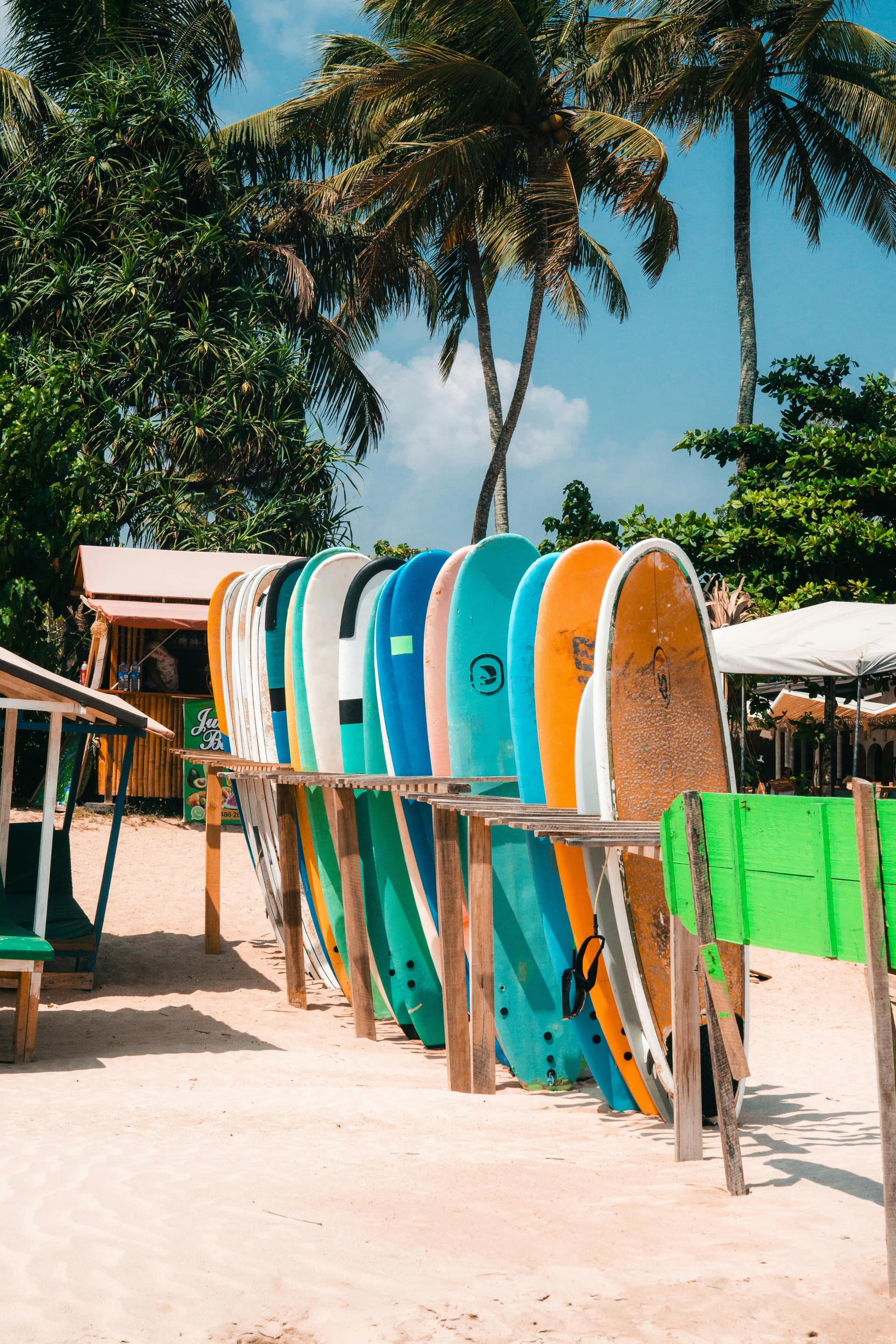
Mirissa's main beach is a gently curving bay lined with restaurants and loungers, and in the December to April season the water at the western end is usually calm enough for swimming. Currents can be strong elsewhere and in other months; swim where others are swimming and heed any flags.
Secret Beach, a small cove a short tuk-tuk ride east of the main bay, is quieter and good for snorkelling when the sea is flat. Weligama, around 15 minutes away, has a long, gentle bay suited to beginner surf lessons if you want something active.
- →Mirissa main beach: calmer at the western end in season.
- →Secret Beach: a short tuk-tuk ride, quieter, good for snorkelling on flat days.
- →Weligama: around 15 minutes away, gentle waves for beginner surfers.
Coconut Tree Hill and a Mirissa sunset
Coconut Tree Hill, a small headland covered in tall palms at the eastern end of Mirissa, has become one of the most photographed spots on the south coast. It is a short walk from the beach and best in the late afternoon, though it is busy around sunset.
Parrot Rock, a small rocky islet at the western end of the main beach, is the other sunset spot and can be reached on foot at low tide. After dark, the beachfront restaurants set out tables on the sand and grill the day's fish.
When choosing seafood from a display, ask for the price by weight before it is cooked, since the bill for a large fish or lobster can surprise people who assume a set price. Beachfront places are lively rather than refined, and a short walk back from the sand often finds better value.
- →Coconut Tree Hill: arrive an hour before sunset to avoid the busiest window.
- →Parrot Rock: reachable on foot at low tide from the western end of the beach.
- →Seafood: confirm the price by weight before it goes on the grill.
Mirissa, Weligama or Unawatuna for nights 5 and 6
The 7-day Sri Lanka itinerary names Mirissa as the south-coast base because it has the whale-watching harbour, a swimmable bay in season and an easy evening scene. It is not the only sensible choice, and the right one depends on what you want from the last two nights of the week.
Weligama, around 15 minutes west, has a long, shallow bay that suits beginner surf lessons and a quieter, more local town. Unawatuna, closer to Galle, has a sheltered crescent beach and puts Galle Fort about 15 minutes away on day 7. Tangalle, roughly 45 minutes east, has wide, empty beaches but adds time to the airport drive.
Whichever you choose, pick accommodation within walking distance of the beach. Much of the value of these two nights is being able to wander down to the sand at sunset without organising a tuk-tuk.
- →Mirissa: whale boats, a lively bay, the default choice.
- →Weligama: beginner surf and a quieter, more local feel.
- →Unawatuna: a sheltered bay about 15 minutes from Galle Fort.
- →Tangalle: wide, quiet beaches, but further from the airport.
Day 6 outside the December to April season
From roughly May to September, the south-west monsoon brings rougher seas, stronger currents and more rain to Mirissa, and whale-watching trips from here largely stop. Travellers on the 7-day route in these months are usually better on the east coast version, with Trincomalee for whales and calm water.
If you are on the south coast outside the season anyway, day 6 works well as a Galle day instead: the fort's ramparts, museums and cafes do not depend on the sea, and Galle can then be done more slowly than on day 7.
Why day 6 is kept light
The 7-day Sri Lanka itinerary keeps day 6 deliberately light because five consecutive days of early starts and long drives catch up with most travellers. A single day with nothing scheduled after lunch is what stops the week feeling like a race.
It is also the evening to pack properly for the flight. Day 7 involves Galle Fort, lunch and a long expressway drive, and bags packed the night before mean the final morning can start at the fort rather than in the hotel room.
Lankan Stays & Trails books whale-watching boats only with operators that follow distance guidelines, and leaves day 6 afternoons free by design. Day 7 continues to Galle Fort and the airport.
Frequently asked questions
Is one day in Mirissa enough?
On a 7-day trip, one full day plus the arrival evening is enough for a whale-watching trip or a beach day, Coconut Tree Hill and a sunset. It is the only rest day of the week, so it feels short, but it is enough to see Mirissa properly.
What is the best month for whale watching in Mirissa?
Roughly December to April is the season, with many operators reporting the calmest seas and frequent blue whale sightings from around January to March. Sightings are never guaranteed, and trips largely stop once the south-west monsoon arrives around May.
How long is the whale-watching trip in Mirissa?
Typically four to six hours, leaving the harbour around 6 to 7am and returning around midday. The whales are several kilometres offshore in deep water, so much of the time is spent travelling out and searching, often in a choppy sea.
Is it safe to swim in Mirissa?
In the December to April season the western end of the main beach is usually calm enough for swimming. Currents can be strong elsewhere and in the May to September monsoon months, so swim where others are swimming, heed flags and ask locally.
Is Coconut Tree Hill worth visiting?
It is a short walk from Mirissa beach and worth a look, especially in late afternoon. It has become very busy around sunset with people queuing for photographs, so arriving an hour before sunset or early in the morning gives a calmer experience.
What can I do in Mirissa if it rains?
Drive around 45 minutes to Galle Fort, whose ramparts, museums, shops and cafes work in any weather. A cooking class, a spa treatment or a visit to the stilt fishermen at Koggala, if they are out, are other options between showers.