
Quick answer
The 12-day Alps-to-beach Sri Lanka itinerary works with young children by adjusting expectations rather than the route itself: treat the roughly 1,200-step Sigiriya climb as optional or partial rather than compulsory, split the roughly 4-5 hour transfer to the south coast with a lunch stop, and pick hotels with a pool at each of the five stops rather than prioritising the best view. Nuwara Eliya's cooler evenings also mean packing a layer most Swiss families would otherwise leave at home.
Key takeaways
- Sigiriya's climb of roughly 1,200 steps typically takes 2-3 hours return for an adult, and is genuinely harder to judge for children under about 7 or 8, so build in an early start and a clear turnaround point.
- The roughly 4-5 hour transfer from Ella or the hill country down to the south coast is the single hardest day of the route for young children and is worth splitting with a fixed lunch or play stop.
- A pool at the hotel matters more for a family with young children than at almost any other stop, particularly in Nuwara Eliya where outdoor swimming is not realistic given the cooler air.
- Nuwara Eliya's evening temperatures, which can drop near or below roughly 10 degrees Celsius especially between December and February, catch out families who packed only for tropical heat.
- The Kandy-Ella scenic railway's roughly 6-7 hour duration is long for young children unless broken up, and travelling only the shorter, more scenic middle section is a realistic alternative to the full journey.
Keeping the same route, changing the pace
The fixed 12-day route, 2 nights Cultural Triangle, 2 Kandy, 3 hill country, 4-5 south coast, does not need restructuring for a family with young children. What changes is how much is packed into each day and how firmly the schedule is held to. Families who try to run this itinerary at the same pace as a couple typically end up with at least one exhausted, overstimulated afternoon somewhere around day 5 or 6.
The practical fix is to treat two or three specific legs as needing deliberate slowing down rather than reworking the whole trip, because most of the route, the Kandy lake walk, a tea estate stroll, beach days on the south coast, is naturally forgiving of a slower pace and short attention spans.
It also helps to think of the 12 days in two categories rather than one undifferentiated schedule: days built around a single demanding activity (Sigiriya, the scenic railway, the coast transfer) and days that are naturally open-ended (Kandy, Nuwara Eliya, the south coast stretch). Front-loading rest around the first category, rather than assuming every day needs the same amount of downtime, tends to work better in practice.
Sigiriya: treating the climb as optional
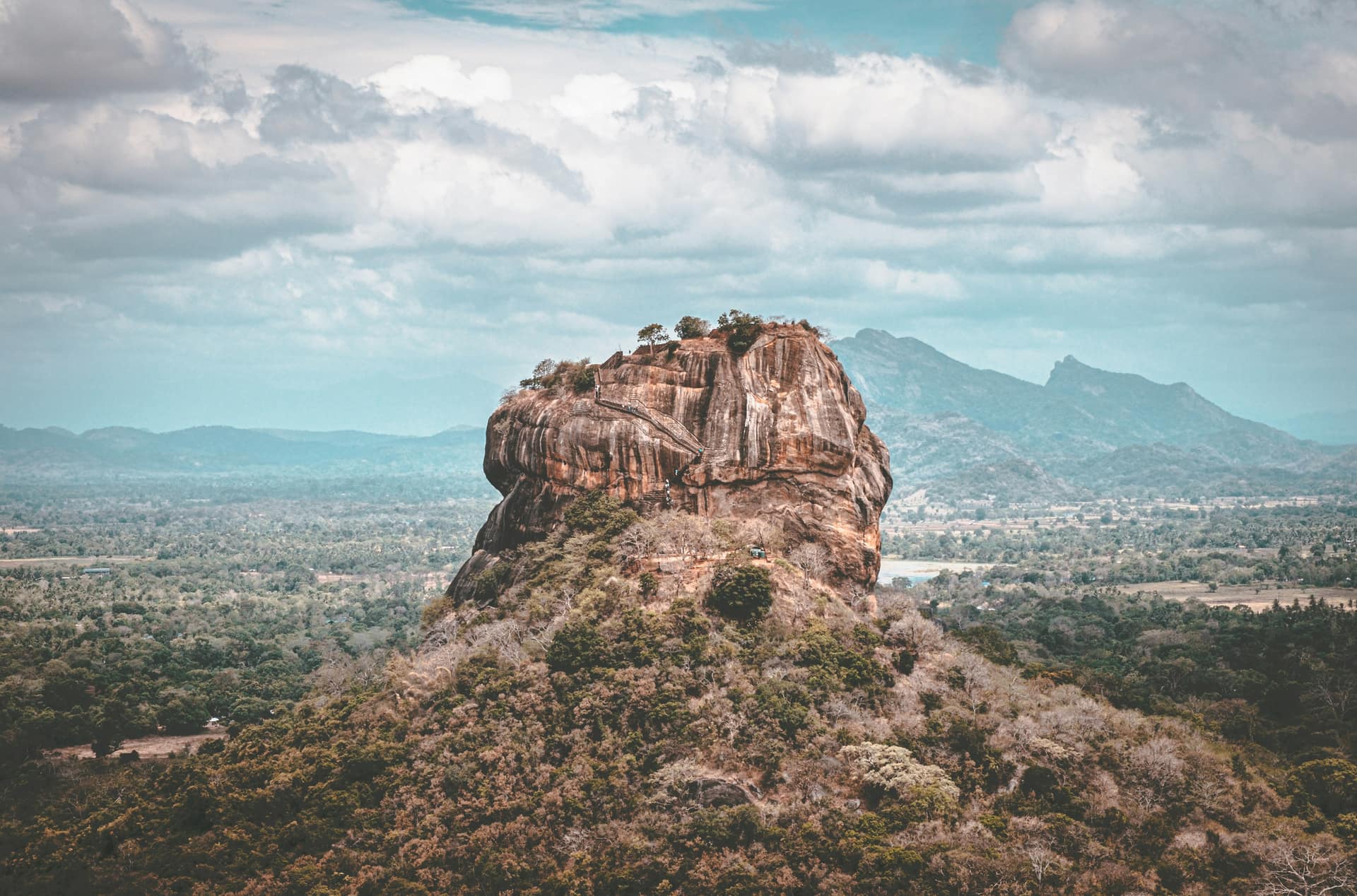
Sigiriya rock fortress on day 2 involves roughly 1,200 steps and takes an adult roughly 2-3 hours return, much of it in direct sun once the morning progresses. For families with children under about 7 or 8, the honest approach is to frame the summit as a bonus rather than the goal, since carrying a tired child down uneven stone steps is not something most parents want to be doing at midday.
Starting at or before the gates open is worth doing regardless of age, both for the cooler air and the thinner crowds, but building in an agreed turnaround point, often around the lion's paw terrace roughly two-thirds of the way up, gives the day a natural exit if a child has had enough.
Some families choose to split the climb between two adults, with one parent turning back with a tired child while the other continues to the summit, rather than the whole group abandoning the attempt together. Booking a guide who is used to travelling with children can also help, since pacing the steps and reading a child's energy levels is a genuinely different skill from guiding an able-bodied adult group.
- →Start as early as the site allows, both for temperature and for a lighter crowd on the steps.
- →Agree a turnaround point in advance rather than deciding under pressure partway up.
- →Carry more water than feels necessary; the open stone sections have little shade.
Pacing the day 5 scenic railway
The Kandy-Ella scenic railway on day 5 is one of the highlights Swiss families specifically build this route around, but the full journey runs roughly 6-7 hours, which is a long stretch for young children even with tea estates and misty ridgelines to look at. Reserved seats with a window and enough space to move around matter more here than on almost any other leg.
One realistic adaptation is travelling only the shorter, more dramatic middle section of the line by road-and-rail combination rather than the full journey, joining or leaving the train partway through. A local operator can generally advise which combination suits a specific family's tolerance for a day on a train.
Whichever version of the journey is chosen, packing simple snacks and a change of activity for the carriage matters more than trying to keep a young child seated and quiet for hours at a time. The train's open sections and vestibules between carriages also give restless children somewhere to stand and watch the view move past, which is worth knowing about in advance rather than discovering on the day.
Breaking up the transfer to the south coast
Day 8's transfer from the hill country down to Mirissa or Unawatuna is roughly 4-5 hours, the longest single drive on the route, and it is the day most families with young children remember as the hardest rather than the Sigiriya climb. Treating it purely as a travel day, with no sightseeing built in either side, is the right instinct, but it still needs active planning rather than just endurance.
A fixed lunch stop roughly halfway, ideally somewhere with space to walk around rather than a roadside table, breaks the drive into two more manageable halves. Packing snacks, a tablet loaded in advance, and a change of clothes for the inevitable spill are ordinary precautions that matter more on this leg than any other.
- →Plan a fixed, walkable lunch stop roughly halfway through the roughly 4-5 hour drive.
- →Load entertainment for the vehicle in advance; signal along parts of this route is patchy.
- →Time departure for the morning rather than after lunch, so the arrival at the coast still has usable daylight.
- →Ask the driver in advance about a second, shorter stop if a child needs it; there is generally no penalty for adding one.
Choosing accommodation: pool over view
At each of the five stops on this route, a hotel with a proper pool does more for a family with young children than a spectacular view or a heritage building, simply because it gives a child somewhere to release energy that does not depend on the day's schedule. This is worth prioritising even in Kandy and the Cultural Triangle, where many properties otherwise sell themselves on outlook rather than facilities.
In Nuwara Eliya specifically, a pool is often unheated and the cooler air (daytime highs are typically roughly 16-20 degrees Celsius) makes outdoor swimming unappealing for most children, so an indoor games room, a garden, or simply a larger family room becomes the more useful amenity to check for at that one stop.
Connecting rooms or a suite with a partition are also worth asking about at every stop, since young children often sleep better close to a parent but the whole family still needs somewhere for adults to sit once the children are down. Confirming this in advance with the hotel, rather than assuming a standard double will flex to fit a family of four, avoids an awkward conversation at check-in.
- →Cultural Triangle and Kandy: a pool is genuinely usable most of the year given the warmer air.
- →Nuwara Eliya: prioritise indoor space or a garden over a pool, given the cooler daytime temperatures.
- →South coast: a shallow, gently sloping pool or a calm swimming beach matters more than proximity to surf breaks.
Packing for the temperature swing between stops
This route runs from tropical heat at the Cultural Triangle and south coast (roughly 28-32 degrees Celsius) to genuinely cool hill-country air, with Nuwara Eliya's evenings able to drop near or below roughly 10 degrees Celsius, especially December to February. Families packing only for a tropical beach holiday are routinely caught out by this swing, particularly for children who run cold more easily than adults.
A light fleece or jacket, closed shoes, and at least one pair of long trousers per child for the two Nuwara Eliya nights and the scenic railway morning cover the gap, without needing to pack for anything close to genuine Alpine cold.
It is worth packing this layer somewhere accessible rather than buried at the bottom of a suitcase, since the temperature change happens over the course of a single travel day on the scenic railway rather than gradually. A child who is dressed for the tropical heat of the Cultural Triangle at breakfast can be genuinely cold by the time the train reaches the higher tea estates that same afternoon.
How Lankan Stays & Trails adjusts this route for families
We build this exact 12-day route for Swiss families with young children by keeping the five stops and the scenic railway leg intact, but adjusting daily start times, splitting the coast transfer with a planned stop, and steering hotel choices at each location towards pools and family rooms rather than adult-oriented boutique properties.
None of this changes the structure the pillar itinerary sets out, and a family group can still cover the same ground in the same 12 days, provided the pace at Sigiriya, the railway day and the coast transfer is planned around the children rather than the schedule.
In practice this means the planning conversation with a family happens before arrival rather than being improvised on the ground: agreeing turnaround points for Sigiriya, deciding whether to ride the full scenic railway or a shorter section, and choosing which hotels at each stop genuinely suit young children rather than simply having a family room listed on a website.
Frequently asked questions
Is Sigiriya worth attempting with young children?
It can work with an early start and a flexible attitude to the summit, but the roughly 1,200 steps and 2-3 hour return time are genuinely demanding for children under about 7 or 8. Treating the climb as optional, with an agreed turnaround point, is more realistic than committing to the top.
How do you break up the long transfer to the south coast with kids?
The roughly 4-5 hour drive from the hill country to Mirissa or Unawatuna is best split with a fixed, walkable lunch stop roughly halfway. Departing in the morning rather than after lunch also keeps arrival at the coast within usable daylight for children to settle in.
Do young children need to do the full Kandy-Ella scenic railway?
Not necessarily. The full journey runs roughly 6-7 hours, which is long for young children, so travelling only the shorter, more scenic middle section by combining road and rail is a reasonable alternative to the full ride.
What should families pack for Nuwara Eliya specifically?
A light fleece or jacket and closed shoes for each child, since evening temperatures in Nuwara Eliya can drop near or below roughly 10 degrees Celsius, especially December to February, a genuine contrast to the tropical heat elsewhere on this route.
Should hotel choice change for families with young children on this route?
Yes, prioritising a usable pool or family room over a view or heritage character makes each of the five stops easier to manage, with the exception of Nuwara Eliya, where the cooler air makes indoor space or a garden more valuable than a pool.
Is this 12-day route too long for young children?
Not inherently, but it needs deliberate pacing rather than the same schedule an adult couple might follow. Slowing down at Sigiriya, the scenic railway and the south-coast transfer, while leaving the rest of the route largely as planned, generally keeps the trip manageable.
Can a private driver-guide help manage this route with young kids?
Yes, a driver-guide who knows the route can time departures around nap schedules, suggest walkable lunch stops on the long transfer days, and adjust the daily plan if a child has had enough at Sigiriya or elsewhere.