
Quick answer
The ashoka tree of the Ramayana is usually identified as Saraca asoca, a small evergreen tree with clusters of orange and red flowers, sacred in Hindu tradition. In the epic, Sita sits beneath one in Ashok Vatika. Around Seetha Eliya the natural forest is cool montane jungle rather than an ashoka grove, but devotees treat the whole wooded valley as Sita's garden. Ashoka trees grow in Sri Lankan temple grounds and gardens, and guides can point out examples.
Key takeaways
- Ashok Vatika means the grove of ashoka trees, where Sita was held.
- The ashoka of tradition is usually identified as Saraca asoca, with orange-red flowers.
- The forest around Seetha Eliya is mainly cool montane jungle.
- Devotees treat the whole wooded valley as Sita's garden.
- Hakgala garden lets you explore the wider forest landscape on foot.
What Ashok Vatika means
In Sanskrit, ashoka means without sorrow, and vatika means a garden or grove. The name is full of irony in the Ramayana: Sita, held in the grove without sorrow, spends her days there in the deepest grief, refusing Ravana and waiting for Rama.
Valmiki describes the grove as beautiful, with flowering trees, birdsong and pools, a pleasure garden fit for a king. Sita sits beneath a single tree, a shimshapa or ashoka depending on the version, and it is in its branches that Hanuman hides before revealing himself to her.
Pilgrims at Seetha Eliya often recall this scene. The idea of a grove that should have brought joy but became a place of trial runs through the devotional songs and stories told at the temple.
- →Ashoka: without sorrow.
- →Vatika: garden or grove.
- →Sita sits beneath a tree; Hanuman hides in its branches.
The ashoka tree itself
The ashoka tree of Hindu tradition is usually identified with Saraca asoca, a small evergreen tree native to South Asia. It has glossy leaves, drooping new shoots and dense clusters of orange to red flowers that appear in the warmer months. The tree is sacred in Hinduism, Buddhism and Jainism.
In Hindu belief the ashoka is linked with love, fertility and the removal of grief, and its flowers are offered in some rituals. Women in parts of India worship the tree on certain festival days. Its association with Sita has deepened that symbolism over centuries.
Another tree, the tall mast tree often sold as the false ashoka, is common in gardens across South Asia and is sometimes confused with it. If you see a tall, narrow tree with long wavy leaves, that is probably the mast tree rather than the true ashoka.
- →True ashoka: small tree with orange-red flower clusters.
- →Sacred in Hindu, Buddhist and Jain tradition.
- →Often confused with the tall mast tree.
The real forest at Seetha Eliya
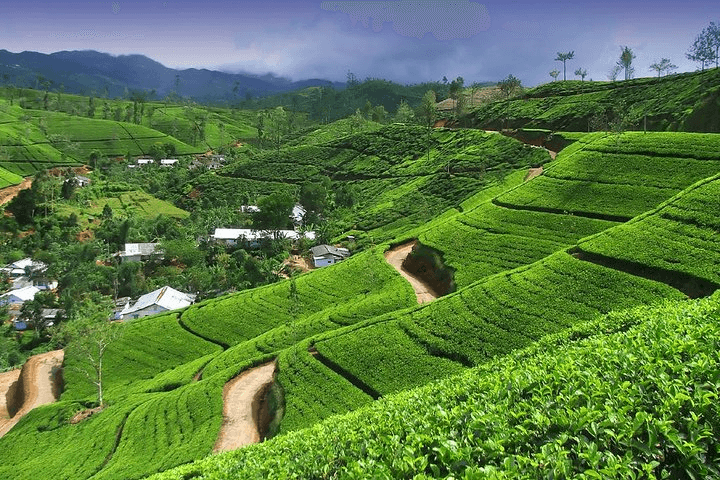
The natural vegetation around Seetha Eliya is montane forest: moss-hung trees, tree ferns, rhododendron and dense undergrowth, adapted to the cool, wet climate of the high hills. Much of the surrounding land has been cleared for vegetables and tea, but forest still covers the slopes above the temple.
The true ashoka prefers warmer, lower country, so you are unlikely to find a natural ashoka grove at this height. Devotees do not see this as a problem. For them, the sacred grove is the whole wooded valley, and the epic's description of flowering trees and streams matches the place well enough.
The Hakgala Strict Nature Reserve rises above the area and protects some of the best remaining montane forest in the hills. Its slopes form the backdrop to both the temple and Hakgala garden.
Where to see the forest and the trees
The easiest place to explore the landscape is Hakgala Botanical Garden, a few kilometres further along the road. Its paths climb through planted collections and into the edge of natural forest beneath Hakgala rock, and many pilgrims treat a walk there as part of the Ashok Vatika experience.
At the temple itself, simply look up and around. The forest across the stream, the ferns on the banks and the mist moving through the trees give a good sense of what the grove of tradition might have felt like.
Ashoka trees are planted in some temple grounds and gardens in warmer parts of Sri Lanka. Ask your guide to point one out when you pass, especially if you are visiting temples around Kandy or on the west coast.
- →Hakgala garden: forest paths a short drive away.
- →Temple: forested slopes across the stream.
- →Lower country: planted ashoka trees in some temples.
Why the tree matters to pilgrims
For pilgrims, the ashoka tree is a reminder of Sita's endurance. She sat beneath it for months, as tradition tells, refusing comfort and holding to her faith in Rama. Many women see her patience there as a model for facing their own hardships.
The tree also marks the moment of hope in the story: Hanuman's arrival. Devotional songs describe him dropping from the branches with Rama's ring, and that image is painted on the temple walls at Seetha Eliya.
Some families bring ashoka leaves or flowers from home as offerings, or press a leaf from the area into a book as a keepsake. Picking from protected forest is not allowed, so take only what is offered at stalls or fallen in public areas.
Visiting the forest with respect
The forests above Seetha Eliya are protected, and the strict nature reserve is closed to casual visitors. Stay on public paths, do not pick plants and keep noise low, especially near the temple.
Leeches can be active on forest paths after rain. Long trousers and closed shoes help on walks at Hakgala, though shoes come off at the temple itself.
Lankan Stays & Trails guides can combine the temple and Hakgala into a relaxed half day, pointing out the forest plants and telling the Ashok Vatika story as you walk.
- →Stay on public paths; the reserve is protected.
- →Do not pick plants from the forest.
- →Expect leeches on paths after rain.
Frequently asked questions
Are there ashoka trees at the Seetha Amman Temple?
The forest around the temple is mostly cool montane jungle, and the true ashoka prefers warmer, lower country. Devotees treat the whole wooded valley as Sita's grove. Ashoka trees are planted in some temples and gardens in lower parts of Sri Lanka.
What does an ashoka tree look like?
The true ashoka, usually identified as Saraca asoca, is a small evergreen tree with glossy leaves and dense clusters of orange to red flowers. It is often confused with the tall, narrow mast tree, sometimes called the false ashoka, which is common in gardens.
Why is it called Ashok Vatika?
Ashoka means without sorrow and vatika means garden or grove, so the name means the grove of ashoka trees. The irony that Sita spent her captivity there in deep grief is often noted by storytellers and devotional singers.
Is Hakgala garden the real Ashok Vatika?
Tradition links both the Seetha Eliya valley and the Hakgala area to Ashok Vatika. The temple is the devotional heart, and the garden offers a larger landscape of forest and flowers. Most pilgrims visit both and see them as parts of the same sacred place.
Can I walk in the forest near the temple?
The strict nature reserve above the area is closed to casual visitors. Hakgala Botanical Garden is the best place to walk among similar forest, on marked paths. Wear long trousers and closed shoes there, and expect leeches after rain.
Can I take a leaf or flower as a souvenir?
Do not pick from protected forest. Flowers and leaves sold at stalls for offerings are fine, and a fallen leaf from a public area makes a simple keepsake. Check your home country's rules on bringing plant material through customs.
When do ashoka trees flower?
The true ashoka usually flowers in the warmer months, with orange and red clusters appearing on the branches and trunk. Flowering times vary with altitude and rainfall. Ask a guide or gardener if any planted trees are flowering during your trip.