
Quick answer
The most common mistakes on the 12-day Alps-to-beach Sri Lanka itinerary are booking the Kandy-Ella scenic railway too late for reserved seating, scheduling sightseeing on top of day 1's arrival transfer or day 8's roughly 4 to 5 hour drive to the coast, and packing only tropical clothing while underestimating how cold Nuwara Eliya gets at night, especially December to February, when temperatures can drop near or below 10 degrees Celsius.
Key takeaways
- Reserved seats on the Kandy-Ella scenic railway sell out well in advance in peak season, roughly December to March, and should be booked weeks to months ahead, not on arrival in Sri Lanka.
- Day 1's roughly 3 to 4 hour arrival transfer and day 8's roughly 4 to 5 hour Ella-to-coast drive are both genuine travel days and should not carry a scheduled activity either side.
- Nuwara Eliya, at roughly 1,868 metres elevation, can drop near or below 10 degrees Celsius at night, especially December to February, a genuine surprise for travellers packing only for a tropical beach trip.
- Underestimating the roughly 1,200-step Sigiriya climb's difficulty in mid-morning heat is a recurring complaint; an early start avoids both the heat and the crowds.
- Treating the whole trip as one packing list, rather than layering for both roughly 28 to 32 degree coastal heat and roughly 16 to 20 degree hill-country days, leads to either an overloaded bag or a cold, uncomfortable Nuwara Eliya stretch.
Mistake one: booking the scenic railway too late
The single most common and most avoidable mistake on this route is leaving the Kandy-Ella scenic railway booking until close to travel dates. Reserved second and third class seats on this roughly 6 to 7 hour journey sell out well in advance during the route's own best season, roughly December to March, and unreserved seating is a considerably less comfortable way to spend most of a day.
Travellers who discover this too late are typically left choosing between an unreserved carriage, a different, less scenic departure time, or dropping the train altogether for a road transfer, none of which match the experience the route is actually built around. Booking weeks to a few months ahead, ideally through a local operator, avoids this entirely.
A related, second-order version of this mistake is booking any Kandy-Ella seat rather than the specific departure that keeps the best scenery in daylight. A later train can mean finishing the ride into Nanu Oya or Ella after the light has already faded on the most photogenic tea-estate stretch, so it is worth confirming the exact departure time against current timetables rather than just the date.
- →Reserved second class or observation carriage seats typically need booking weeks to a few months ahead in peak season.
- →Unreserved carriages can mean standing for part of the roughly 6 to 7 hour journey.
- →Confirm the specific departure time, not just the date, against current timetables before booking.
Mistake two: over-scheduling the two big transfer days
Day 1 (arrival plus a roughly 3 to 4 hour transfer to the Cultural Triangle) and day 8 (the roughly 4 to 5 hour drive from Ella down to the south coast) are the route's two genuine travel days, and a recurring mistake is scheduling a sightseeing stop or activity on either side of them without allowing for how much a long-haul flight or a multi-hour road transfer actually takes out of a day.
On day 1 specifically, travellers who push straight into an evening activity after a 12 to 17 hour journey from Switzerland tend to arrive at day 2's Sigiriya climb already tired, undermining what should be one of the trip's better mornings. On day 8, treating the transfer as pure travel time rather than trying to fit in a stop along the way generally makes for a smoother arrival at the coast.
Fatigue on this route tends to be cumulative rather than isolated to a single bad day. A tiring arrival on day 1 can leave a traveller under-recovered for the Sigiriya climb on day 2, which in turn colours how day 3's onward transfer to Kandy feels, so protecting the two big travel days is less about that day alone and more about keeping the whole first week on an even keel.
- →Day 1: avoid scheduling sightseeing after the arrival transfer; a settle-in evening works better.
- →Day 8: treat the Ella-to-coast drive as a dedicated travel day, not a day for extra stops.
- →Both days already carry enough physical load without an added activity.
- →A short coffee or viewpoint stop along the day 8 drive is fine; a full sightseeing detour generally is not.
Mistake three: underestimating the Nuwara Eliya cold
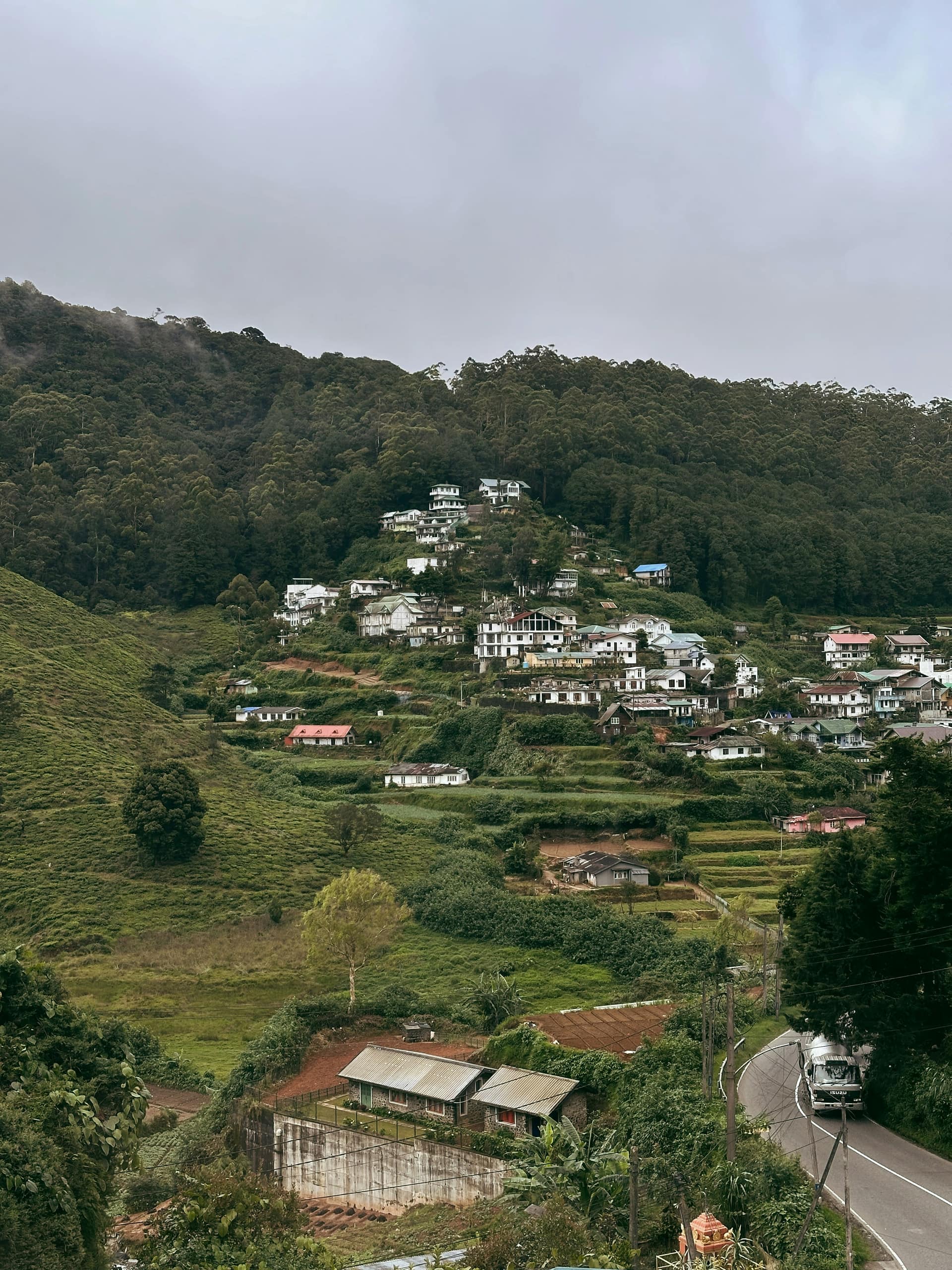
Nuwara Eliya sits at roughly 1,868 metres elevation, and Horton Plains higher still at roughly 2,100 to 2,300 metres, which means daytime highs of roughly 16 to 20 degrees Celsius and nights that can drop near or below 10 degrees, particularly December to February. Travellers packing exclusively for a tropical beach trip are regularly caught out here, arriving with only light cotton clothing for what turns out to be a genuinely cool couple of days and a cold pre-dawn departure if visiting Horton Plains.
This is not an Alpine cold by any Swiss standard, but it is enough to need a proper layer, a warm layer for evenings and the Horton Plains dawn excursion, and closed shoes rather than sandals for that particular stretch of the route.
A practical fix, if a bag is already tight for space, is to travel light on warm layers through the Cultural Triangle and Kandy and pick up an inexpensive fleece or wool item in Nuwara Eliya itself, where tea-estate wool is sold locally. Either way, the mistake to avoid is assuming the whole 12 days sits at one climate, since the route genuinely moves through three distinct ones: humid Cultural Triangle heat, cool hill-country air, and warm coastal humidity again by day 8.
- →Pack at least one warm layer specifically for Nuwara Eliya and Ella evenings.
- →The Horton Plains dawn excursion (roughly 1.5 to 2 hours each way) is notably colder before sunrise.
- →Closed, comfortable shoes matter more here than on the rest of the route.
- →Long trousers or leggings are worth having for the two Nuwara Eliya nights even if not needed elsewhere.
Other recurring mistakes worth flagging
Starting the Sigiriya climb late in the morning rather than early is another common misstep; the roughly 1,200-step climb is noticeably harder in the late morning heat, and starting early also avoids the busiest crowds on the rock itself. A related mistake is skipping breakfast before an early Sigiriya start and then feeling the effects of the climb on an empty stomach.
On the coast leg, assuming whale watching is guaranteed on any given day is another avoidable disappointment; the activity is genuinely season and weather dependent, roughly November to April, and boats occasionally do not go out or do not sight whales even in season.
A quieter but still recurring mistake sits earlier in the planning process: leaving the Electronic Travel Authorisation application until the last minute, or assuming the currency reference used when budgeting will hold exactly across the trip. The ETA is applied for online rather than through a consulate, and while it is not typically a slow process, applying with some margin before departure avoids any last-minute stress. Budgeting mostly in USD with only a rough CHF conversion in mind, rather than a fixed figure, also avoids disappointment if exchange rates move before travel.
- →Starting the Sigiriya climb too late in the morning, rather than early.
- →Assuming whale watching is guaranteed rather than season and weather dependent.
- →Not confirming the exact Electronic Travel Authorisation status before departure from Switzerland.
- →Budgeting to a fixed CHF figure rather than treating the conversion as an approximate, moving reference.
How to avoid these mistakes in practice
Most of these mistakes share a common fix: treating the fixed route's structure, its transfer days, its rail leg and its elevation changes, as fixed constraints to plan around rather than flexible details to sort out once in Sri Lanka. Booking the train early, protecting the two transfer days from extra activity, and packing a genuine layer system rather than one climate's worth of clothing solve the majority of what goes wrong on this route.
We at Lankan Stays & Trails flag these three points specifically to every Swiss traveller booking this route, since they are the most common source of avoidable frustration on an otherwise well-tested itinerary.
None of these mistakes are difficult to fix once identified, and most travellers who run this route with a local operator handling the train booking, the daily driving schedule and the packing guidance simply never encounter them. The route itself is genuinely well-tested; it is almost always the planning shortcuts around it, not the itinerary's structure, that cause the recurring frustration described above.
Frequently asked questions
What is the most common mistake on the 12-day Alps-to-beach itinerary?
Booking the Kandy-Ella scenic railway too late. Reserved seats sell out well in advance in peak season, roughly December to March, so this should be booked weeks to months ahead rather than left until arrival in Sri Lanka.
Should I plan activities on the day 1 arrival transfer?
Generally no. Day 1 already involves a roughly 3 to 4 hour transfer to the Cultural Triangle after a long-haul flight, and adding sightseeing on top of it tends to leave travellers tired for day 2's Sigiriya climb.
How cold does it actually get in Nuwara Eliya?
Daytime highs run roughly 16 to 20 degrees Celsius, and nights can drop near or below 10 degrees, especially December to February, given the town's elevation of roughly 1,868 metres. It surprises travellers who pack only for the coast.
Is it a mistake to climb Sigiriya later in the morning?
It is not ideal. The roughly 1,200-step climb is noticeably harder in late-morning heat and busier with visitors, so an early start is generally recommended over a mid-morning or afternoon climb.
Is whale watching guaranteed on the south coast leg?
No, it is season and weather dependent, roughly November to April, and treating it as guaranteed is a common source of disappointment. Boats occasionally do not go out or do not sight whales even within season.
What should I do differently to avoid these mistakes?
Book the scenic railway early, avoid scheduling sightseeing on the two main transfer days (day 1 and day 8), and pack a genuine warm layer specifically for the Nuwara Eliya and Horton Plains stretch of the route.