
Quick answer
The most common Sigiriya and Ella planning errors are single-night stops at either, booking the Kandy to Ella train last rather than first, underestimating drive times, climbing Sigiriya in the middle of the day, adding too many inland bases, reversing the route order without a reason, and treating the middle of the day in the dry zone as usable time.
Key takeaways
- One night at either anchor produces no usable full day, because transfers consume both ends.
- The train is the least flexible element and should be booked before accommodation.
- Map applications routinely understate Sri Lankan drive times by a third or more.
- Climbing Sigiriya after about nine means heat, crowds and a one-way staircase.
- More than about four inland bases in a week turns the trip into a transfer schedule.
Mistake one: a single night at either
This is the most common and the most damaging. Two nights at a stop produce one full day between the arrival afternoon and the departure morning. One night produces none at all, because Sri Lankan transfers are long enough to consume part of both ends.
At Sigiriya a single night forces the roughly 1,200-step climb into either the arrival afternoon, after four to five hours of driving on a rock with no shade, or a dawn start on a departure day with luggage already in the car. Both are poor versions of the best thing in the Cultural Triangle.
In Ella a single night usually means arriving off a six to seven hour train in the afternoon and leaving the next morning. The town's entire value is that it is somewhere to stop, and one night removes exactly that.
- →Two nights give one full day; one night gives none.
- →A single Sigiriya night forces an afternoon or departure-day climb.
- →A single Ella night follows a six to seven hour train arrival.
- →If two nights at both is impossible, drop one stop rather than halving both.
Mistake two: booking the train last
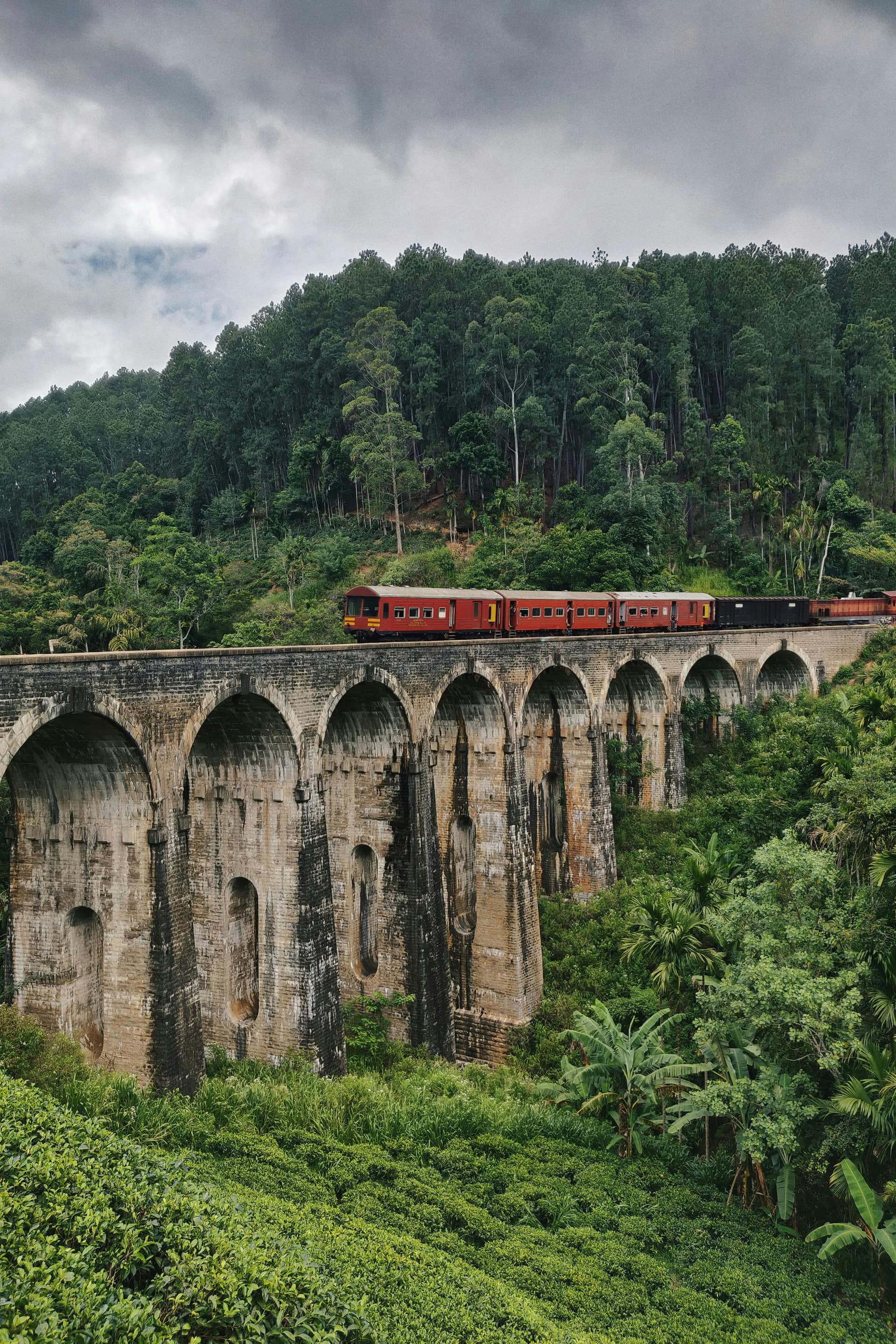
Most people book flights, then hotels, then the train. That is exactly backwards, because reserved seats on the Kandy to Ella line are limited and sell out well ahead, while accommodation at both anchors is abundant and easy to change.
The result is an itinerary built around fixed hotel dates that then has to be rearranged when the train on the required day turns out to be full, or a traveller standing for six to seven hours in an unreserved carriage.
Book the train the moment its release window opens, and confirm that window locally rather than relying on a published figure, since the rules change. Then build the accommodation outwards from the rail date.
- →Reserved seats are limited and cannot be added to.
- →Accommodation at both anchors is abundant and easy to change.
- →Book the train first, then work the hotels outwards from it.
- →Confirm the booking release window locally.
Mistake three: trusting the map
Sri Lankan distances are consistently misleading. Sigiriya to Ella is roughly 160 kilometres and roughly six to seven hours, because hill-country roads are narrow, gradients are sustained, and average speeds frequently fall below forty kilometres per hour.
Map applications routinely understate these journeys by a third or more, so an itinerary built on their estimates runs late from the first day and stays late. The correct approach is to plan in hours, hedged upwards, and to treat any drive over about five hours as needing a break rather than a stronger coffee.
The figures worth memorising: airport to Sigiriya roughly four to five hours, Sigiriya to Kandy roughly two and a half to three, Kandy to Ella by train roughly six to seven, Ella to the south coast roughly four to five, Galle to the airport roughly two and a half to three.
- →Sigiriya to Ella is roughly 160 kilometres and six to seven hours.
- →Hill-country average speeds often fall below forty kilometres per hour.
- →Map estimates routinely understate journeys by a third or more.
- →Treat any drive over about five hours as needing an overnight break.
Mistake four: climbing Sigiriya at the wrong hour
Sigiriya usually opens around seven, and the first ninety minutes are better than the rest of the day combined. The rock stores and radiates heat from mid-morning, and there is no useful shade anywhere on roughly 1,200 steps.
The crowding problem compounds it. The upper section is a narrow, effectively one-way metal staircase, so from mid-morning your pace is set by whoever is ahead of you, and you queue standing still in full sun on an exposed structure.
The fix costs nothing but organisation: arrange breakfast and the driver the night before, and keep the preceding afternoon light so the early start actually survives contact with the alarm.
- →Opening is usually around seven; the first ninety minutes are the best.
- →The rock radiates stored heat from mid-morning with no shade.
- →The one-way upper staircase means crowds set your pace.
- →Arrange breakfast and the driver the night before.
Mistakes five, six and seven
Too many inland bases is the fifth. More than about four in a week produces a transfer schedule with sightseeing attached, and the usual culprits are Nuwara Eliya and Polonnaruwa added to an itinerary that was already full. Cut a base rather than a night.
Reversing the order without a reason is the sixth. Ella first costs roughly a day and a half, in a seven to eight hour arrival drive and a long return, and it is only worth paying when a fixed hill-country date, a southern departure or a trip that starts on the coast genuinely demands it.
Treating the middle of the day as usable is the seventh. Dry-zone afternoons are hot enough that scheduling anything between roughly eleven and three produces tired travellers rather than extra sightseeing. Lankan Stays and Trails leaves that block empty deliberately, and it is the change travellers notice most.
- →More than about four inland bases in a week is too many.
- →Cut a base rather than a night when an itinerary runs long.
- →Reversing the order costs roughly a day and a half.
- →Leave roughly eleven to three empty in the dry zone.
Frequently asked questions
What is the biggest mistake when planning a Sri Lanka trip?
Single-night stops. Transfers are long enough that arriving in the afternoon and leaving the next morning gives no usable time at all. Two nights everywhere with fewer destinations consistently produces a better trip than one night everywhere with more.
Why do Sri Lankan itineraries run late?
Because they are built on map estimates. Hill-country average speeds frequently fall below forty kilometres per hour, and map applications routinely understate journeys by a third or more, so a schedule slips on day one and never recovers.
When should I book the Kandy to Ella train?
Before any accommodation. Reserved seats are limited and sell out well ahead, particularly from December to March, while hotels at both anchors are abundant and easy to change. Confirm the release window locally, since the rules change.
How many stops should a one-week Sri Lanka trip have?
About four bases across six nights, typically Sigiriya, Kandy, Ella and one coastal stop. More than that turns the week into a transfer schedule, and the usual additions that break it are Nuwara Eliya and Polonnaruwa.
What time should I avoid climbing Sigiriya?
Anything after about nine in the morning. The rock radiates stored heat from mid-morning with no shade on roughly 1,200 steps, and the narrow one-way upper staircase means you queue standing still in full sun.
Should I cut a night or a destination if my trip is too long?
A destination. Dropping Nuwara Eliya, Kandy or Polonnaruwa removes a hotel change and several hours of driving while keeping the anchors intact. Cutting nights from both anchors saves two nights and costs two full days.
Can I schedule sightseeing in the afternoon in Sri Lanka?
Not usefully in the dry zone. Afternoons around Sigiriya are hot enough that anything scheduled between roughly eleven and three produces tired travellers rather than extra sightseeing. Leaving that block empty deliberately improves the whole trip.