
Quick answer
Cycling from Galle to Tangalle covers roughly 85 to 95 kilometres along the south coast, usually split over two to three days with stops in Ahangama, Mirissa or Dikwella. The main A2 coast road is busy with fast buses, so use back roads where possible: around Koggala lake, through Mirissa's lanes, past Dondra Head and inland of Dikwella. Ride from November to April, start at dawn, and consider a support vehicle for luggage and busier stretches.
Key takeaways
- Galle to Tangalle is roughly 85 to 95 kilometres.
- Two to three days with beach stops suits most riders.
- The A2 is busy; use back roads where possible.
- November to April is the season.
- Start at dawn and finish by late morning.
The route
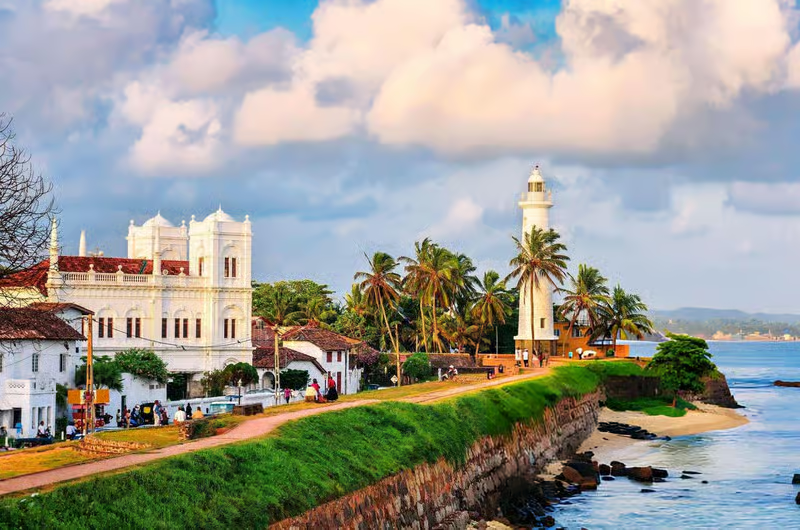
The ride follows the south coast east from Galle Fort through Unawatuna, Koggala, Ahangama, Midigama, Weligama, Mirissa, Matara, Dondra, Dikwella and Hiriketiya to Tangalle. Most of the way is flat, with a few short climbs over headlands.
The main A2 road carries the coastal traffic, including fast inter-city buses. Back roads and lanes run parallel to it in many places, and local guides know the best connections.
The coast is the attraction: stilt fishermen near Koggala, surf breaks at Midigama, Weligama's long bay, Mirissa's beaches, the lighthouse at Dondra Head and the horseshoe bay of Hiriketiya.
Along the way, there is plenty to break the ride: a swim at Jungle Beach near Unawatuna, a coffee in Ahangama, a surf lesson at Weligama or a boat on Koggala lake. The coast is lined with cafes and fruit stalls, so stopping for king coconuts in the shade is easy every few kilometres.
- →Galle Fort to Tangalle along the coast.
- →Mostly flat, with short headland climbs.
- →Back roads parallel to the A2 in places.
Suggested stages
Day one: Galle to Ahangama or Weligama, about 25 to 30 kilometres, with Unawatuna, Koggala lake and the stilt fishermen. Day two: on to Mirissa, Matara and Dondra Head, about 25 to 30 kilometres. Day three: Dondra to Tangalle via Dikwella and Hiriketiya, about 30 to 35 kilometres.
Strong riders can do it in one long day, but that means riding into the heat and missing the beaches. Two to three days lets you swim, surf or take a boat on Koggala lake along the way.
Distances are approximate and depend on detours.
- →Day one: Galle to Ahangama or Weligama.
- →Day two: to Mirissa and Dondra Head.
- →Day three: on to Tangalle.
Back roads worth taking
Around Koggala, lanes circle the lake through villages and cinnamon gardens, away from the main road. In Mirissa, the lanes behind the beach and up to Coconut Tree Hill are quiet in the early morning.
Between Matara and Dondra, small roads lead to the lighthouse at Dondra Head, the southernmost point of Sri Lanka. Beyond Dikwella, inland lanes past paddy and temples, including the Wewurukannala Vihara with its giant Buddha, avoid the main road.
A local guide or offline maps make these connections far easier.
- →Koggala lake lanes.
- →Mirissa's back lanes.
- →Dondra Head lighthouse road.
- →Inland lanes near Dikwella.
Season and timing
The south coast's season runs from roughly November to April, when the seas are calm and the weather dry. December to March is usually best. From May to September, the south-west monsoon brings rain, wind and rough seas.
Start each day at dawn, around 6am, and aim to finish by 10 or 11am. The afternoon heat and humidity are punishing, and traffic increases through the day.
Weekends and holidays bring more traffic, especially near Galle and Matara.
- →November to April season.
- →Start at dawn, finish by late morning.
- →Busier on weekends and holidays.
Traffic and safety
The A2 is one of the busiest roads in the south, and buses overtake aggressively. Where you must use it, ride single file close to the left edge, wear bright clothing and a helmet, and give way to buses and trucks.
A support vehicle that carries luggage and water and can pick you up for the busiest stretches, especially through Matara town, makes the ride much more pleasant.
Dogs, potholes and sudden stops by tuk-tuks are other hazards. Ride defensively.
Planning the ride
Hire a bike in Galle or Unawatuna, or bring your own. Guesthouses along the coast make easy overnight stops; book ahead in peak season. Lankan Stays & Trails can arrange bikes, a guide who knows the back roads and a support vehicle moving luggage between beach stays.
For a gentler option, ride shorter sections, such as Galle to Koggala or Mirissa to Dondra, and use a tuk-tuk for the rest.
Frequently asked questions
How long is the bike ride from Galle to Tangalle?
Roughly 85 to 95 kilometres along the coast, depending on detours. Most riders split it over two to three days, with stops in Ahangama or Weligama and Mirissa or Dikwella, leaving time for beaches and sights. Strong riders can do it in a day, but heat makes that hard.
Is it safe to cycle on the south coast of Sri Lanka?
It can be, with care. The A2 coast road is busy with fast buses, so use back roads where possible, ride early, wear a helmet and bright clothing and keep to the left. A support vehicle can carry luggage and transfer you past the busiest sections, such as Matara town.
When is the best time to cycle the south coast?
November to April, when the south coast is dry and the seas are calm, with December to March usually best. From May to September, the south-west monsoon brings rain and wind. Start every ride at dawn to avoid the heat and the heaviest traffic.
Where can I hire a bike in Galle?
Guesthouses and shops in Galle Fort and Unawatuna rent bikes, usually simple city or mountain bikes for a few dollars a day. For a multi-day coastal ride, ask about better bikes from cycling operators, and check brakes, tyres and lights before you set off.
What are the highlights of cycling Galle to Tangalle?
Galle Fort, Unawatuna, the stilt fishermen and lake at Koggala, the surf breaks of Midigama, Weligama's bay, Mirissa's beaches and lanes, Dondra Head lighthouse at the southern tip, the giant Buddha at Wewurukannala and the horseshoe bay of Hiriketiya near Dikwella.
Do I need a support vehicle?
It is not essential, but it makes the ride safer and more enjoyable. A support vehicle carries luggage and water, picks you up if you are tired or the heat is too much, and can skip busy stretches of the A2. It is especially useful for families and groups.
Can I cycle Galle to Tangalle with children?
Only with care. Older children who ride confidently can enjoy short sections on back roads, such as the lanes around Koggala lake or Mirissa, but the A2 itself is too busy for young riders. Use a support vehicle for the main road and plan short morning rides with beach stops.