
Quick answer
Devon Falls and St Clair's Falls lie near Talawakele, roughly an hour to an hour and a half west of Nuwara Eliya on the road towards Hatton. Devon Falls, roughly 97 metres high, is seen from a viewpoint beside a tea centre; St Clair's, one of the widest falls in Sri Lanka and nicknamed the little Niagara, is seen from a roadside viewpoint a few kilometres away. Both are fullest from about May to December, after rain. Allow half a day from Nuwara Eliya, or stop on the way to Hatton or Colombo.
Key takeaways
- Devon Falls and St Clair's Falls lie near Talawakele, roughly an hour to an hour and a half west of Nuwara Eliya.
- Devon Falls is commonly given as roughly 97 metres high and is named after an early coffee planter.
- St Clair's Falls is one of the widest waterfalls in Sri Lanka and is often called the little Niagara.
- Both falls are usually fullest after the rains, roughly May to December, and thinner in the dry months.
- Hydropower development on the upper Kotmale catchment has reduced the flow at St Clair's in recent decades (hedged).
Where the falls are
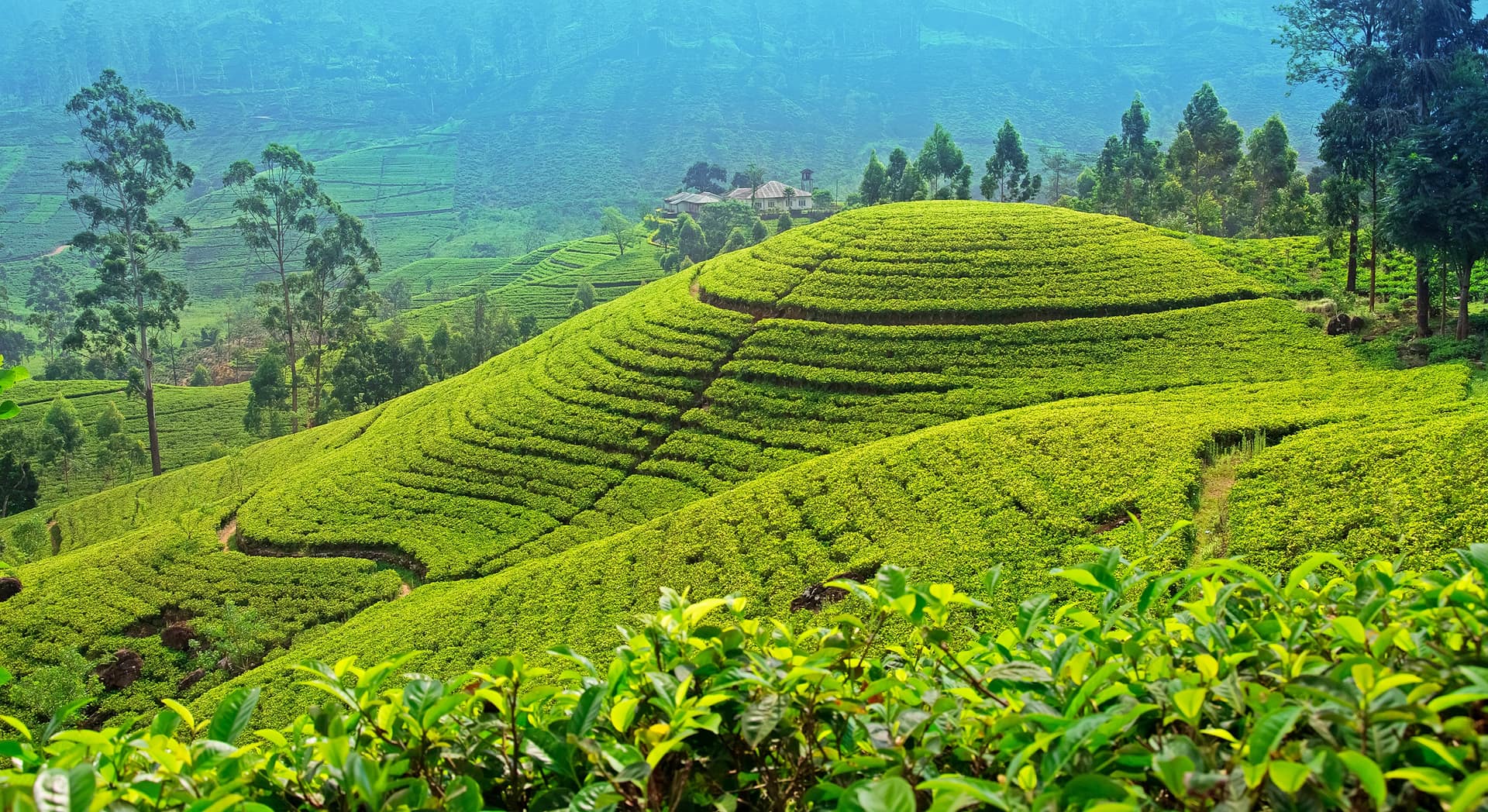
Devon Falls and St Clair's Falls lie in the Dimbula tea district near Talawakele, on the main road between Nuwara Eliya and Hatton. From Nuwara Eliya, the drive takes roughly an hour to an hour and a half, descending past Nanu Oya and Lindula through steep, well-kept estates.
Devon Falls and St Clair's are a few kilometres apart and both are seen from viewpoints on or near the main road. Reaching their bases involves rough paths through private estates and is not recommended without local guidance.
- →From Nuwara Eliya: roughly an hour to an hour and a half.
- →From Hatton: roughly 20 to 40 minutes.
- →On the route: Nuwara Eliya to Hatton, Colombo or Adam's Peak.
Devon Falls
Devon Falls drops roughly 97 metres in a narrow white ribbon down a forested cliff, framed by tea on both sides of the valley. It takes its name from an early coffee planter called Devon whose land lay nearby. The best-known view is from a terrace beside a tea centre on the main road, where you can drink a cup facing the fall.
Devon Falls is most impressive after rain, when the ribbon thickens and the roar carries across the valley. In long dry spells, roughly January to March, it can thin considerably. Morning light is usually clearer, before cloud builds over the valley.
St Clair's Falls
St Clair's Falls is broad rather than tall, spreading across a wide rock face in two main tiers, which earned it the nickname the little Niagara of Sri Lanka. It is seen from a viewpoint on the main road, looking down across the tea of the estate that shares its name.
St Clair's Falls has lost some of its former volume as water in the upper catchment has been diverted for hydropower. After heavy rain it can still be spectacular; in the dry season it may disappoint. Treat it as a short stop rather than a destination in itself.
St Clair's Falls and Devon Falls together take about an hour, including stops and a cup of tea. Combining them with a factory visit in the Dimbula district makes a good half day.
- →Devon: tall and narrow, viewed from a tea centre terrace.
- →St Clair's: wide and tiered, viewed from the roadside.
- →Both: fullest after rain.
When to go
Devon Falls and St Clair's are fullest from about May to December, when the south-west monsoon and inter-monsoon rains feed them. The trade-off is mist: on some days the valley is hidden. Early mornings and short breaks between showers usually give the best views.
Devon Falls and St Clair's are thinner from about January to March, when skies are clearest. The views of the tea are crisp, but the falls can be underwhelming. If waterfalls are a priority, travel in the wetter months and plan flexibly.
- →May to December: more water, more mist.
- →January to March: clearer skies, thinner falls.
- →Any month: go in the morning.
Fitting the falls into a route
Devon Falls and St Clair's fit most naturally on the drive between Nuwara Eliya and Hatton, Colombo or Adam's Peak, adding about an hour. As a return day trip from Nuwara Eliya, they make a half day, perhaps with a tea factory in the Dimbula district.
Devon Falls and St Clair's also suit travellers staying in a tea bungalow around Hatton or Dickoya, for whom they are close by. Lankan Stays & Trails includes both viewpoints on hill country routes that run west to Adam's Peak or down to Colombo.
- →On the way to Colombo or Hatton: add about an hour.
- →Half day from Nuwara Eliya: falls plus a factory.
- →From a Hatton bungalow: a short outing.
Safety
Devon Falls and St Clair's have dangerous bases, with slippery rocks, strong currents and sudden rises in water after rain upstream. Several visitors have been injured or drowned at hill country waterfalls. View them from the official viewpoints unless a local guide knows a safe path.
Devon Falls and St Clair's viewpoints lie on a busy, winding main road. Park only where your driver says it is safe, and watch for buses and lorries when crossing or stepping back for photographs.
Frequently asked questions
How far is Devon Falls from Nuwara Eliya?
Devon Falls is roughly an hour to an hour and a half west of Nuwara Eliya by road, near Talawakele on the way to Hatton. St Clair's Falls is a few kilometres away on the same road, so the two are usually seen together.
Which is better, Devon Falls or St Clair's Falls?
Devon Falls is taller and more dramatic, at roughly 97 metres, while St Clair's is wider and tiered. Devon has a pleasant tea terrace viewpoint. After heavy rain, St Clair's can be spectacular. Most visitors see both in under an hour.
Can you walk to the bottom of Devon Falls?
Walking to the bottom of Devon Falls is not recommended without local guidance. Paths cross private estates, are steep and slippery, and the base is dangerous after rain. The tea terrace viewpoint on the main road gives the best and safest view.
When are Devon and St Clair's falls fullest?
Devon and St Clair's falls are fullest after rain, roughly from May to December. From January to March, they can thin considerably. Mornings usually give the clearest views before cloud and mist fill the valley.
Why is St Clair's called the little Niagara?
St Clair's Falls is called the little Niagara of Sri Lanka because it is one of the widest falls on the island, spreading across a broad rock face in tiers. Its flow has been reduced by hydropower development, but it remains impressive after heavy rain.
Are Devon and St Clair's falls worth the detour?
Devon and St Clair's falls are worth a stop if you are driving between Nuwara Eliya and Hatton, Colombo or Adam's Peak. As a separate day trip, they are worthwhile in the wetter months. In dry spells, Ramboda Falls or Lover's Leap may be closer options.