
Quick answer
Nuwara Eliya is worth visiting for its cool climate at about 1,890 metres, its high-grown tea, the most delicate in Ceylon, and the colonial town built by British planters in the nineteenth century. Within ten kilometres sit Gregory Lake, Hakgala Botanical Garden, the Seetha Amman Temple and Pedro Tea Estate, and Horton Plains is about an hour away. Days run roughly 15 to 21 degrees, so walking is a pleasure. Two nights is the usual stay, best from January to March.
Key takeaways
- Nuwara Eliya sits at about 1,890 metres, making it the highest town most visitors to Sri Lanka will sleep in.
- Nuwara Eliya is one of Ceylon tea's seven growing regions and the highest, known for light, bright and floral teas.
- Gregory Lake, Victoria Park, the post office and the racecourse all lie within a 20-minute walk of the town centre.
- Hakgala Botanical Garden, begun in 1861 as a cinchona plantation, is roughly 10 kilometres south-east of the town.
- January to March is usually the clearest and driest stretch in Nuwara Eliya, while April is the busy domestic holiday month.
Why Nuwara Eliya is worth visiting: the short case
Nuwara Eliya is worth visiting because it gives a Sri Lanka trip a second climate. After the heat of Sigiriya or the coast, a town where you sleep under a blanket and walk all day without sweating resets the whole holiday. The cool air is the first reason, and almost everyone notices it within an hour of arriving.
The other reasons are specific. Nuwara Eliya grows the island's highest and most delicate tea, keeps a Victorian town centre, has some of the best gardens in the country, and is the base for Horton Plains National Park. None of these alone needs a detour. Together they make two nights well spent.
- →The climate: days of roughly 15 to 21 degrees and nights often below 12.
- →The tea: the highest of Ceylon's seven tea regions, with estates on the edge of town.
- →The town: mock-Tudor and red-brick buildings from the British planting era.
- →The gardens: Victoria Park in town and Hakgala Botanical Garden 10 kilometres away.
- →The walks: Lover's Leap, Moon Plains and Horton Plains within an hour.
High-grown tea at the source
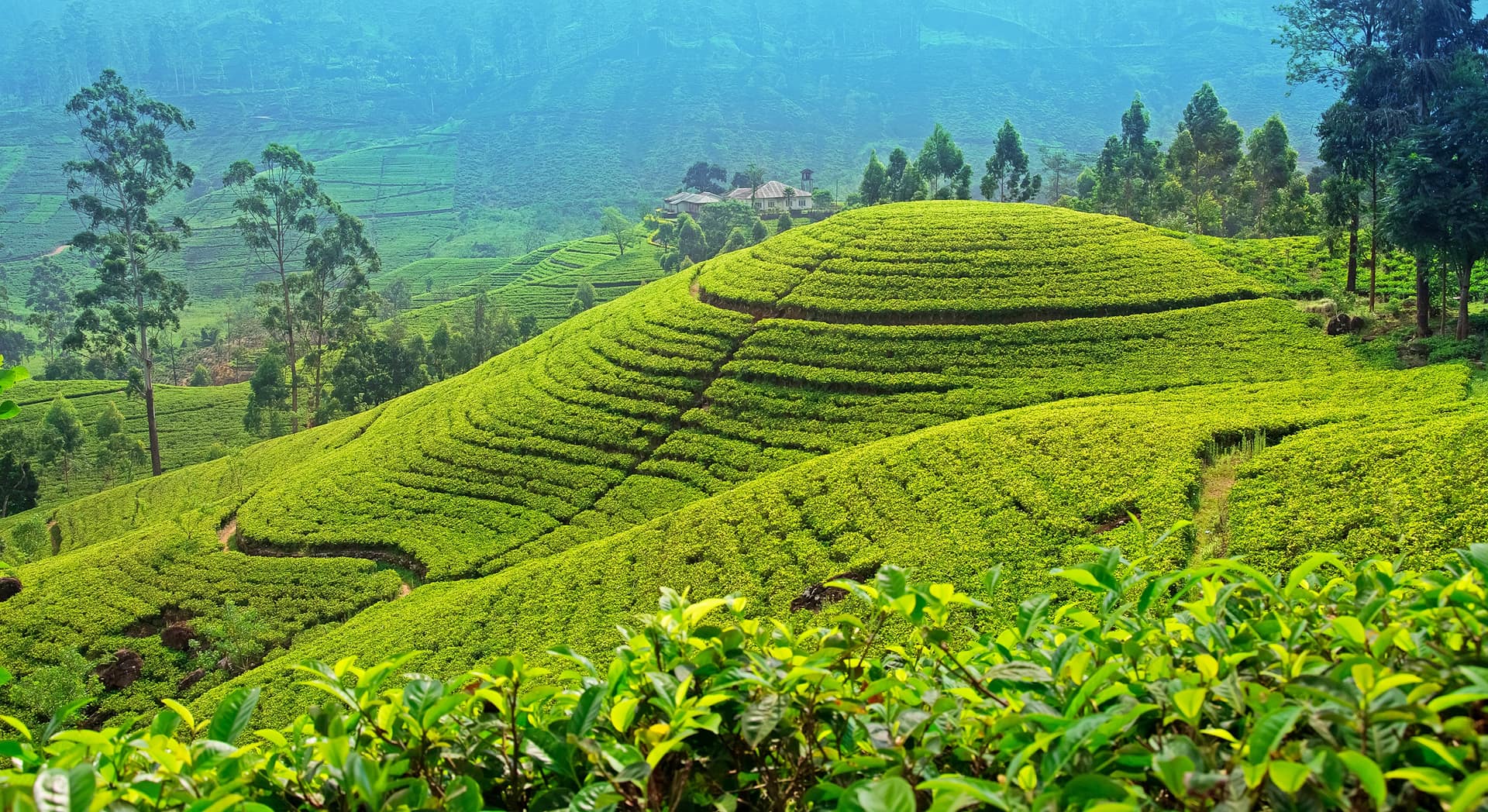
Nuwara Eliya tea is the reason many visitors come. The estates around the town grow tea at roughly 1,800 to 2,000 metres, where slow growth produces a light, golden cup with a floral, almost citrus note. Tasters sometimes call it the champagne of Ceylon teas, and the best leaf is usually made from January to March.
Pedro Tea Estate sits about three to four kilometres east of the town, and Labookellie lies on the Ramboda road to the north. Both welcome visitors for a short factory walk and a tasting. Seeing pluckers on a slope at 8am, then drinking the same leaf at noon, is the clearest lesson in tea you will get.
A colonial hill station that still works
Nuwara Eliya grew as a British retreat from the 1820s, and the town centre still shows it. The red-brick post office, the racecourse, the golf course and several mock-Tudor former residences sit within a short walk of each other. Gregory Lake, created in the 1870s, closes the town to the south.
Nuwara Eliya is not a museum. The market sells leeks, carrots and cabbages grown on the terraces above town, schoolchildren walk past in jumpers, and Sri Lankan families arrive in April for horse racing and flower shows. The mix of colonial set and busy hill town is part of the appeal.
- →Gregory Lake: pedal boats and a lakeside path, about 15 minutes' walk from the centre.
- →Victoria Park: formal beds at their best roughly March to May.
- →The post office: a red-brick landmark from the late nineteenth century.
Gardens, grassland and Horton Plains
Nuwara Eliya's surroundings are its strongest card for nature lovers. Hakgala Botanical Garden, about 10 kilometres south-east at roughly 1,700 metres, has rose terraces, tree ferns and cloud forest on the slopes above. Galway's Land, a small national park close to the centre, is one of the best places on the island for wintering thrushes and flycatchers.
Horton Plains National Park is roughly an hour away by road, and most visitors come to Nuwara Eliya partly for the dawn walk to World's End. Closer to town, Moon Plains offers a grassland viewpoint with a wide ring of peaks, including Pidurutalagala, at 2,524 metres the highest mountain in Sri Lanka.
Who will love Nuwara Eliya most
Nuwara Eliya suits travellers who enjoy walking, gardens, tea and a slower evening by a fire. It suits older travellers who find the lowland heat tiring, and it suits families who want a change of pace. Hikers use it for Horton Plains and longer days around Pidurutalagala and the estates.
Nuwara Eliya suits less well those who want a lively bar scene or warm evenings outdoors. Ella, roughly two to two and a half hours away, is warmer and more social. If you are weighing whether to include the town at all on a first trip, our verdict page gives a straight answer.
- →Choose Nuwara Eliya for cool air, tea, gardens and Horton Plains.
- →Choose it for a slower, quieter hill country night.
- →Skip it only if you have under a week and prefer Ella's walking.
How long to stay and when to go
Two nights in Nuwara Eliya is the usual answer: one full day for tea, the lake and Hakgala, and one dawn for Horton Plains. One night works if you arrive by noon. Three nights suits walkers and anyone using the town as a base for Adam's Peak or the Hatton estates.
January to March is usually the clearest stretch, with cold nights and bright mornings. April is the domestic holiday season, lively and expensive. From May to September, mist and drizzle are common, though the tea is green and the town is quiet. Lankan Stays & Trails builds Nuwara Eliya into routes from Kandy to Ella with a tea stop on the way up.
- →Kandy to Nuwara Eliya: roughly two and a half to three hours by road.
- →Nuwara Eliya to Ella: roughly two to two and a half hours by road, or the train from Nanu Oya.
- →Colombo to Nuwara Eliya: roughly five to six and a half hours.
Frequently asked questions
Why is Nuwara Eliya worth visiting?
Nuwara Eliya is worth visiting for its cool climate, its high-grown tea and its colonial hill station character. It is also the nearest town to Horton Plains, and Hakgala Botanical Garden, the Seetha Amman Temple and Pedro Tea Estate are all within about ten kilometres.
What is Nuwara Eliya famous for?
Nuwara Eliya is famous for tea, cool weather and its British-era buildings, which earned it the nickname Little England. It is also known for strawberries, vegetables grown on terraced hillsides, Gregory Lake, the April holiday season and access to Horton Plains National Park.
Is Nuwara Eliya better than Ella?
Nuwara Eliya is not better or worse than Ella; the two suit different moods. Nuwara Eliya is colder, more formal and closer to the tea industry and Horton Plains. Ella is warmer, more social and better for short hikes. Most routes include both, two hours apart.
How many days do you need in Nuwara Eliya?
Two nights in Nuwara Eliya suits most travellers: one day for the town, tea and gardens, and one early morning for Horton Plains. One night is enough if you skip Horton Plains. Walkers and tea enthusiasts often enjoy three nights.
When is the best season to visit Nuwara Eliya?
The clearest weather in Nuwara Eliya usually comes from January to March, with cold nights and blue mornings. April is lively but crowded. May to September is mistier and quieter. Rain can fall in any month, so pack a waterproof whenever you go.
Is Nuwara Eliya worth it for just one night?
Nuwara Eliya is worth one night if you arrive by early afternoon. That gives time for a tea estate, Gregory Lake and the town centre before dark. You will miss Horton Plains unless you leave very early the next morning on your way to Ella.