
Quick answer
In an early-year tour, roughly November to April, dive and snorkel on the south and west coasts: wrecks and reefs near Galle and Unawatuna, turtles at Hikkaduwa, and sites off Weligama and Mirissa. In a mid-year tour, roughly May to September, the south is rough, so head to the east coast: Pigeon Island near Trincomalee and Pasikudah. Book with a certified dive centre, and avoid diving within about 24 hours of flying.
Key takeaways
- South and west coast diving is best roughly November to April, matching early-year tours.
- East coast diving is best roughly May to September, matching mid-year tours.
- Galle and Unawatuna have wrecks and reefs close to the cricket ground.
- Pigeon Island near Trincomalee is the best-known snorkelling site.
- Avoid diving within about 24 hours of a flight.
Matching the coast to the tour
Sri Lanka's two monsoons decide where the sea is calm. The southwest monsoon, roughly May to September, makes the south and west coasts rough, while the east coast is calm and clear. From roughly November to April, the pattern reverses.
So an early-year cricket tour, with Tests in Galle, puts you on the right coast for diving. A mid-year tour means a detour to the east coast for clear water, which pairs well with a white-ball leg in Dambulla.
Lankan Stays & Trails plans dive days by season, with the east coast added to mid-year cricket trips.
- →Early-year tours: south and west.
- →Mid-year tours: east coast.
- →Check sea conditions before booking.
The south and west coasts
Near Galle, dive centres in Unawatuna and Galle run trips to wrecks and reefs, some within a short boat ride of the fort. The bay at Unawatuna also has easy snorkelling, and Jungle Beach nearby is calm on good days.
Hikkaduwa, about 30 minutes north of Galle, has a shallow reef where green turtles feed close to shore, good for snorkelling. Weligama and Mirissa, about an hour east, have dive sites and are the base for whale watching.
Visibility varies with swell and plankton; mornings are usually calmest.
Galle's harbour and the coast nearby have a long maritime history, with wrecks from several centuries lying offshore. Some dive centres run trips to these sites for certified divers, and the Maritime Museum inside Galle Fort explains the history on a rest day.
- →Galle and Unawatuna: wrecks and reefs.
- →Hikkaduwa: turtles and a shallow reef.
- →Weligama and Mirissa: dives and whales.
The east coast
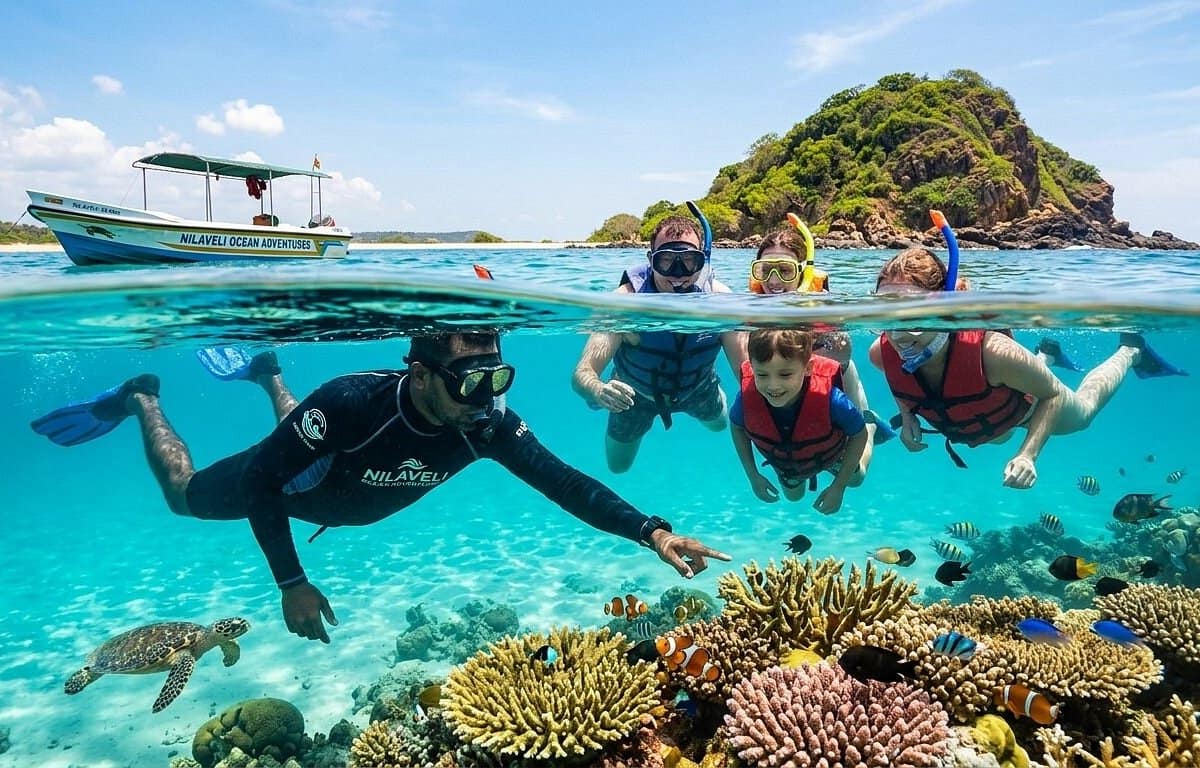
Pigeon Island National Park, off Nilaveli near Trincomalee, is the best-known snorkelling site in Sri Lanka, with coral, reef fish and blacktip reef sharks in shallow water. Trincomalee also has dive centres, with reefs and, at times, whale sightings.
Pasikudah, further south, has a long, shallow bay ideal for swimming and gentle snorkelling. Trincomalee is about two and a half to three hours from Dambulla.
Pigeon Island gets busy in peak months, so go early.
- →Pigeon Island: coral and reef sharks.
- →Trincomalee: dive centres.
- →Pasikudah: calm, shallow water.
Courses and safety
Certified dive centres in Unawatuna, Hikkaduwa, Weligama and Trincomalee offer try dives, open water courses and fun dives for certified divers. Bring your certification card and logbook, and check the centre's safety standards and equipment.
Avoid diving within about 24 hours of a flight. Plan dive days early in the trip or with a gap before flying home, and keep hydrated after diving in the heat.
- →Try dives and courses available.
- →Bring certification and logbook.
- →No diving within about 24 hours of flying.
Timing around the cricket
Dive or snorkel on free days between matches, ideally in the morning when the sea is calmest. A morning snorkel at Hikkaduwa or Unawatuna leaves the afternoon for the fort or a rest.
Avoid strenuous dives the day before a long day at the ground, and use reef-safe sunscreen.
For non-divers in a group, snorkelling at Unawatuna, Hikkaduwa or Pigeon Island needs no certification and only a few hours, so it suits everyone. Masks and fins can be hired on the beach, though bringing your own mask gives a better fit.
Frequently asked questions
Where can you dive on a cricket tour of Sri Lanka?
In an early-year tour, dive near Galle, Unawatuna, Hikkaduwa, Weligama and Mirissa on the south and west coasts. In a mid-year tour, head to the east coast, where Trincomalee and Pigeon Island have calm, clear water. Match the coast to the season.
Is there diving near Galle cricket ground?
Yes, dive centres in Galle and Unawatuna run trips to wrecks and reefs, some a short boat ride from the fort. Conditions are best from roughly November to April, matching early-year tours. Mid-year, the sea off Galle is usually rough.
When is the best snorkelling in Sri Lanka?
The south and west coasts are best roughly November to April, and the east coast roughly May to September. Hikkaduwa's turtles and Unawatuna's bay suit early-year tours; Pigeon Island near Trincomalee suits mid-year tours. Mornings are usually calmest.
Can you see turtles on a cricket trip?
Yes, green turtles feed close to shore at Hikkaduwa, about 30 minutes north of Galle, best from roughly November to April. Snorkel quietly, keep your distance and never touch or feed them. Turtle hatcheries along the coast also show conservation work.
Can you do a dive course on a cricket tour?
Yes, certified dive centres in Unawatuna, Hikkaduwa, Weligama and Trincomalee offer try dives and open water courses. A full course takes a few days, so it suits a gap between Tests or a beach week after the series.
How long should you wait to fly after diving?
Avoid flying within about 24 hours of diving, following your dive centre's advice. Plan dive days early in the trip or with a gap before flying home. Snorkelling has no such restriction.
Is Pigeon Island worth it on a mid-year cricket tour?
Yes. Pigeon Island near Trincomalee has some of Sri Lanka's best snorkelling, with coral, reef fish and blacktip reef sharks, and it is at its best in the mid-year months. Trincomalee is about two and a half to three hours from Dambulla.
Is Sri Lankan diving as good as the Great Barrier Reef?
Sri Lanka's reefs are smaller and less famous than the Great Barrier Reef, but the wrecks near Galle, the turtles at Hikkaduwa and the reef sharks at Pigeon Island make rewarding dives and snorkels. It is a good rest-day activity rather than a dive holiday in itself.