
Quick answer
The order matters in direct proportion to how short your trip is. On five to eight days, putting Ella before Sigiriya costs roughly a day and a half in extra driving and a lost coastal finish, which is a large fraction of the holiday. On twelve days or more the same penalty is absorbed by the slack in the schedule and the order becomes largely a matter of preference.
Key takeaways
- On trips under eight days the wrong order costs roughly a day and a half of usable time.
- The penalty comes from two long drives: roughly seven to eight hours inbound and a return north or south at the end.
- On twelve days or more the schedule has enough slack to absorb the penalty entirely.
- Order affects comfort as well as time, because it decides whether the hardest climb falls early or late.
- Night counts at each stop usually matter more than order on longer trips.
Measuring the penalty rather than asserting it
The cost of the wrong order is not abstract, and it can be counted. Bandaranaike International Airport to Ella is roughly seven to eight hours against roughly four to five to Sigiriya, so the arrival day loses about three hours. The end of the trip loses more, because a Cultural Triangle finish sits roughly four to five hours inland with no coast on the route out.
Added together on a typical first trip, reversing without a reason costs somewhere around a day and a half of usable daylight. That figure is stable across most itineraries because it comes from fixed distances rather than from how the days are filled.
What varies is how much a day and a half is worth. On a six-day trip it is a quarter of everything. On a fifteen-day trip it is noise, and can reasonably be traded for any preference at all.
- →Arrival day: roughly three hours lost to the longer drive.
- →Trip end: a lost coastal finish, or a long southward drive to recover one.
- →Total: roughly a day and a half of usable time on most itineraries.
- →The figure is fixed; its significance is not.
Under eight days, the order is decisive
Short Sri Lanka trips have almost no slack. With five to seven days you are typically running four bases and three transfers, and each one has to earn its place. A day and a half of avoidable driving in that context is not an inefficiency, it is a deleted stop.
There is a compounding effect too. A long arrival drive pushes the first real sightseeing morning to day three, which on a six-day trip leaves three usable days rather than four. Travellers rarely notice this until they are living it.
At these lengths the advice is simple and firm: unless one of the genuine reversal cases applies to you, run Sigiriya first. The order is doing more work than almost anything else you will decide.
- →Five to seven days typically means four bases and three transfers.
- →A long arrival drive delays the first sightseeing morning to day three.
- →A day and a half of driving at this length is effectively a deleted stop.
- →Reverse only for a genuine structural reason, not a preference.
Eight to twelve days, the order is a comfort question
In the middle range the time penalty stops being fatal and starts being annoying. There is enough room to absorb a long arrival drive without losing a destination, so the argument shifts from what you see to how it feels.
The comfort argument is mostly about effort curves. Sigiriya is roughly 1,200 steps in the hottest part of the country, and doing it on day two rather than day eight matters because energy, enthusiasm and jet-lag-driven early waking are all higher at the start. A trip that front-loads effort and then decelerates is more pleasant than one that does the reverse.
At this length it is also worth checking the night counts before worrying further about the order. Moving a night from Kandy to Ella often improves a trip more than flipping the whole route direction does.
- →Eight to twelve days has room to absorb the driving penalty.
- →The argument shifts from lost sights to effort and pacing.
- →Front-loading the hardest climb suits energy and early waking.
- →Night counts often matter more than direction at this length.
Over twelve days, do what you like
On trips of twelve days and up, the order genuinely stops mattering much. There is time for the Cultural Triangle, the hill country, a safari and a proper coastal stretch regardless of sequence, and the extra hours disappear into a schedule that already has rest days in it.
Longer trips also tend to be loops rather than lines, which removes the doubling-back problem altogether. If you are visiting Anuradhapura and Polonnaruwa as well as Sigiriya, and Nuwara Eliya as well as Ella, the route has its own internal logic and the Sigiriya and Ella question resolves itself.
The one thing that still holds at any length is the climb timing. Whatever direction you travel, put the Sigiriya morning somewhere you will be rested, and do it at opening rather than in the middle of the day.
- →Twelve days or more absorbs the penalty into existing slack.
- →Longer trips become loops, which removes the doubling-back problem.
- →Adding Anuradhapura, Polonnaruwa or Nuwara Eliya changes the logic anyway.
- →Climb timing still matters at every trip length.
Things that matter more than the order
It is worth naming the decisions that outrank this one, because planning attention is finite. The number of bases matters more: four inland stops in a week produces a trip that feels like a transfer schedule regardless of direction. Two nights minimum per base is the single most effective rule in Sri Lankan itinerary planning.
Season matters more. Travelling in the May to September south-west monsoon and still booking the south coast will affect your trip far more than any ordering question, and the fix is to move the beach section to Trincomalee or Nilaveli in the east.
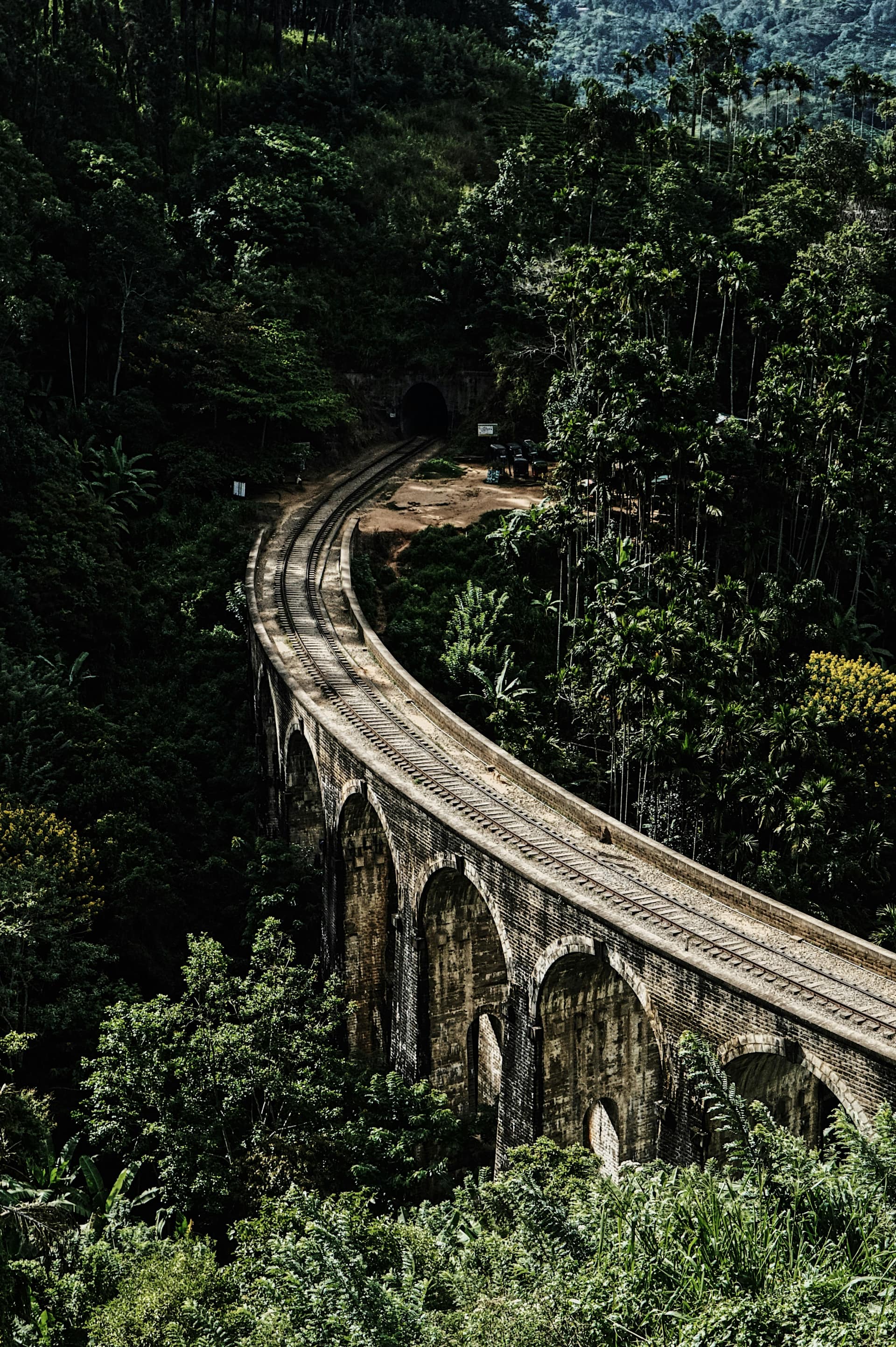
Finally, the time of day you attempt things matters more. Sigiriya at opening and Sigiriya at noon are different experiences, and so are the Nine Arch Bridge at dawn and at eleven in the morning. Lankan Stays and Trails spends more planning effort on the hour than on the sequence, because that is where the returns are.
- →Two nights minimum per base beats any ordering decision.
- →Matching the coast to the monsoon matters more than route direction.
- →Sigiriya at opening versus midday is a bigger difference than first versus last.
- →Four inland bases in a week produces a transfer schedule, whichever way round.
Frequently asked questions
Does it matter which way round you do Sri Lanka?
Below about eight days, yes, by roughly a day and a half of usable time. Above twelve days it makes very little difference, because the schedule has enough slack to absorb the extra driving and the route usually becomes a loop rather than a line.
How much time does the wrong route order actually cost?
Roughly a day and a half on a typical first trip. About three hours come from the longer arrival drive to Ella, and the rest from finishing inland at Sigiriya with no coast on the route back to the airport.
Is there a wrong way to plan a Sri Lanka route?
Doubling back is the real mistake rather than direction. A route that runs south, then north, then south again costs more than either clean direction and usually comes from adding a stop late in planning without redrawing the line.
What matters more than the order of stops?
The number of bases and the nights at each. Two nights minimum per stop transforms a Sri Lanka itinerary more than any sequencing decision, because it removes the pattern of arriving late, sightseeing badly and leaving early the next morning.
Does the order matter on a two-week trip?
Barely. Fourteen days comfortably holds the Cultural Triangle, the hill country, a safari and a coastal stretch in either direction. At that length the ordering question is genuinely a preference, and climb timing is the only part still worth protecting.
Should I worry about route order or season first?
Season. Booking the south coast during the May to September south-west monsoon will shape your trip far more than sequencing will. Move the beach section to Trincomalee or Nilaveli on the east coast and the inland order can then be settled calmly.
Does the order change how tired I will be?
Yes, noticeably. Sigiriya is roughly 1,200 steps in the hottest part of the country, and climbing it on day two rather than day eight uses the energy and early waking of the opening days. A trip that front-loads effort and decelerates is more comfortable than one that does the reverse.