
Quick answer
Sri Lanka works as a winter escape from Turkey because its south-west coast, including Bentota and Mirissa, typically holds daytime highs of roughly 27-31C and sea temperatures around 26-29C through December, January and February, a period that also tends to be one of that coast's drier windows. This is precisely when Istanbul turns cold and the Turkish Riviera enters its kapali sezon (closed season), so a Turkish traveller trades a shut domestic coast for one that is fully open, reachable in roughly 9-10 hours non-stop from Istanbul (IST) to Colombo (CMB).
Key takeaways
- Sri Lanka's south-west coast typically sees one of its drier windows roughly December to March, overlapping directly with the Turkish Riviera's closed season.
- Daytime highs on Sri Lanka's south-west coast, including Bentota and Mirissa, typically run roughly 27-31C through the winter months.
- The Turkish Riviera's kapali sezon runs roughly November to April, when many Antalya, Bodrum and Marmaris hotels reduce services or close.
- Turkish Airlines' non-stop Istanbul-Colombo flight, roughly 9-10 hours, keeps the journey manageable compared with a genuine long-haul westward winter-sun trip.
- Sri Lanka's hill country, including Nuwara Eliya, actually turns cooler in December and January, offering a contrasting cool-climate stop within the same warm-coast trip.
The problem with a Turkish winter for sun-seekers
Istanbul and Turkey's interior turn genuinely cold and often grey through the winter months, and the domestic beach alternative, the Turkish Riviera, is not much help at that time of year. Towns like Antalya, Bodrum and Marmaris enter kapali sezon roughly November to April, when many seafront hotels reduce services or close entirely, leaving few good local options for a warm coastal break.
This leaves a genuine gap for anyone wanting sun and sea specifically in December, January or February, the months when Turkey's own coastline is least able to provide it.
- →Istanbul and Turkey's interior: cold and often grey through the winter months.
- →Turkish Riviera towns (Antalya, Bodrum, Marmaris): kapali sezon roughly November to April, many hotels reduced or closed.
- →Result: few good domestic options for a warm coastal break in December, January or February.
Why Sri Lanka's coast fills that gap
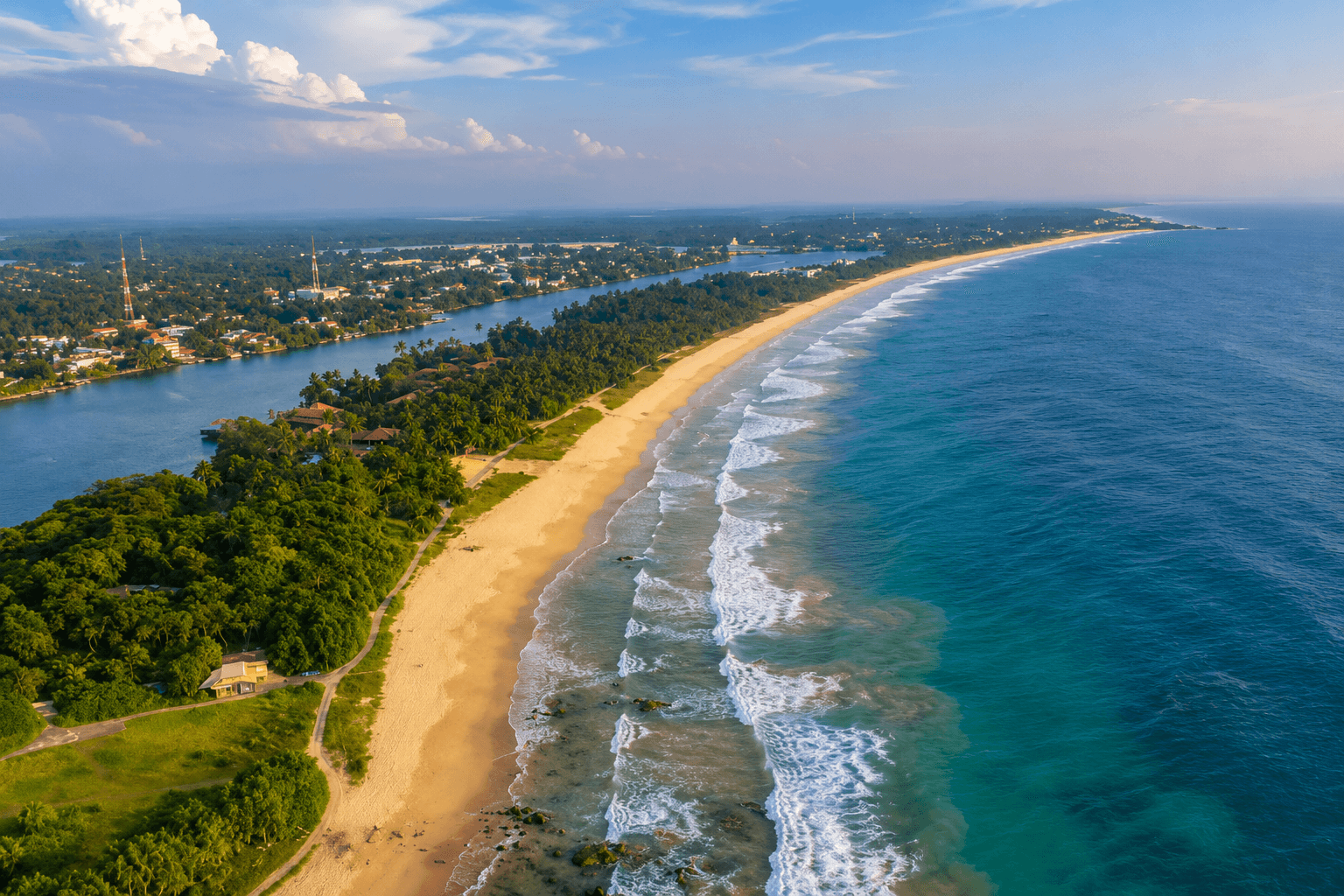
Sri Lanka's south-west coast, including Bentota, Unawatuna and Mirissa, typically holds daytime highs of roughly 27-31C through December, January and February, alongside sea temperatures around 26-29C. Usefully, this window often coincides with one of that coast's drier stretches, since the south-west monsoon (roughly May to September) has usually eased by then.
The result is a coast that is not just warm on paper but genuinely pleasant to be on: hotels, restaurants and boat trips run at full service, unlike the reduced winter operations along the Turkish Riviera during the same months.
- →South-west coast daytime highs, December to February: roughly 27-31C.
- →Sea temperature over the same months: roughly 26-29C.
- →This window often overlaps with a drier stretch on the south-west coast, though conditions vary year to year.
A manageable journey, not a full long-haul slog
Turkish Airlines flies non-stop from Istanbul (IST) to Colombo (CMB) in roughly 9 to 10 hours, and the time difference between the two countries is small, roughly 2.5 hours, since Turkey runs on UTC+3 and Sri Lanka on UTC+5:30. This keeps jet lag minimal compared with a genuine long-haul westward winter-sun escape to somewhere like the Caribbean.
For a traveller weighing up a winter escape, this matters: the flight itself is a manageable single leg rather than a multi-stop or heavily time-shifted journey, which makes even a relatively short trip, a week to ten days, worthwhile.
More than a beach chair: hill country and culture in the same trip
A Sri Lanka winter escape does not have to be confined to the coast. Sri Lanka's hill country, centred on Nuwara Eliya, Ella and Haputale, actually turns cooler and greener in December and January, with daytime highs typically 16-20C and nights sometimes dropping close to or below 10C, a genuinely different scene reachable from the coast within a few hours by road.
The Cultural Triangle, home to Sigiriya, Dambulla, Polonnaruwa and Anuradhapura, offers sites over 1,000 to 2,000 years old and typically runs warm and dry through the same winter window, giving a touring trip real variety that a single Turkish Riviera resort stay cannot match.
- →Hill country, December to February: cooler, tea-terraced landscape, daytime highs typically 16-20C.
- →Cultural Triangle sites (Sigiriya, Dambulla, Polonnaruwa, Anuradhapura): generally warm and dry through winter.
- →South-west coast: warm, dry-leaning beach base for the same trip.
Two Turkish calendar windows that line up well
Many Turkish universities run a mid-year break roughly late January to February, known informally as ara tatil, a real shoulder-season travel window that lines up neatly with Sri Lanka's typically drier south-west coast stretch. Exact dates vary by institution, so confirming the current academic calendar is worthwhile before booking.
Eid windows, Ramazan Bayrami (Eid al-Fitr) and Kurban Bayrami (Eid al-Adha), are also popular Turkish travel periods, though their dates shift each year with the lunar calendar; whichever Eid falls closer to the northern winter in a given year can make a useful anchor for a Sri Lanka escape, provided current-year dates are confirmed before booking.
Planning a winter escape trip
For a Turkish traveller planning a genuine escape from a cold, closed-season winter at home, the practical shape of a Sri Lanka trip usually combines a coastal base, Bentota or Mirissa work well, with one or two inland stops to add variety without sacrificing warmth. Lankan Stays & Trails runs these as private, driver-guided routes precisely because the logistics of moving between coast, hill country and Cultural Triangle in a short window benefit from a fixed vehicle and guide rather than piecing together local transport.
As with any seasonal claim, confirming current weather patterns and specific hotel availability for the exact dates chosen remains sensible, since any given year's monsoon behaviour can vary from the general pattern described here.
Frequently asked questions
Is Sri Lanka a good winter escape from Turkey?
Yes, Sri Lanka's south-west coast typically holds daytime highs of roughly 27-31C through December, January and February, often one of its drier windows, while the Turkish Riviera is largely in its kapali sezon closed season during the same months.
What is the best month to escape a Turkish winter to Sri Lanka?
December through March tends to work well for Sri Lanka's south-west coast, typically warm and drier-leaning during that stretch. Conditions vary year to year, so confirming current weather patterns closer to your travel dates is sensible.
How long is the flight from Istanbul to Sri Lanka?
Turkish Airlines operates a non-stop flight from Istanbul (IST) to Colombo (CMB), typically taking roughly 9 to 10 hours. The time difference between the two countries is small, roughly 2.5 hours, keeping jet lag minimal.
Is Sri Lanka cold in December like Turkey?
No, Sri Lanka's coastal regions stay warm in December, typically 27-31C by day. Only the hill country, including Nuwara Eliya at roughly 1,868m elevation, turns genuinely cool, with daytime highs typically 16-20C and cooler nights.
Do Turkish Riviera hotels stay open in winter?
Many do not. The Turkish Riviera enters kapali sezon, a closed season, roughly November to April, during which numerous Antalya, Bodrum and Marmaris seafront hotels reduce services or shut entirely until the following spring.
Can you combine a beach escape and cooler hill country in one Sri Lanka trip?
Yes, Sri Lanka's hill country, including Nuwara Eliya and Ella, is typically reachable from the south-west coast within a few hours by road, allowing one trip to include both a warm beach base and a cool, green hill-country stop.
Does the Turkish university semester break line up with good Sri Lanka weather?
Broadly yes. The mid-year break many Turkish universities hold roughly late January to February tends to fall within Sri Lanka's south-west coast's typically drier window, though exact academic dates vary by institution and should be confirmed directly.