
Quick answer
Sri Lanka's major festivals span four faiths and run all year. The biggest national celebration is the Sinhala & Tamil New Year (mid-April); the most sacred Buddhist days are Vesak (May full moon) and Poson (June full moon); the most spectacular is the Kandy Esala Perahera (around July–August). Hindu festivals include Thai Pongal (January) and Deepavali (October–November), and there are also Christmas and the two Eids. Every full-moon (Poya) day is a public holiday, so dates shift yearly with the lunar calendar.
Key takeaways
- Sri Lanka celebrates Buddhist, Hindu, Muslim, and Christian festivals, often side by side.
- Sinhala & Tamil New Year (mid-April) is the biggest national holiday; Vesak (May) is the most sacred Buddhist day.
- The Kandy Esala Perahera (around July–August) is the island's most dramatic procession.
- Most dates follow the lunar calendar and move each year. Confirm before you book.
- Festival visits are welcoming for respectful travellers, but accommodation books out fast.
Why festivals are the heart of Sri Lankan culture
Sri Lanka is one of the most religiously diverse countries in Asia, and its public calendar reflects that: every full-moon Poya day is a Buddhist holiday, and the major Hindu, Muslim, and Christian festivals are national holidays too. Travel here for almost any month and you'll cross paths with a celebration.
For visitors, festivals are the fastest way to feel the island's culture from the inside, provided you come to observe with respect rather than to spectate. Dress modestly at religious sites, ask before photographing people at worship, and follow the lead of the crowd.
Vesak & Poson: lanterns and pilgrimage
Vesak, on the May full moon, is the holiest day in the Buddhist calendar, marking the birth, enlightenment, and passing of the Buddha. Towns glow with paper lanterns (vesak kuudu) and giant illuminated story-boards (thoran), and volunteers run dansala: roadside stalls handing out free food and drink to all.
A month later, Poson (June full moon) celebrates the arrival of Buddhism in Sri Lanka. The focus is Mihintale, near Anuradhapura, where pilgrims in white climb the sacred stairway. Both festivals are gentle, devotional, and deeply atmospheric after dark.
- →Vesak: lanterns, pandals, and free dansala food stalls
- →Best experienced in the evening as the lights come on
- →Poson: pilgrimage to Mihintale and Anuradhapura
- →Dress modestly; white is common among devotees
The Kandy Esala Perahera: the island's grand procession
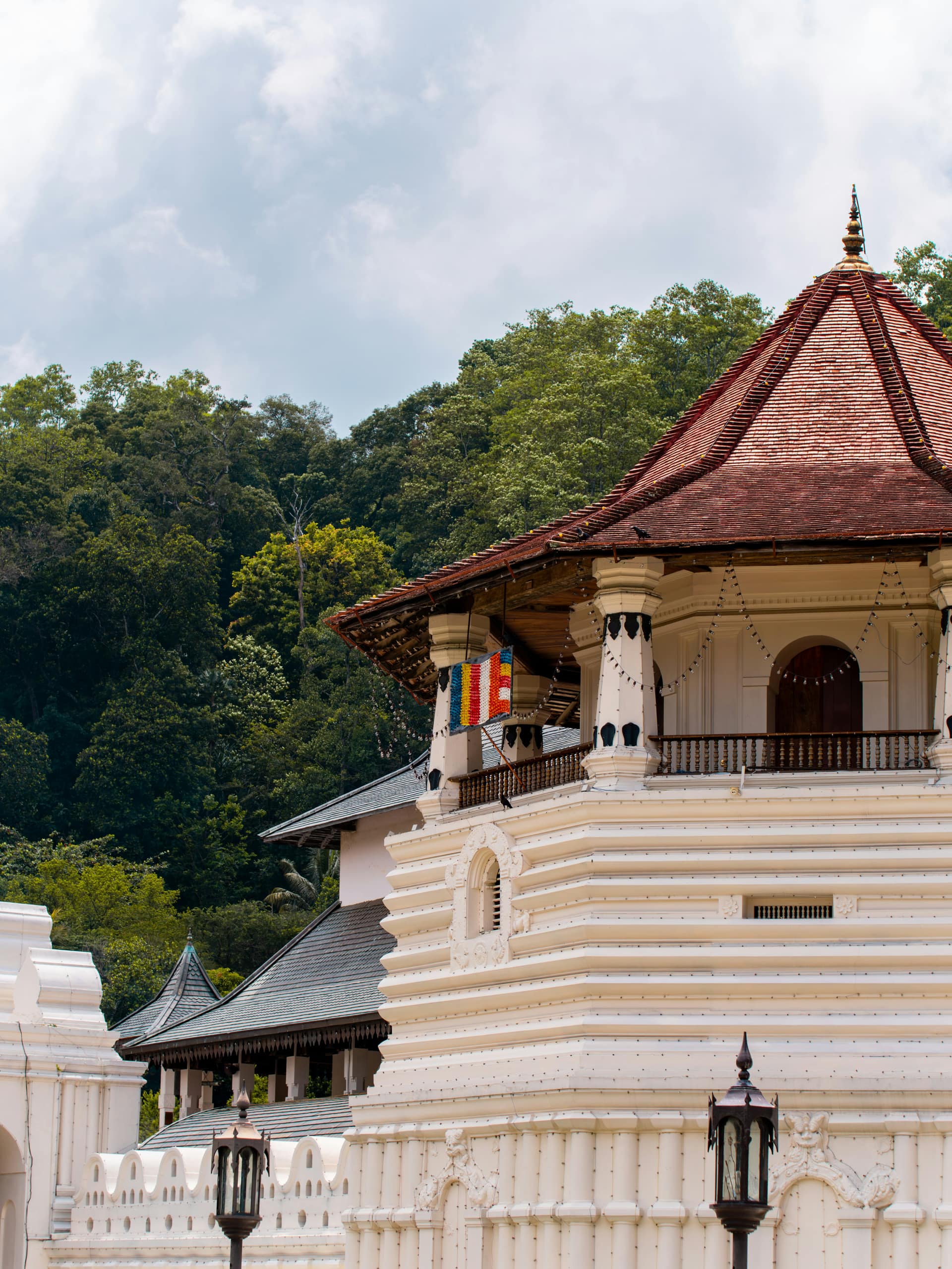
If you see one Sri Lankan festival, make it the Esala Perahera in Kandy, held over about ten nights around July or August. Honouring the sacred tooth relic of the Buddha, it fills the streets with whip-crackers, fire-dancers, Kandyan drummers and dancers, and dozens of ceremonially robed elephants.
The deep south holds its own Kataragama Esala festival at the same time of year: an intense, multi-faith event known for fire-walking. Book accommodation months ahead for either; Kandy in particular fills completely.
Sinhala & Tamil New Year: the island slows down
Around 13–14 April, the Sinhala & Tamil New Year (Aluth Avurudu / Puthandu) is the biggest national celebration, shared by Sinhalese Buddhists and Tamil Hindus alike. It marks the end of the harvest, and the whole country pauses: families cook milk rice (kiribath) and sweets, light the hearth at an auspicious time, and play village games.
It's a quieter, home-centred festival rather than a street spectacle, but a wonderful time to be hosted in a village or homestay, though many shops and services close for several days.
Thai Pongal, Deepavali & Hindu festivals
Sri Lanka's Tamil Hindu communities, strongest in the north and east and the hill-country tea estates, bring their own vivid calendar. Thai Pongal (mid-January) is a harvest thanksgiving to the sun god, when families boil the first rice until it overflows for good fortune.
Deepavali, the festival of lights (October or November), fills homes and temples with oil lamps. In Jaffna, the 25-day Nallur temple festival (around August) is one of the north's great spectacles. These are best experienced around Jaffna, the east coast, and Hindu temple towns.
- →Thai Pongal (mid-January): harvest thanksgiving, pongal rice
- →Deepavali (Oct–Nov): lamps and lights
- →Nallur festival, Jaffna (around August): 25 days of processions
- →Dress modestly and follow temple etiquette
Planning a trip around the festivals
Because most dates follow the lunar calendar, confirm the year's exact dates before locking in flights, and book hotels early, as Esala Perahera, Vesak week, and New Year all strain accommodation. A festival can be the centrepiece of a trip or a lucky bonus alongside the usual highlights.
Lankan Stays & Trails times private itineraries around the festivals you most want to see, with guides who interpret the rituals respectfully and seating arranged for major peraheras. Tell us your dates and we'll tell you what's on.
Frequently asked questions
What is the main festival of Sri Lanka?
The Sinhala & Tamil New Year (mid-April) is the biggest national celebration, shared across communities. Vesak (May full moon) is the most sacred Buddhist festival, while the Kandy Esala Perahera (around July–August) is the most spectacular procession.
When is Vesak in Sri Lanka?
Vesak falls on the full-moon Poya day in May, so the exact date shifts each year with the lunar calendar. It's celebrated nationwide with lanterns, illuminated pandals, and free dansala food stalls, best seen in the evening.
When is the Kandy Esala Perahera in 2026?
The Esala Perahera runs for about ten nights around July or August, set by the lunar calendar each year. Confirm the dates ahead of time and book Kandy accommodation months in advance, as the city fills completely.
Is Deepavali celebrated in Sri Lanka?
Yes. Deepavali, the Hindu festival of lights, is a national holiday celebrated by Sri Lanka's Tamil communities in October or November, with oil lamps in homes and temples. Jaffna, the east coast, and Hindu temple towns are good places to experience it.
What is the Sinhala and Tamil New Year?
Held around 13–14 April, it marks the harvest new year for both Sinhalese Buddhists and Tamil Hindus. It's a home-centred festival of milk rice, sweets, auspicious rituals, and village games: a lovely time to be hosted, though many businesses close.
Can tourists attend Sri Lankan festivals?
Yes, visitors are welcome at most festivals when dressed modestly and behaving respectfully. Follow local guidance, ask before photographing worshippers, and book accommodation early for major events like the Esala Perahera and Vesak.
Does Lankan Stays & Trails plan festival trips?
Yes. We time private itineraries around the festivals you want to see (Esala Perahera, Vesak, Kataragama, Nallur, and more) with respectful guides and arranged viewing. Share your travel dates and we'll tell you what's on.