
Quick answer
A Sita-centred route follows her story in Sri Lankan tradition: Weragantota near Mahiyangana, where Ravana's chariot is said to have landed; Sita Kotuwa near Gurulupotha, her first captivity; Seetha Eliya and Hakgala, identified with Ashok Vatika; Ravana Falls and Ravana Cave near Ella, linked to her in local belief; and Divurumpola, the place of her fire ordeal. It takes four to six days from Kandy, ending with a beach or a return to Colombo.
Key takeaways
- The route follows Sita's story in Sri Lankan tradition.
- Weragantota and Sita Kotuwa mark her arrival and first captivity.
- Seetha Eliya and Hakgala mark Ashok Vatika.
- Divurumpola marks her fire ordeal.
- The trail takes four to six days from Kandy.
Why follow Sita
Sita's story is one of endurance, faith and dignity. Following the places tradition links to her gives pilgrims a chance to reflect on those qualities in order, from her arrival as a captive to her vindication by fire.
The route is especially meaningful for women pilgrims, mother-daughter trips and families who see Sita as a model. It is also quieter than the busiest Ramayana circuits, with more time at each place.
The trail can be added to a wider Ramayana itinerary or taken on its own.
Pace matters on this trail. Rather than racing between many sites, it encourages longer, quieter visits: time to sit by the stream at Seetha Eliya, to walk slowly at Hakgala and to pray under the tree at Divurumpola. Many pilgrims keep a journal along the way.
Arrival: Weragantota and Sita Kotuwa
Tradition holds that Ravana's flying chariot, the Dandu Monara, landed at Weragantota near Mahiyangana. From there he took Sita to Sita Kotuwa near Gurulupotha, where his queen Mandodari had a palace.
Both lie east of Kandy on the road over the Hunnasgiriya hairpins and make a full day from Kandy, perhaps with the great stupa at Mahiyangana. Sita Kotuwa has quiet ruins; Weragantota is a rural site with local legends.
Our pages on Weragantota and Sita Kotuwa cover access and what to expect.
- →Weragantota: the chariot lands.
- →Sita Kotuwa: first captivity.
- →A full day from Kandy.
Ashok Vatika: Seetha Eliya and Hakgala
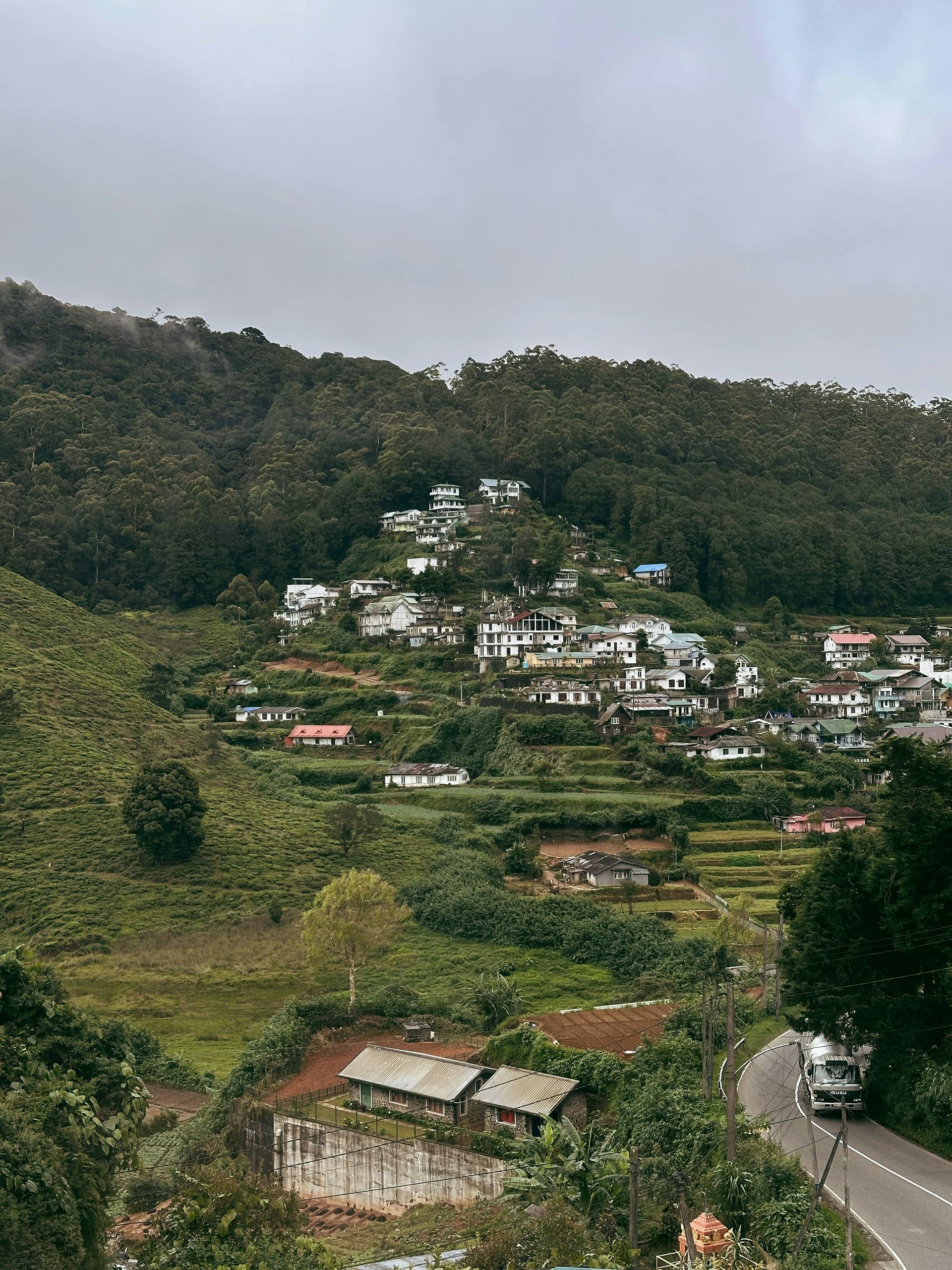
The heart of the trail is Seetha Eliya, where the Seetha Amman Temple stands beside the stream. Here, tradition says, Sita spent her captivity, refused Ravana and met Hanuman, receiving Rama's ring and giving her chudamani in return.
Hakgala garden, a few minutes away, represents the wider grove. On the way up from Kandy, the Ramboda Hanuman temple recalls Hanuman's search for her.
Allow a relaxed morning for the temple and garden, with an archana or special puja if you wish.
- →Ramboda: Hanuman's search.
- →Seetha Eliya: the stream and shrine.
- →Hakgala: the wider grove.
Near Ella: Ravana Falls and Ravana Cave
Local belief links Ravana Falls, south of Ella, to Sita bathing in a pool below the falls, and Ravana Cave, above Ella, to a place where she was hidden. These stories differ from the Ashok Vatika tradition but are part of the island's Sita lore.
Ravana Falls is visible from the roadside; Ravana Cave involves a steep climb of several hundred steps.
These sites often reflect Sinhala stories of Ravana as a king, adding another perspective to the trail.
Families who prefer to keep the trail strictly devotional sometimes skip the Ella sites and spend the extra time at Seetha Eliya and Divurumpola instead. Either choice is valid; the trail is meant to be shaped around what each pilgrim finds most meaningful.
The fire ordeal: Divurumpola
After Rama's victory, Sita underwent the agni pariksha, the trial by fire, to prove her purity. Sri Lankan tradition places it at Divurumpola near Welimada, whose name is explained as the place of the oath.
A Buddhist temple stands at the site, and Hindu pilgrims pray beneath a large tree. Many end their Sita trail here, reflecting on her vindication.
Divurumpola lies between Nuwara Eliya and Ella, so it fits easily on the drive.
- →Divurumpola: place of the oath.
- →Buddhist temple and sacred tree.
- →On the road between Nuwara Eliya and Ella.
A sample route
Day one: Kandy, with a visit to the Temple of the Tooth. Day two: Weragantota, Sita Kotuwa and Mahiyangana, back to Kandy. Day three: drive via Ramboda to Nuwara Eliya. Day four: Seetha Eliya, Hakgala, Divurumpola and on to Ella. Day five: Ravana Falls and Ravana Cave, then onwards to the south coast or back to Colombo.
A six-day version adds a rest day in Nuwara Eliya or a beach finish. Lankan Stays & Trails can arrange the route with a driver-guide who knows each site's stories.
The Ramayana trail 9-day tour covers many of these places within a wider circuit.
- →Days one and two: Kandy and the arrival sites.
- →Days three and four: Ramboda, Seetha Eliya, Divurumpola.
- →Day five: Ella sites and onward.
Frequently asked questions
What places in Sri Lanka are linked to Sita?
Tradition links Weragantota (Ravana's chariot landing), Sita Kotuwa (first captivity), Seetha Eliya and Hakgala (Ashok Vatika), Ravana Falls and Ravana Cave (local legends) and Divurumpola (her fire ordeal). Each can be visited on a Sita-centred route.
How many days does the Sita trail take?
Four to six days from Kandy, depending on pace. Five days allows a full day for Weragantota and Sita Kotuwa, a relaxed morning at Seetha Eliya, Divurumpola on the way to Ella and the Ella sites before moving on.
Can I do the trail without Sita Kotuwa?
Yes. Sita Kotuwa and Weragantota are remote and need a full day from Kandy. A shorter trail can focus on Seetha Eliya, Hakgala and Divurumpola, which lie close together between Nuwara Eliya and Ella.
Is the trail suitable for elderly pilgrims?
Mostly. Seetha Eliya, Hakgala's lower lawns, Divurumpola and Ravana Falls are easy. Sita Kotuwa involves a long drive and uneven ground, and Ravana Cave has steep steps. Skip those if needed and keep driving days short.
Where should the trail end?
Many pilgrims end at Divurumpola, reflecting on Sita's vindication, then relax in Ella or on the south coast. Others return to Colombo via Kandy. A beach finish makes a restful end to a devotional journey.
Is Ravana Falls really linked to Sita?
Local belief says Sita bathed in a pool below the falls, and Ravana Cave is said to be where she was hidden. These are local traditions, often from Sinhala stories, and differ from the Ashok Vatika tradition at Seetha Eliya.
Can the trail be combined with other Ramayana sites?
Yes. Munneswaram near Chilaw, Kelaniya near Colombo, Ussangoda and Rumassala on the south coast and Mannar in the north can all be added for a fuller Ramayana circuit across the island.