
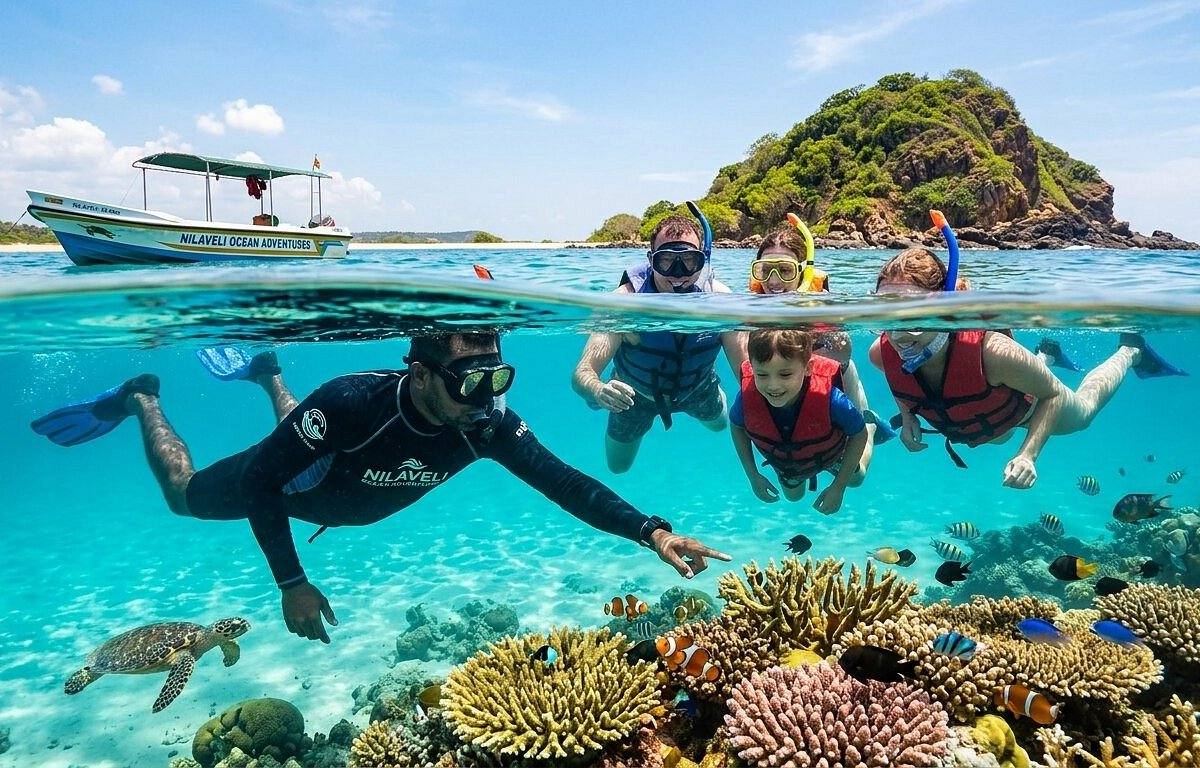
Quick answer
Freediving in Sri Lanka is offered by a small number of schools and dive centres on the south coast, around Hikkaduwa, Unawatuna and Mirissa, from November to April, and around Trincomalee and Pigeon Island from May to September. Beginner courses usually take two to three days, combining breath-hold theory, pool or shallow sessions and open-water dives to around 10 to 20 metres. Never freedive alone, train with a certified instructor, and choose the coast that is in season for calm, clear water.
Key takeaways
- Schools operate on the south coast and around Trincomalee.
- The south is in season November to April; the east May to September.
- Beginner courses take two to three days.
- Training depths start around 10 to 20 metres.
- Never freedive alone; always train with an instructor.
What freediving is
Freediving means diving on a single breath, without scuba tanks. Freedivers use relaxation, breathing techniques and efficient movement to dive deeper and stay longer, and the sport ranges from relaxed snorkelling-style dives on reefs to competitive depth disciplines.
Many people are drawn to it for the quiet: no bubbles, no heavy equipment and a calm, focused mind. Marine life is often less disturbed by freedivers than by scuba divers, so encounters with turtles and fish can be closer.
Learning properly with an instructor is essential, because freediving has specific risks, especially blackout, which must be managed with strict safety procedures.
Freediving also improves other water sports. Surfers use breath-hold training to stay calm during long hold-downs, snorkellers learn to dive down to reefs and turtles with confidence, and scuba divers often find their air consumption improves once they learn to relax underwater.
Where to freedive
On the south and west coasts, from November to April, dive centres and freediving schools around Hikkaduwa, Unawatuna and Mirissa offer courses and guided sessions. Reefs, rock formations and wrecks provide varied sites, and turtles are common around Hikkaduwa.
On the east coast, from May to September, Trincomalee and Nilaveli offer calm, clear water, with Pigeon Island National Park nearby for reef snorkelling and shallow dives. Deeper water close to shore around Trincomalee suits depth training.
The number of dedicated freediving schools is small and changes, so check current operators before planning a trip around a course.
- →South coast: Hikkaduwa, Unawatuna, Mirissa.
- →East coast: Trincomalee, Nilaveli, Pigeon Island.
- →Check current schools before booking.
Seasons and visibility
The south and west coasts are calmest from November to April, with best visibility usually from around January to April. From May to September, the south-west monsoon makes these coasts rough, and diving largely stops.
The east coast is in season from May to September, with calm seas around Trincomalee. From October to April, the north-east monsoon brings rough seas and poor visibility to the east.
Visibility varies with plankton, rain and swell, typically from a few metres to 20 metres or more on the best days.
- →South: November to April, clearest January to April.
- →East: May to September.
- →Visibility varies with conditions.
What courses involve
Beginner courses from recognised freediving agencies usually take two to three days. They cover theory on physiology, breathing and safety; static breath-hold practice, often in a pool or calm shallows; and open-water sessions on a line, typically reaching 10 to 20 metres.
More advanced courses build depth, technique and rescue skills. Courses are certified, so you can continue training elsewhere.
You need to be a comfortable swimmer and in reasonable health. A medical questionnaire is usually required.
- →Two to three days for a beginner course.
- →Theory, breath-hold and open-water sessions.
- →Depths of around 10 to 20 metres.
Safety rules
The most important rule is never freedive alone. Shallow-water blackout can happen without warning, and a trained buddy watching from the surface is what keeps freedivers safe. Always dive one up, one down.
Train with certified instructors, use a line and buoy for depth dives, and never hyperventilate before a dive. Do not freedive within 24 hours of scuba diving at depth, and avoid alcohol and fatigue.
Respect marine life and protected areas such as Pigeon Island, where rules on touching coral and wildlife apply.
- →Never freedive alone.
- →Certified instructors, lines and buoys.
- →No hyperventilation; no diving after scuba.
Planning a freediving trip
Pick the coast in season and book a course in advance, as schools are small. Combine freediving with snorkelling, whale watching or surfing on the south coast, or with Pigeon Island and the Cultural Triangle from Trincomalee.
Lankan Stays & Trails can arrange accommodation near freediving schools and build a course into a wider adventure trip. For scuba options, see the diving guide.
Frequently asked questions
Where can I learn freediving in Sri Lanka?
A small number of schools and dive centres offer freediving courses on the south coast, around Hikkaduwa, Unawatuna and Mirissa, from November to April, and around Trincomalee and Nilaveli from May to September. Schools change, so check current operators before planning your trip around a course.
When is the best time for freediving in Sri Lanka?
The south and west coasts are best from November to April, with clearest water usually from January to April. The east coast around Trincomalee is best from May to September. Each coast is rough and murky in its monsoon season, when diving largely stops.
How long does a freediving course take?
A beginner course usually takes two to three days, covering theory, breath-hold practice and open-water sessions on a line to around 10 to 20 metres. Advanced courses take longer. Courses from recognised agencies are certified, so you can continue training elsewhere.
Is freediving dangerous?
Freediving has specific risks, especially shallow-water blackout, but it is safe when done properly. Never dive alone, always have a trained buddy watching from the surface, train with certified instructors, use lines and buoys, and never hyperventilate before a dive.
Do I need to be very fit to freedive?
You need to be a comfortable swimmer and in reasonable health, but not an athlete. Relaxation and technique matter more than strength. A medical questionnaire is usually required, and people with heart, lung or ear problems should seek medical advice first.
Can I freedive and scuba dive on the same trip?
Yes, but plan the order. Do not freedive within 24 hours of scuba diving at depth, because of decompression risks. Many divers freedive first, then scuba dive later in the trip, or keep the two on separate days with a gap between them.
What equipment do I need for freediving?
Schools provide most equipment for courses: a low-volume mask, snorkel, long freediving fins, a wetsuit and a weight belt. Sri Lanka's water is warm, around 27 to 30 degrees Celsius, so a thin wetsuit is enough. Experienced freedivers often bring their own mask and fins for comfort.