
Quick answer
The main hidden costs on a 10-day Sri Lanka trip for Swiss travellers are tipping the driver-guide and hotel staff, entry tickets to Sigiriya Rock, Dambulla, Polonnaruwa and a safari park that add up across several days, a warm layer bought locally for Nuwara Eliya if one was not packed, a local SIM or eSIM for data, bottled water for ten days, and optional extras such as a cooking class or spa treatment. None of these is large alone, but together they are worth budgeting a genuine buffer for.
Key takeaways
- Entry tickets to Sigiriya Rock, Dambulla's cave temples, Polonnaruwa's ruins and a Yala or Udawalawe safari are separate fees that stack up across the Cultural Triangle days and the safari day.
- Tipping the driver-guide across a 10-day private arrangement is a genuine budget line, distinct from and additional to the tour price itself.
- A local SIM or eSIM with a data plan for roughly ten days is a small but recurring cost most first-time visitors forget to budget for.
- Nuwara Eliya's noticeably cooler evenings sometimes prompt travellers to buy a jumper or fleece locally if they under-packed, an avoidable cost with better planning.
- Bottled water for ten days, plus the odd fresh king coconut or bottled drink at sightseeing stops, is a small daily cost that adds up over the full trip.
Why the small costs matter on a 10-day route
A 10-day Sri Lanka itinerary covers four or five distinct regions, each with its own entry fees, its own small purchases and its own opportunities to tip. None of these individually changes the trip budget, but across ten full days they add up to a noticeable total that is easy to underestimate when comparing only the headline flight and tour costs.
Swiss travellers used to all-inclusive European package pricing sometimes assume a quoted tour price covers everything on the ground. In Sri Lanka, entry fees, tips and personal extras are typically kept separate from the core itinerary price, which is worth knowing before the trip rather than discovering it day by day.
None of these costs are large in absolute terms relative to Swiss prices, but building a rough daily buffer into the budget, rather than treating the tour price as the full cost, avoids any awkward surprises along the way.
Entry fees that stack across the route
The Cultural Triangle alone involves several separate entry tickets: Sigiriya Rock, Dambulla's cave temples and, if the itinerary includes it, Polonnaruwa's ruins or a half-day Minneriya safari. Each is priced individually, and together they represent one of the larger on-the-ground cost clusters of the whole trip.
The Temple of the Tooth in Kandy and a Yala or Udawalawe safari further south add two more distinct entry costs, the safari typically including a vehicle and park fee bundled together. None of these figures should be treated as fixed since entry pricing for foreign visitors is periodically revised, so confirm current rates before travel rather than relying on an old quote.
- →Sigiriya Rock: a separate foreign-visitor entry ticket, among the higher single fees on the route.
- →Dambulla cave temples and Polonnaruwa's ruins: each a distinct, smaller entry fee.
- →A Yala or Udawalawe safari: typically a vehicle and park fee bundled per safari, confirm current rates before travel.
- →The Temple of the Tooth in Kandy: a modest separate entry fee, worth carrying in cash.
Tipping the driver-guide and hotel staff
A private driver-guide for the full ten days is the standard way this route is run, and tipping is customary at the end of the arrangement, roughly in proportion to the length and quality of the service rather than a fixed daily rate. It is worth budgeting for this as a distinct line rather than an afterthought on the last day.
Smaller tips for hotel porters, restaurant staff and occasional local guides at sites like Sigiriya or Polonnaruwa also add up over ten days, even if each individual tip is modest. Carrying a reasonable amount of small local currency notes throughout the trip makes this easier than trying to find change at the point of tipping.
- →Driver-guide: a single, larger tip at the end of the ten-day arrangement, reflecting the length of service.
- →Hotel porters and housekeeping: small tips across several different hotel stays.
- →Local site guides, where used, at Sigiriya, Polonnaruwa or the Temple of the Tooth.
A cold-weather layer for Nuwara Eliya
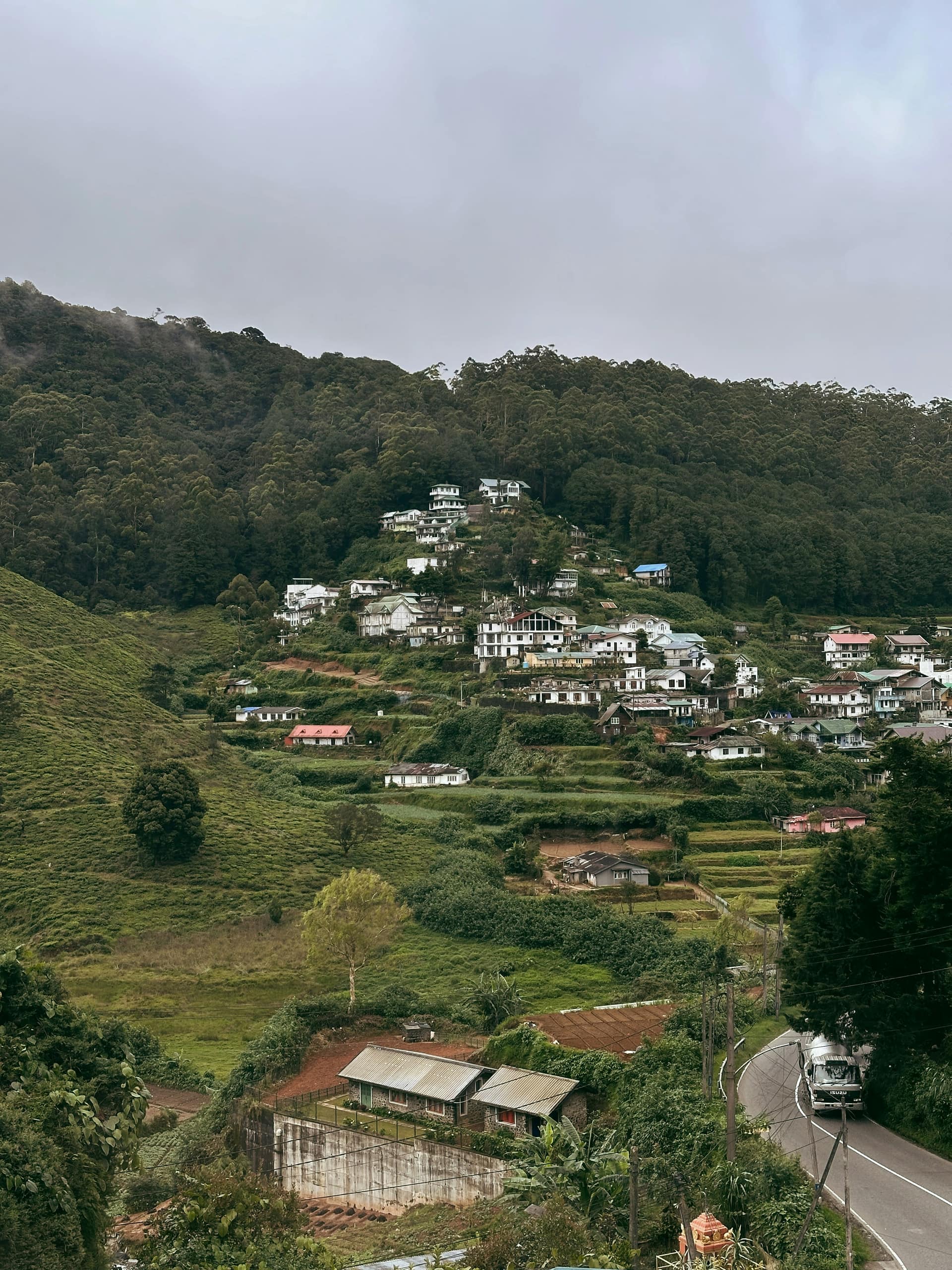
Nuwara Eliya's evenings, at altitude in the hill country, are noticeably cooler than the coast or Cultural Triangle, closer to a mild Swiss autumn evening than anything else on the route. Travellers who pack only tropical clothing sometimes end up buying a jumper or fleece locally once they feel the evening chill.
This is one of the easiest hidden costs to avoid entirely: packing one warm layer from home costs nothing extra in luggage terms and removes the need for a last-minute local purchase, which is often a rushed and less considered buy than planning ahead.
SIM data, bottled water and small daily extras
A local SIM or eSIM with a data plan covering roughly the ten-day trip is a small, recurring cost that is easy to forget when budgeting only for flights and the tour. It is worth arranging either on arrival at Colombo airport or in advance through an eSIM provider, since reliable data supports maps, ride-hailing apps and staying in touch.
Bottled water is the sensible default for drinking throughout the trip, and across ten days in a warm climate this becomes a genuine, if small, recurring cost. Fresh king coconuts and bottled soft drinks at sightseeing stops are an easy, inexpensive extra that most travellers end up trying at least once.
- →Local SIM or eSIM: a small one-off cost for roughly ten days of data.
- →Bottled water: a modest daily cost across the full trip, inexpensive relative to Swiss prices.
- →Optional extras: a cooking class, spa treatment or an extra activity booked on the ground rather than in advance.
Budgeting a realistic buffer
Rather than trying to price every individual fee precisely, most Swiss travellers find it easier to add a general daily buffer on top of the flight and core tour cost to cover entry fees, tips, water and small extras together. Since on-the-ground pricing in Sri Lanka is inexpensive relative to Swiss costs, this buffer does not need to be large to comfortably cover the trip.
Lankan Stays & Trails quotes tour pricing in USD and can outline roughly which costs are included in the itinerary price and which, such as tips and personal extras, are typically kept separate, which makes it easier to plan this buffer accurately before departure.
Frequently asked questions
What are the hidden costs of a Sri Lanka trip?
The main hidden costs are tipping the driver-guide and hotel staff, stacked entry fees across the Cultural Triangle and a safari, a local SIM or eSIM for data, bottled water across the trip, and occasional extras such as a cooking class. None is large alone but together they add a noticeable buffer to the headline tour price.
Do entry fees add up on the 10-day Sri Lanka itinerary?
Yes. Sigiriya Rock, Dambulla's cave temples, Polonnaruwa's ruins, the Temple of the Tooth and a Yala or Udawalawe safari are all separate fees, and across the Cultural Triangle and safari days these stack into one of the larger on-the-ground cost clusters of the trip.
How much should you tip a driver-guide in Sri Lanka?
There is no fixed rate, but a single tip at the end of a 10-day private driver-guide arrangement, roughly proportional to the length and quality of service, is customary. Smaller tips for hotel staff and local site guides along the way are separate and additional.
Do you need a SIM card for a Sri Lanka trip from Switzerland?
It is strongly recommended. A local SIM or eSIM with a data plan for roughly ten days is inexpensive and supports maps, ride-hailing apps and staying in touch, and it can be arranged on arrival at Colombo airport or in advance.
Is bottled water necessary in Sri Lanka?
Yes, bottled or otherwise reliably treated water is the sensible default for drinking throughout the trip. Across ten days this becomes a small but genuine recurring cost, inexpensive relative to Swiss prices but worth including in the daily budget.
Do you need to pack warm clothes for Sri Lanka?
Yes, at least one warm layer for Nuwara Eliya, where evenings are noticeably cooler than the coast, closer to a mild Swiss autumn evening. Packing this from home avoids the need for a last-minute local purchase once the evening chill is felt.
How much extra should I budget beyond the tour price for Sri Lanka?
Most Swiss travellers add a general daily buffer on top of the flight and core tour cost to cover entry fees, tips, water and small extras, rather than pricing each item individually. On-the-ground costs are inexpensive relative to Swiss prices, so this buffer does not need to be large.