
Quick answer
Solo American travellers should generally budget 10 to 16 days for Sri Lanka, longer than a typical group or family trip, because solo pacing tends to slow down naturally: more time in each place, more flexibility to change plans, and no pressure to keep to a fixed group schedule. Given the 18 to 22 hour flight from the US, anything under 9 days is workable but leaves little room for the spontaneous detours that make solo travel worthwhile. Each additional day typically adds roughly USD 60 to 120 to a mid-range solo budget, including accommodation, driver-guide time and meals.
Key takeaways
- Solo travellers commonly extend a Sri Lanka trip by 2 to 4 days compared with a group itinerary covering the same regions, simply because pacing is unhurried.
- 10 to 16 days is the realistic solo range for a US traveller once the 18 to 22 hour flight is factored against the value of extra flexibility.
- A solo trip's marginal cost per extra day runs roughly USD 60 to 120 at a mid-range level, since there's no group to split driver, guide or private-transfer costs with.
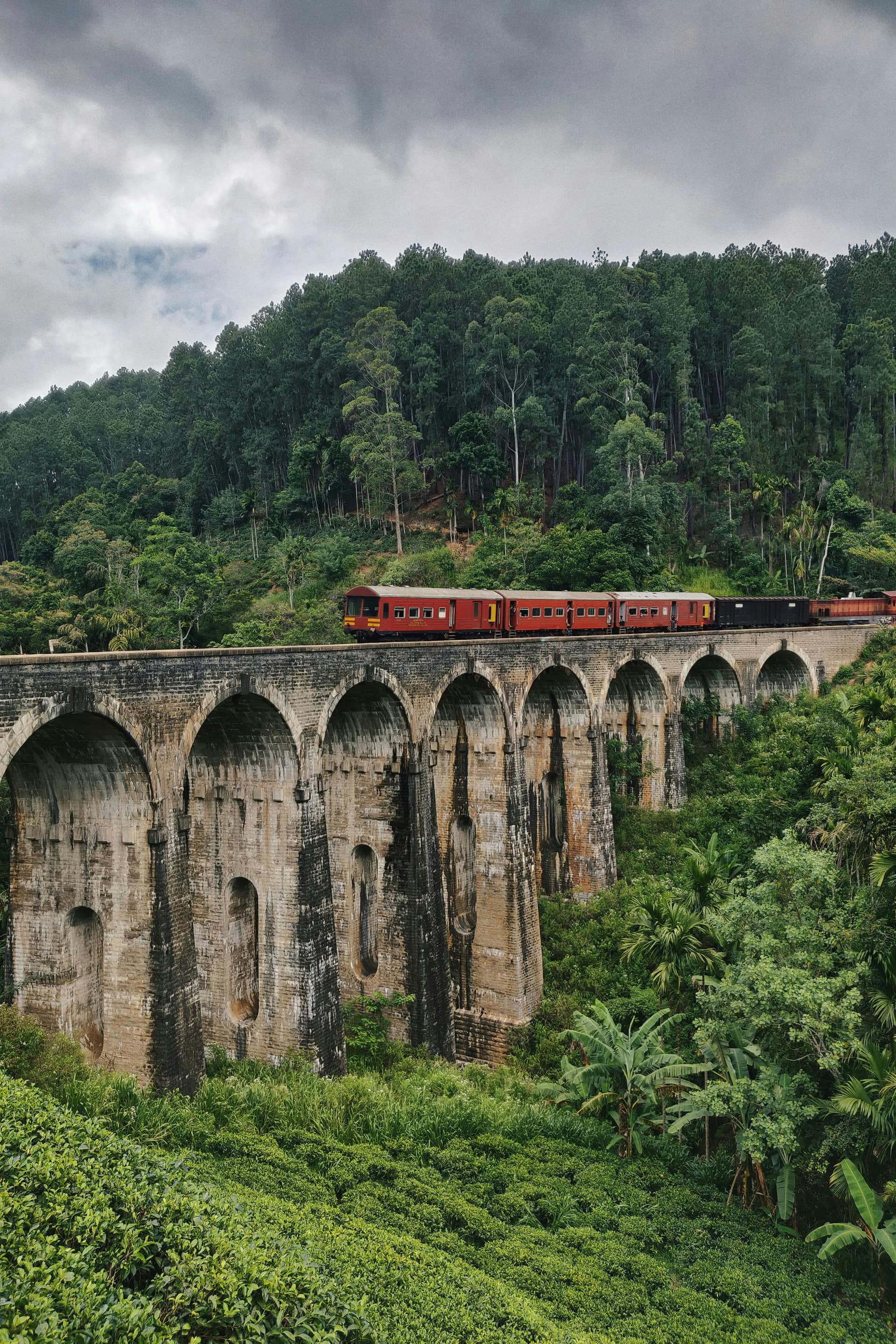
- Ella and Kandy suit solo travellers wanting to slow down and stay an extra night without disrupting anyone else's plans.
- A private driver-guide is a genuinely different value proposition solo: it replaces the safety and logistics net a group provides.
Why solo travel changes the length calculation
Solo travel in Sri Lanka doesn't just change who's along for the trip, it changes how many days actually make sense, because there's no second opinion capping a stay or pushing to move on early. A solo traveller who falls for Ella's hiking or Kandy's temple evenings can simply add a night, something far harder to negotiate in a couple or family itinerary.
This flexibility tends to push solo trip lengths upward, not down. Most solo American travellers who've done Sri Lanka report wishing they'd built in more slack, rather than less, once they discovered how much a single extra day in one place changed the experience.
The realistic range: 10 to 16 days
Ten to 16 days works well for solo travel from the US, striking a balance between the flight time investment (18 to 22 hours each way) and the genuine value of unhurried, flexible days. At the shorter end, 10 days supports a Cultural Triangle base, hill country and one coastal stop with minimal compromise. At the longer end, 16 days allows detours: an extra hike, a slower coast, a side trip to Jaffna in the north for travellers who want somewhere less visited.
Below 9 days, solo travel is still entirely workable, but it starts to resemble a fixed group itinerary rather than the flexible trip solo travel is usually chosen for, since there's less slack to change plans once they're booked.
- →10 days: Cultural Triangle, hill country, one coastal base, tightly but comfortably paced.
- →13-14 days: the above with an added safari or extra hill-country time.
- →16 days: room for one genuine detour, Jaffna, the east coast, or simply a slower pace throughout.
Budgeting the extra days
Extending a solo trip has a different cost structure than extending a group trip, because a solo traveller doesn't split accommodation, driver or guide costs with anyone. A mid-range extra day, hotel, meals, local transport or a half-day driver-guide, typically runs roughly USD 60 to 120, hedged for the specific region and season, higher on the coast in peak December-March than inland in the shoulder months.
This makes the length decision genuinely a budget decision for solo travellers in a way it isn't for a group splitting costs three or four ways. Weigh each additional day against what it actually buys: an extra night in Ella costs less and arguably adds more than an extra night in a five-star coastal resort.
- →A mid-range extra day for a solo traveller runs roughly USD 60-120, higher on the coast in peak season.
- →Hill-country towns like Ella and Nuwara Eliya tend to be less costly per extra night than coastal resort areas.
- →A private driver-guide's day rate is a fixed cost whether travelling solo or in a group, so it's proportionally more expensive solo, worth planning routes to minimise unnecessary driving days.
Pacing a solo itinerary
Solo travel rewards fewer, longer stops rather than a packed circuit, partly for cost reasons and partly because solo travellers report the connections made in one place, a guesthouse owner, a fellow traveller, a local guide, as the best part of the trip, and those take more than one night to develop.
Kandy and Ella are particularly well suited to this: both are compact enough to explore on foot, safe for a solo traveller to walk in the evening within the town centre, and interesting enough to fill 3 nights rather than the 1 to 2 a group itinerary might allocate.
- →Favour 3-night stops over 1-night stops when travelling solo; the extra day is where the trip actually happens.
- →Kandy and Ella both reward a slower solo pace, walkable and safe to explore independently in the evening.
- →Build one flexible, unplanned day into any solo itinerary over 10 days rather than fixing every day in advance.
When a shorter solo trip still works
Not every solo trip needs 10-plus days. A focused 7 to 8 day trip covering one region, the Cultural Triangle and hill country, or the south coast alone, works well for a solo traveller with limited vacation time, provided the itinerary stays tightly regional rather than trying to circle the island.
The trade-off is simply less room for spontaneity, the flexibility that makes longer solo trips distinctive gets compressed into a schedule closer to a standard itinerary.
Planning solo trip length
Start from available vacation days and budget per extra day, then decide how much flexibility to build in, rather than fixing a rigid day-by-day plan from the outset. Ten to 16 days gives most solo American travellers the right balance of flight-time value and freedom to change course.
Lankan Stays & Trails runs solo itineraries as private, driver-guided routes with built-in flexibility, so a solo traveller can extend a stop that's working without renegotiating the whole trip.
Frequently asked questions
How many days should a solo traveller spend in Sri Lanka?
Roughly 10 to 16 days works well for a solo American traveller, longer than a typical group trip, since solo pacing naturally slows down and there's more value in building flexibility into the schedule to extend a stop that's working.
Is a week enough for solo travel in Sri Lanka?
It's workable for a single-region trip, the Cultural Triangle and hill country, or the south coast alone, but it leaves little room for the spontaneous changes that make solo travel distinctive, given the 18 to 22 hour flight from the US.
How much does an extra day cost when travelling solo in Sri Lanka?
Roughly USD 60 to 120 at a mid-range level, covering accommodation, meals and local transport, higher on the coast in the December-March peak season. Solo travellers don't split these costs, so extra days carry proportionally more weight in the budget than for a group.
Is Sri Lanka good for solo travel from the USA?
Yes, it's a compact, English-widely-spoken island with a well-established private driver-guide network, which is a genuinely different value proposition solo since it replaces the logistics and safety net a group would otherwise provide.
Where should solo travellers spend extra time in Sri Lanka?
Ella and Kandy both reward a slower solo pace: compact, walkable, safe to explore independently in the evening, and interesting enough to justify 3 nights rather than the 1 to 2 a fixed group itinerary might allocate.
Should solo travellers plan a fixed itinerary or leave flexibility?
A mix works best: fix accommodation and transport for most of the trip, but leave at least one day unplanned. That flexibility is one of the main practical advantages of travelling solo rather than in a group.