
Quick answer
Sri Lanka's south coast, covering Galle, Mirissa, Unawatuna and Bentota, realistically needs 2 to 4 days for a Canadian traveller. Two days suits a single base with a Galle Fort day trip, while 3 to 4 days allows moving between a culture-and-shopping base like Galle and a beach-focused base like Mirissa or Unawatuna. The region is generally driest and calmest from December to March, which lines up well with Canadian winter travel, and works as a genuinely relaxed final leg after the Cultural Triangle and hill country.
Key takeaways
- Galle Fort, a UNESCO World Heritage Site, can be explored on foot in roughly half a day.
- Mirissa and Unawatuna both offer whale watching in season, roughly November to April, with sightings never guaranteed on any given day.
- The south coast is generally driest from December to March, aligning with Canada's deep winter months.
- Two days suits a single base plus a Galle Fort day trip; 3 to 4 days allows combining a culture base with a beach base.
- The south coast is the part of a Sri Lanka trip most Canadian travellers describe as genuinely restful rather than sightseeing-heavy.
What the south coast covers
The south coast stretches roughly from Bentota in the north down through Unawatuna, Galle and Mirissa, all within about an hour and a half of each other by road. Each town has a distinct character: Bentota is river-and-beach resort country, Galle is a walkable colonial-era fort town, and Mirissa and Unawatuna are more beach and cafe-focused with a younger, more casual feel.
Unlike the Cultural Triangle or hill country, the south coast isn't built around a single must-see site, which is part of its appeal for Canadian travellers arriving after several days of temples, trains and early starts. It's a stretch built for a slower pace, longer breakfasts and fewer alarms.
Realistic day allocation
Two days is workable for a single base, most commonly Mirissa or Unawatuna, with a half-day trip into Galle Fort for its ramparts, boutiques and colonial architecture. This suits a shorter overall Canadian itinerary of 10 to 12 days where the coast is the finishing touch rather than the focus.
Three to four days allows splitting time between two bases, for example a night or two in Galle for the fort and its restaurants, then moving to Mirissa or Unawatuna for beach time, without feeling like the days are stacked with driving.
- →2 days: single base (Mirissa or Unawatuna) plus a Galle Fort day trip.
- →3 days: Galle overnight, then a beach base for the remainder.
- →4 days: Galle, plus a proper beach stretch with time for whale watching if the season fits.
Galle Fort: how much time it needs
Galle Fort, a UNESCO World Heritage Site built by the Portuguese and later fortified by the Dutch, can be walked in roughly half a day: the ramparts, the lighthouse, a handful of boutiques and galleries in converted colonial buildings, and a coffee stop somewhere with a rampart view. A full day allows a slower pace and a proper lunch or dinner inside the fort walls, which many find worth the extra time.
Most travellers visit as a day trip from a nearby beach base rather than staying multiple nights inside the fort itself, though a night or two there suits anyone who wants the atmosphere in the early morning or evening once the day-trip crowds have thinned.
Choosing between Mirissa, Unawatuna and Bentota
Mirissa is the more established base for whale watching boat trips, running roughly November to April with sightings never guaranteed on any single outing, and has a lively but still fairly low-key strip of beachfront restaurants. Unawatuna offers a more sheltered, family-friendly bay with calmer swimming conditions than the more open beaches nearby.
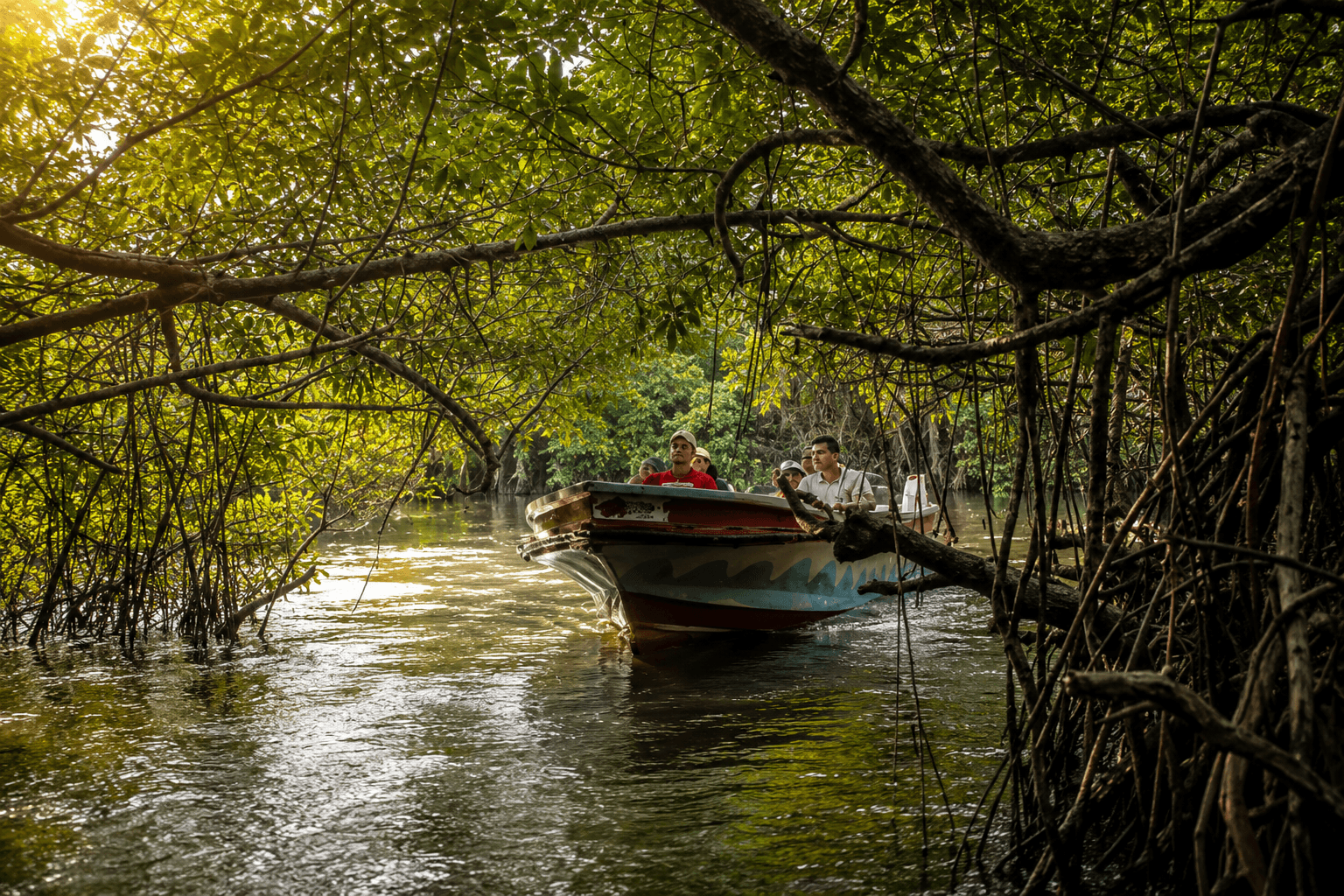
Bentota, further north, leans more toward resort-style stays and river safaris on the Bentota River, and suits travellers wanting a quieter, more self-contained few days rather than a walkable town centre.
- →Mirissa: whale watching (roughly Nov-Apr), lively but low-key beachfront.
- →Unawatuna: sheltered bay, calmer swimming, good for families.
- →Bentota: resort-style stays, river safaris, quieter and more self-contained.
When the south coast suits a Canadian trip best
The south-west coast is generally driest and calmest from December to March, during the north-east monsoon season, which lines up neatly with the depth of the Canadian winter and is a large part of why this coast draws so many Canadian travellers. May to September brings more rain and rougher seas to this side of the island, though the east coast, including Trincomalee, is in season during those months instead.
Given Sri Lanka's two monsoon systems on opposite coasts, there's rarely a genuinely bad time to find a good beach somewhere on the island, only a bad time for one particular coast, which is worth remembering if travel dates fall outside the south coast's prime window.
Fitting the south coast into a Canadian itinerary
Most Canadian itineraries place the south coast at the end of the trip, after the Cultural Triangle, hill country and a wildlife safari, using it as the wind-down before the long flight home. This sequencing also suits jet lag less directly, since by this point most travellers are fully adjusted and simply want a slower pace.
Lankan Stays & Trails builds the south coast leg around whichever base suits the traveller's pace, whether that's Galle's culture and shopping or Mirissa's beach-first rhythm, rather than a fixed one-size-fits-all stop.
Frequently asked questions
How many days do you need on Sri Lanka's south coast?
A realistic range is 2 to 4 days. Two days suits a single beach base with a Galle Fort day trip, while 3 to 4 days allows splitting time between Galle and a separate beach base like Mirissa or Unawatuna.
How long should I spend in Galle Fort?
Roughly half a day covers the ramparts, lighthouse and main streets on foot. A full day allows a slower pace with time for shopping in the converted colonial buildings and a proper meal inside the fort walls.
When is whale watching season in Mirissa?
Whale watching runs roughly November to April, though sightings are never guaranteed on any single boat trip and conditions vary by day. Check current operator schedules closer to your travel dates.
Should I stay in Galle or Mirissa?
Galle suits travellers who want a walkable, culture-and-shopping base with fort-town atmosphere, while Mirissa suits a more beach-focused stay with whale watching access. Many itineraries combine a night or two in each rather than choosing only one.
Is the south coast good for a Canadian winter trip?
Yes. The south-west coast is generally driest from December to March, which lines up well with the depth of the Canadian winter, making it one of the more popular reasons Canadian travellers choose Sri Lanka for a winter escape.
What is the difference between Unawatuna and Mirissa?
Unawatuna has a more sheltered bay with calmer swimming conditions, suiting families, while Mirissa is the more established base for whale watching trips and has a slightly livelier beachfront restaurant strip.