
Quick answer
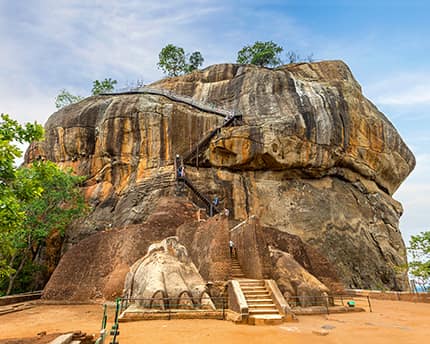
Ella is considerably cheaper than Sigiriya. Ella's main attractions, including Little Adam's Peak, Ella Rock and the Nine Arch Bridge, cost nothing, and guesthouse competition keeps rooms affordable. Sigiriya carries the most expensive single entry ticket most first-time visitors buy in Sri Lanka, with Dambulla and Polonnaruwa charging separately on top. Prices change, so confirm current figures locally.
Key takeaways
- Sigiriya carries the most expensive single entry ticket most first-time visitors buy in Sri Lanka.
- Dambulla Cave Temple and Polonnaruwa charge separate entry fees on top of it.
- Ella's main walks and viewpoints are free, and the train fare is modest.
- Transport is usually the largest single cost, charged daily rather than by distance.
- Published daily budgets of roughly US$30 to 50, US$80 to 180 and US$250 plus per person still apply here.
The tickets, which drive the difference
Sigiriya carries the most expensive single admission most first-time visitors buy in Sri Lanka. There is no student rate for foreign visitors, no cheaper time of day, and no combined ticket that softens it. Prices change periodically, so confirm the current figure locally rather than budgeting from any published number.
Dambulla Cave Temple and Polonnaruwa each charge separately, so a full Cultural Triangle stay involves three significant admissions rather than one. Anuradhapura is a fourth if it is on the itinerary.
Ella has no equivalent. Little Adam's Peak, Ella Rock and the Nine Arch Bridge are all free to reach, tea estate and factory visits are inexpensive, and the only meaningful ticketed cost is the train fare, which is modest by any standard.
- →Sigiriya: the most expensive single admission most visitors buy here.
- →No student rate for foreign visitors and no cheaper hour.
- →Dambulla and Polonnaruwa charge separately on top.
- →Ella's main walks and viewpoints cost nothing.
Where the Sigiriya cost can be reduced
Pidurangala is the honest alternative. It costs substantially less, takes roughly forty-five minutes, and gives the classic view of Sigiriya itself, which is the photograph most travellers actually want. It ends in a scramble over boulders, so it is shorter rather than gentler.
What Pidurangala does not give you is the water gardens, the fresco gallery, the mirror wall or the summit palace ruins. Whether that matters depends entirely on whether you came for the archaeology or for the view.
Travellers on tight budgets sometimes do Pidurangala and Dambulla and skip Sigiriya itself, which is a defensible plan rather than a failure. Dambulla's five caves with roughly 150 Buddha statues are a genuinely major site in their own right.
- →Pidurangala costs substantially less and takes roughly forty-five minutes.
- →It gives the view of Sigiriya, not the water gardens or frescoes.
- →The boulder scramble makes it shorter rather than easier.
- →Pidurangala plus Dambulla is a defensible budget alternative.
Transport, usually the largest cost
On most itineraries covering both stops, transport rather than admissions is the biggest line. A private car with a driver is charged by the day rather than by distance, and it includes fuel and usually the driver's meals and accommodation, with a daily tip customary on top.
Because charging is daily, a day spent sitting at Sigiriya costs much the same as a day driving to the coast. That changes the arithmetic of adding nights: an extra night at a base costs accommodation plus a driver day, not just the room.
The alternative is buses and the train, which reduce this cost dramatically. Dambulla to Kandy by bus takes roughly two and a half to three hours, and the Kandy to Ella train is inexpensive in any class. The cost is time, comfort and luggage handling rather than money.
- →Transport is usually the largest single cost on this section.
- →Drivers are charged daily, so idle days cost much the same as driving days.
- →An extra night costs the room plus a driver day.
- →Buses and the train reduce the cost substantially at the expense of comfort.
Accommodation at the two stops
Ella is cheaper and easier. The town is compact with dense guesthouse and hostel competition along a short main street, which keeps prices honest and makes arriving without a booking feasible outside the peak season.
The Cultural Triangle is more expensive and more dispersed. Accommodation spreads between Sigiriya, Habarana and Dambulla, often set back from the road, so a cheaper property further out adds tuk-tuk fares to every meal and every site visit.
Dambulla town generally has the most concentrated budget accommodation in the area and sits on the main bus routes, which makes it the cheapest practical base for travellers without a vehicle.
- →Ella is compact with dense guesthouse competition.
- →The Cultural Triangle is dispersed and generally more expensive.
- →Cheaper properties further out add tuk-tuk fares to every trip.
- →Dambulla town is the cheapest practical base without a vehicle.
What it comes to per day
The daily ranges that apply across Sri Lanka apply here too: roughly US$30 to 50 per person per day at a backpacker level, roughly US$80 to 180 at a comfortable mid-range, and US$250 and upwards at the top end. All of those exclude international flights and should be treated as indicative, since prices move.
The Cultural Triangle days sit at the upper end of whichever band you are in because of the admissions, and the Ella days sit at the lower end because the walking is free. Across a five-night section covering both, those tend to average out.
Lankan Stays and Trails quotes in USD and states what is included rather than leaving admissions and driver costs to be discovered later. Whatever arrangement you use, the figure worth establishing before you travel is what the entry tickets will actually come to, since that is the part most budgets underestimate.
- →Roughly US$30 to 50 per person per day at backpacker level.
- →Roughly US$80 to 180 at a comfortable mid-range.
- →US$250 and upwards at the top end, excluding international flights.
- →Cultural Triangle days cost more; Ella days cost less.
Frequently asked questions
How much is the entrance fee for Sigiriya?
It is the most expensive single admission most first-time visitors buy in Sri Lanka, with no student rate for foreign visitors and no cheaper time of day. Prices change periodically, so confirm the current figure locally rather than relying on published numbers.
Is Ella expensive to visit?
No, it is among the cheapest stops on the classic route. Little Adam's Peak, Ella Rock and the Nine Arch Bridge are all free to reach, guesthouse competition in the compact town keeps rooms affordable, and the train fare is modest.
What is the biggest cost on a Sri Lanka trip?
Usually transport rather than admissions. A private car with a driver is charged by the day rather than by distance, so a day sitting at a base costs much the same as a day driving, which changes the arithmetic of adding nights.
How much does a day in Sri Lanka cost?
Roughly US$30 to 50 per person at a backpacker level, roughly US$80 to 180 at a comfortable mid-range, and US$250 and upwards at the top end, excluding international flights. Cultural Triangle days sit higher and Ella days lower.
Can I save money by skipping Sigiriya?
Yes, meaningfully. Pidurangala costs substantially less, takes roughly forty-five minutes and gives the classic view of Sigiriya itself. You lose the water gardens, fresco gallery, mirror wall and summit ruins, which may or may not matter to you.
Do Dambulla and Polonnaruwa cost extra?
Yes, each charges its own entry fee on top of Sigiriya, so a full Cultural Triangle stay involves three significant admissions. Anuradhapura is a fourth if it is included. This is the part of a Sri Lanka budget most often underestimated.
Where is the cheapest place to stay near Sigiriya?
Dambulla town generally, which has the most concentrated budget accommodation in the area and sits on the main bus routes north and south. It adds roughly twenty to thirty minutes to the journey to the rock each morning.