
Quick answer
The most practical way to get between Sri Lanka's top ten places on a first trip is a private vehicle with a driver-guide for most legs, combined with the train for the hill country stretch between Nanu Oya and Ella. Buses are cheap and extensive but slow and crowded, and tuk-tuks suit short hops of under roughly an hour rather than intercity travel.
Key takeaways
- A private driver-guide covers the whole route and is priced per vehicle rather than per person.
- The Nanu Oya to Ella train stretch takes roughly two and a half to three hours and is the one leg where rail clearly wins.
- Buses are inexpensive and go almost everywhere, but they are slow, crowded and impractical with luggage.
- Tuk-tuks suit short hops of under roughly an hour, and metered apps operate in larger towns.
- Self-driving is legal with the correct permit but rarely advisable for a first visit.
The private driver-guide, and what it actually buys
A private vehicle with a driver-guide is how most first-time visitors cover Sri Lanka, and the reason is not luxury. It is that the country has slow winding roads, limited intercity rail, and a great many sites that are awkward to reach without a vehicle waiting.
What it buys beyond transport is flexibility: leaving at first light for Sigiriya without negotiating, stopping at a viewpoint or a roadside king coconut stall, reordering a day when weather turns, and having someone who knows which gate at a site is quieter. Across a fortnight of slow roads, that compounds.
The cost consideration is that it is priced per vehicle rather than per person, which makes it excellent value for four people and a noticeable premium for one. Solo travellers should weigh it against mixing trains and shared transport, which works well in Sri Lanka.
- →Covers the whole route, including sites awkward to reach otherwise.
- →Buys flexibility on timing, stops and reordering days around weather.
- →Priced per vehicle, so excellent value for four and a premium for one.
- →Removes the decision load that first-time visitors find most wearing.
The train, and the one leg where it wins
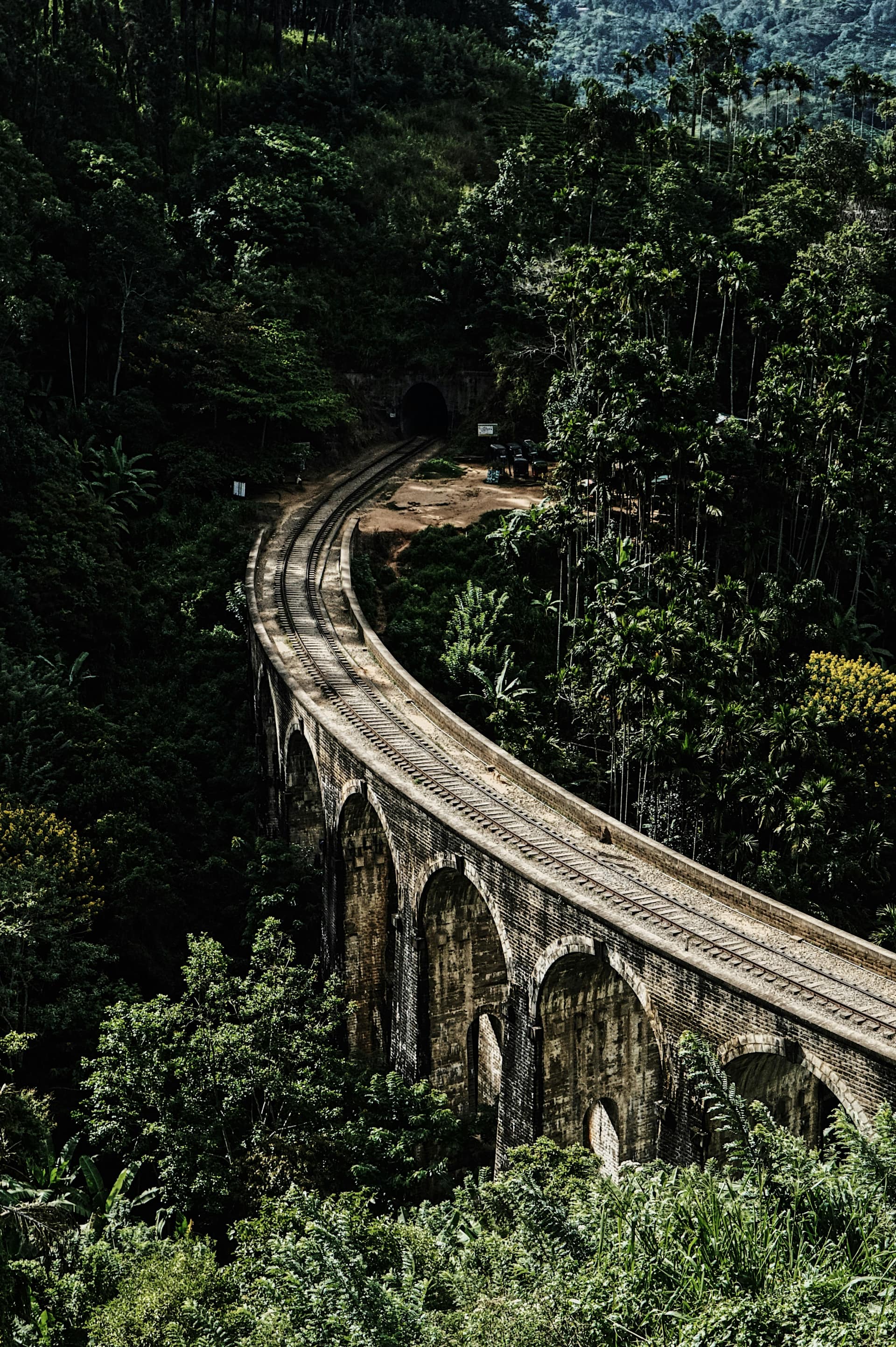
Sri Lanka's rail network is limited but includes one genuinely exceptional route: the hill country line from Kandy through Nanu Oya to Ella. The full Kandy to Ella run takes roughly six to seven hours, which is longer than driving, and the scenic half runs from Nanu Oya onwards at roughly two and a half to three hours.
This is the leg where the train beats a private vehicle outright, because the journey is the attraction rather than a transfer. Many first trips drive to Nuwara Eliya, take the train from Nanu Oya to Ella, and have the driver meet them at the other end with the luggage, which is the arrangement that captures the value without the full-day commitment.
Reserved seats sell out well ahead in high season and unreserved carriages can be standing room only for hours. Book as early as practical and confirm timings locally, as timetables shift more than travellers expect. Do not lean from carriage doorways: serious injuries occur on this line every year.
- →Kandy to Ella: roughly six to seven hours; Nanu Oya to Ella roughly two and a half to three.
- →The best arrangement is to take the scenic half and have the driver meet you at Ella.
- →Reserved seats sell out well ahead; unreserved can mean standing.
- →Leaning from doorways causes serious injuries every year.
Buses, which are cheap and go everywhere
Sri Lanka has an extensive and very inexpensive bus network reaching almost everywhere on the standard route. For budget travellers with time and light luggage, it is entirely viable and it is how most Sri Lankans travel.
The drawbacks are real. Buses are crowded, frequently have no space for large luggage, stop constantly, and the driving is assertive. A journey that takes three hours by car may take four or five by bus, and it will not be restful.
Where buses work well on a first trip is for short hops that a driver is not covering: getting from a hill country base to a trailhead, for instance, or a coastal run of half an hour. For the main intercity legs with luggage, they are a false economy for most visitors.
- →Extensive, very inexpensive, and reaching almost everywhere.
- →Crowded, with limited luggage space and constant stops.
- →A three-hour car journey may take four or five hours by bus.
- →Best used for short local hops rather than main intercity legs.
Tuk-tuks, for the short hops
Tuk-tuks are the right answer for journeys under roughly an hour, and they are how to get around within a base: from a Sigiriya hotel to the rock gate, from Ella into town, from Unawatuna to Galle Fort for the evening.
Metered ride-hailing apps operate in Colombo and the larger towns, and using one removes the negotiation entirely. Elsewhere, agree the fare before setting off rather than at the end, which is standard practice and avoids the only common friction.
For longer journeys tuk-tuks are slow, exposed and uncomfortable, and on main roads they are not the safest way to travel. A two-hour tuk-tuk ride between towns is a memorable experience in the wrong way, and the saving over a car is small.
- →Right for journeys under roughly an hour and for moving around a base.
- →Metered ride-hailing apps operate in Colombo and larger towns.
- →Agree the fare before setting off where no meter is used.
- →Not suitable or safe for long intercity legs on main roads.
Self-driving, and why to think twice
Self-driving is legal for visitors with the correct permit, which requires converting a foreign licence through the relevant Sri Lankan authority. Confirm the current requirements before travelling, as the process has changed periodically.
The practical case against it for a first visit is strong. Traffic is assertive, overtaking conventions differ from most countries, roads are narrow and shared with buses, lorries, tuk-tuks, pedestrians, dogs and occasionally elephants, and signage is inconsistent outside main routes.
The more common middle path is hiring a car with a driver, which costs less than most visitors expect relative to self-drive hire and removes every one of those problems. Self-driving in Sri Lanka is best treated as something for a return visit once the roads are familiar.
- →Legal with a permit converted from a foreign licence; confirm current requirements.
- →Traffic is assertive and overtaking conventions differ from most countries.
- →Roads are shared with buses, lorries, tuk-tuks, pedestrians and animals.
- →Hiring a car with a driver costs less than most visitors expect.
The mix that works on a first trip
The arrangement we would recommend for most first trips is a private driver-guide for the full route, with the Nanu Oya to Ella train substituted for one leg and the driver meeting the group at Ella. Tuk-tuks cover the short hops within each base, and buses are left to travellers with time and light bags.
Lankan Stays and Trails builds itineraries this way as standard, because the train leg is genuinely worth doing and the rest of the route genuinely is not better by public transport. The one thing worth saying clearly is that no single mode is right for the whole trip, which is what most advice on this subject gets wrong.
Frequently asked questions
What is the best way to get around Sri Lanka?
A private vehicle with a driver-guide for most legs, combined with the train for the hill country stretch between Nanu Oya and Ella. No single mode suits the whole route, and mixing the two captures the scenic rail journey without a six to seven hour commitment.
Is a driver in Sri Lanka worth it?
For most first-time visitors, yes. Roads are slow and winding, intercity rail is limited, and many sites are awkward to reach without a waiting vehicle. It is priced per vehicle rather than per person, so it is excellent value for four and a premium for one.
Should I take the Kandy to Ella train?
Take at least the scenic half. The full run takes roughly six to seven hours, while Nanu Oya to Ella takes roughly two and a half to three. Many trips drive to Nuwara Eliya, take the train from there, and have the driver meet them at Ella with the luggage.
Are buses in Sri Lanka good for tourists?
They are cheap and reach almost everywhere, but they are crowded, slow, have limited luggage space and stop constantly. They work well for short local hops but are a false economy for main intercity legs when travelling with bags.
Can you use tuk-tuks for long distances in Sri Lanka?
It is possible but not advisable. Tuk-tuks suit journeys under roughly an hour and moving around within a base. For longer legs they are slow, exposed, uncomfortable and less safe on main roads, and the saving over a car is small.
Can tourists drive in Sri Lanka?
Legally yes, with a permit converted from a foreign licence through the relevant Sri Lankan authority, and requirements have changed periodically so confirm them before travelling. In practice, hiring a car with a driver is the more sensible option on a first visit.
How do I book train tickets in Sri Lanka?
Book reserved seats as early as practical, since they sell out well ahead in high season and unreserved carriages can mean standing for hours. Confirm timings locally close to the date, as published timetables shift more often than travellers expect.