
Quick answer
Public transport is realistic for one leg of the 10-day Sri Lanka itinerary: the Kandy-Ella scenic train, which is a genuinely worthwhile experience in its own right. For the rest of the route, including Cultural Triangle site-hopping, the safari transfer south and reaching sites like Sigiriya or Polonnaruwa efficiently, public buses and trains are slower, less predictable and considerably more time-consuming than a private driver-guide, which is why almost all 10-day itineraries use one for everything except the Kandy-Ella train.
Key takeaways
- The Kandy-Ella (or Nanu Oya) scenic train is the one leg of the route where public transport genuinely works well and is worth doing for its own sake.
- Cultural Triangle site-hopping between Sigiriya, Dambulla and Polonnaruwa has no direct public transport connecting all three efficiently on a tight schedule.
- A Yala or Udawalawe safari requires a park-licensed 4x4 vehicle for the game drive itself, which public transport cannot substitute for at any stage.
- Sri Lankan public buses run frequently but without the fixed, published schedules and platform precision Swiss travellers are used to, adding real uncertainty to timing.
- Relying on public transport for the whole 10-day route would likely require extending the trip by several days to absorb the extra transfer time.
Why this question comes up for Swiss travellers
Switzerland runs one of the most reliable public transport networks in the world, so it is a reasonable instinct for Swiss travellers to ask whether Sri Lanka's trains and buses could do the same job. The short answer is that Sri Lanka's network is genuinely useful in specific places, but it was not built around the kind of tight, multi-region itinerary a 10-day trip requires.
This is less about the quality of the network itself and more about geography: the 10-day route visits several places, such as safari parks and specific archaeological sites, that public transport does not serve directly at all, regardless of how reliable the buses running between major towns might be.
Where public transport genuinely works: the Kandy-Ella train
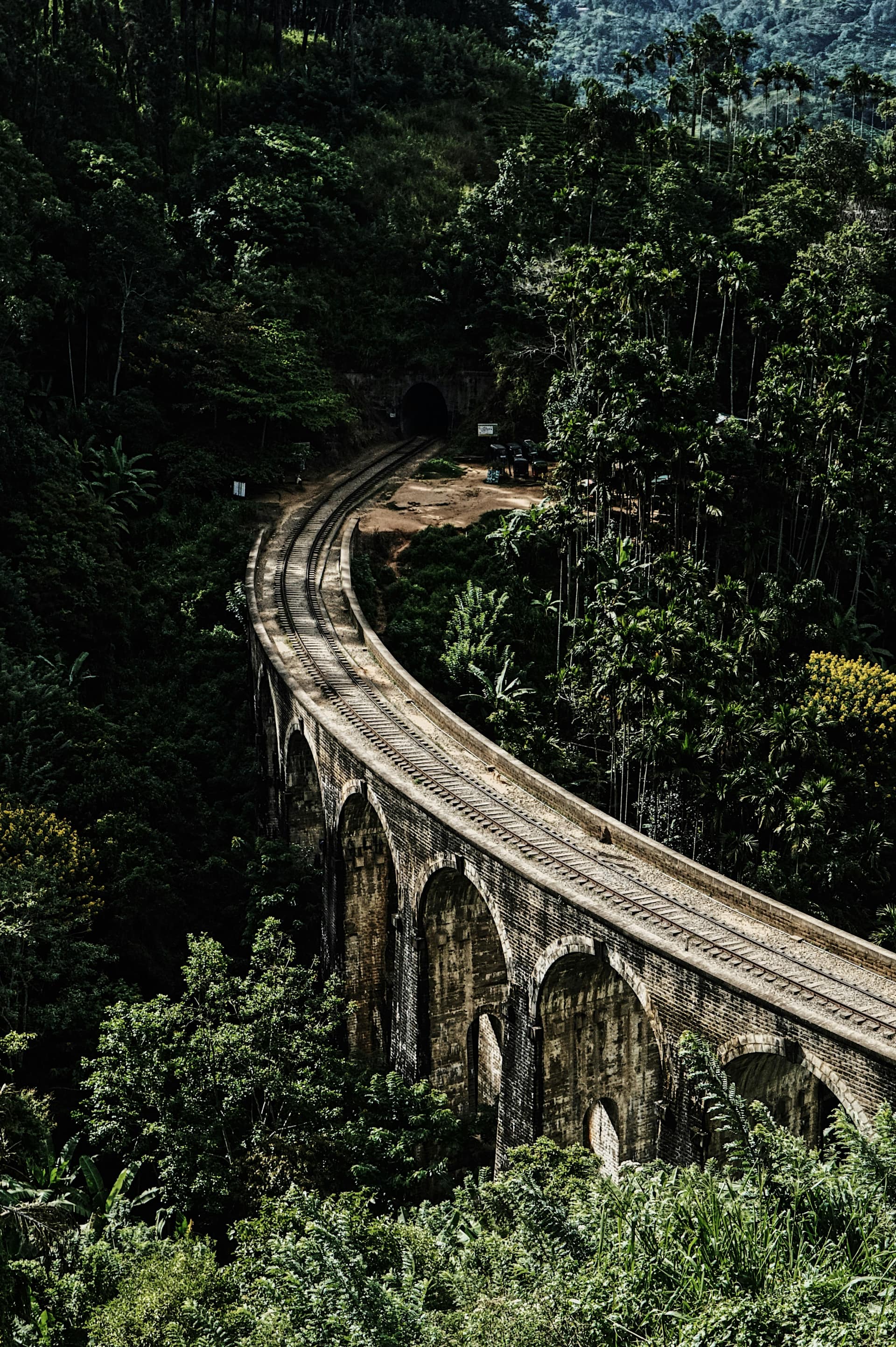
The Kandy-Ella (or Nanu Oya) scenic train is the clear exception on this route, and it is worth taking on its own merits rather than only as a practical transfer. The line winds through tea country, past waterfalls and terraced hillsides, and the roughly several-hour journey is widely regarded as one of the most scenic train rides in Asia.
Seats, particularly in the more comfortable observation carriages, are worth booking well ahead for December-to-March travel dates, since this is a popular route across multiple nationalities and seats do sell out. Most 10-day itineraries build this train ride in as a genuine highlight of the hill country days, with the driver-guide taking the vehicle ahead by road to meet the group at the other end.
- →The Kandy-Ella train is a genuine highlight, not just a practical transfer, through tea country and hillside scenery.
- →Book observation-carriage seats well ahead for December-to-March dates, since this route is popular and sells out.
- →The driver-guide typically takes the vehicle ahead by road to reconnect with the group at the other end.
Where public transport falls short
The Cultural Triangle involves moving between Sigiriya, Dambulla and Polonnaruwa, sites that are close to each other by private vehicle but not efficiently connected by public transport on a tight schedule. Doing this leg by bus would likely mean losing at least a half-day to waiting and connections that a private driver covers in under an hour between sites.
The transfer south to a Yala or Udawalawe safari is a longer multi-hour drive regardless of transport mode, but the safari itself requires a park-licensed 4x4 vehicle and driver for the actual game drive, something public transport cannot provide at any stage of the journey.
Even where buses do run between major towns on this route, they operate on frequent but informal schedules rather than the fixed, published timetables Swiss travellers are used to, which adds a layer of unpredictability that matters more on a tightly paced 10-day trip than it would on an open-ended backpacking trip.
- →Cultural Triangle site-hopping: no efficient direct public transport between Sigiriya, Dambulla and Polonnaruwa.
- →Safari transfers and game drives: require a licensed 4x4 vehicle, not served by any public transport.
- →General bus timing: frequent but informal, without the fixed schedules of the Swiss network, adding uncertainty.
The real time cost of relying on public transport
Beyond specific gaps in coverage, the cumulative time cost is the bigger issue for a trip of only ten days. A private driver-guide covers the Cultural Triangle to Kandy leg in roughly three hours and Kandy to hill country in a further two to three, door to door. The equivalent journeys by public transport, with connections and waiting time, would likely take substantially longer and be harder to predict.
Stretched across a full ten-day itinerary with four or five regions, this added time would likely mean either cutting sightseeing to compensate or extending the trip by several extra days simply to absorb the additional transfer time, neither of which suits most Swiss travellers working within a fixed holiday window.
The practical approach most travellers take
Most 10-day itineraries, including the routes Lankan Stays & Trails runs for Swiss travellers, use a private driver-guide for the whole trip and deliberately build in the Kandy-Ella train as the one leg where public transport adds genuine value rather than just logistics. This combination gets the best of both: the efficiency of a private vehicle everywhere it matters, and one of Sri Lanka's genuine transport experiences where it is worth the time.
For travellers specifically drawn to the idea of using more public transport, a longer, more open-ended trip built around train and bus timetables is a different kind of holiday to plan, and is generally not compatible with a fixed 10-day window covering this many regions.
Frequently asked questions
Can you do the 10-day Sri Lanka itinerary by public transport?
Not efficiently. Public transport works well for the Kandy-Ella scenic train, but Cultural Triangle site-hopping and safari transfers are not well served by buses or trains, and relying on public transport throughout would likely require extending the trip by several days.
Is the Kandy-Ella train worth taking?
Yes, it is a genuine highlight of the route, winding through tea country and hillside scenery over several hours. It is worth booking observation-carriage seats well ahead for December-to-March travel, since the route is popular and does sell out.
Are Sri Lankan buses reliable for tourists?
They run frequently between major towns, but on informal schedules rather than the fixed, published timetables Swiss travellers may expect. This adds real uncertainty on a tightly paced 10-day trip, even though buses are a normal part of everyday travel for locals.
Can you reach Yala or Udawalawe safari by public transport?
The transfer town can be reached by bus in principle, but the safari itself requires a licensed 4x4 vehicle and driver for the game drive, which public transport cannot substitute for, making a private arrangement necessary regardless of how you get there.
How much time would public transport add to the 10-day itinerary?
A private driver-guide covers legs like the Cultural Triangle to Kandy in roughly three hours door to door; the equivalent by public transport, with waiting and connections, would likely take substantially longer and be harder to predict, adding real strain to a fixed ten-day window.
Why do most 10-day Sri Lanka itineraries use a private driver?
A private driver-guide covers the multi-region route efficiently and predictably, which public transport cannot match outside the Kandy-Ella train leg. Almost all 10-day itineraries, including those run by Lankan Stays & Trails, use a driver for everything except that one scenic train ride.
Should Swiss travellers try to use only public transport in Sri Lanka?
For a fixed 10-day trip covering multiple regions, this is generally not practical. A more open-ended trip built specifically around train and bus timetables is a different kind of holiday, better suited to travellers with more flexible time.