
Quick answer
A Kelaniya temple half day from Colombo takes 20 to 40 minutes each way to Kelaniya Raja Maha Vihara, roughly 10 km north-east of the city centre. Allow one to two hours for the image house murals by Solias Mendis, the dagoba, the Bo tree and the riverside. Go in the early morning or late afternoon, wear white or light clothing covering shoulders and knees, and visit in January for the Duruthu Perahera, whose dates shift each year.
Key takeaways
- Kelaniya Raja Maha Vihara lies roughly 10 km north-east of central Colombo, 20 to 40 minutes by road.
- Buddhist tradition holds that the Buddha visited Kelaniya on his third visit to the island.
- The image house murals were painted by Solias Mendis in the mid-20th century.
- The Duruthu Perahera is held at Kelaniya usually in January; dates shift with the lunar calendar.
- Poya days bring large crowds of worshippers dressed in white.
Why visit Kelaniya
Kelaniya Raja Maha Vihara is one of the 16 most sacred Buddhist sites in Sri Lanka. Tradition holds that the Buddha visited Kelaniya on his third visit to the island, and the temple's dagoba is said to enshrine a gem-studded throne connected with that visit.
The temple has been destroyed and rebuilt several times over its history, including during the Portuguese period. The present image house was restored in the 20th century and decorated with murals by Solias Mendis, one of Sri Lanka's most celebrated artists.
For visitors staying in Colombo, Kelaniya is the most important temple within an hour, and it is far less crowded with tourists than Kandy.
- →One of Sri Lanka's 16 most sacred Buddhist sites.
- →Murals by Solias Mendis.
- →20 to 40 minutes from central Colombo.
The murals and the image house
The murals in the image house at Kelaniya Raja Maha Vihara are the main reason many visitors come. Painted by Solias Mendis between the 1930s and 1940s, they depict the Buddha's visits to Sri Lanka, the arrival of the sacred Bo tree sapling with Sangamitta, the story of Vihara Maha Devi and scenes from the island's history.
The style blends classical Sri Lankan painting with a 20th-century sense of narrative. Take time to walk slowly around the walls, and ask a monk or guide to explain the scenes if one is available.
Photography rules vary inside the image house; ask before taking pictures and never use flash.
- →Allow 30 to 45 minutes for the murals.
- →Ask before photographing.
- →No flash inside the image house.
The dagoba, Bo tree and river
Beyond the image house, Kelaniya Raja Maha Vihara has a white dagoba, a sacred Bo tree and a riverside setting on the Kelani river. Worshippers offer flowers, light oil lamps and walk clockwise around the dagoba. Join them quietly if you wish.
The temple is most atmospheric in the early morning and late afternoon, when the light is soft and local families visit. On poya days, the full moon holidays, crowds of white-clad worshippers come to observe the precepts.
Allow one to two hours for a relaxed visit. Small stalls outside sell lotus flowers and incense for offerings.
- →Walk clockwise around the dagoba.
- →Early morning and late afternoon are best.
- →Poya days: crowded and devotional.
The Duruthu Perahera
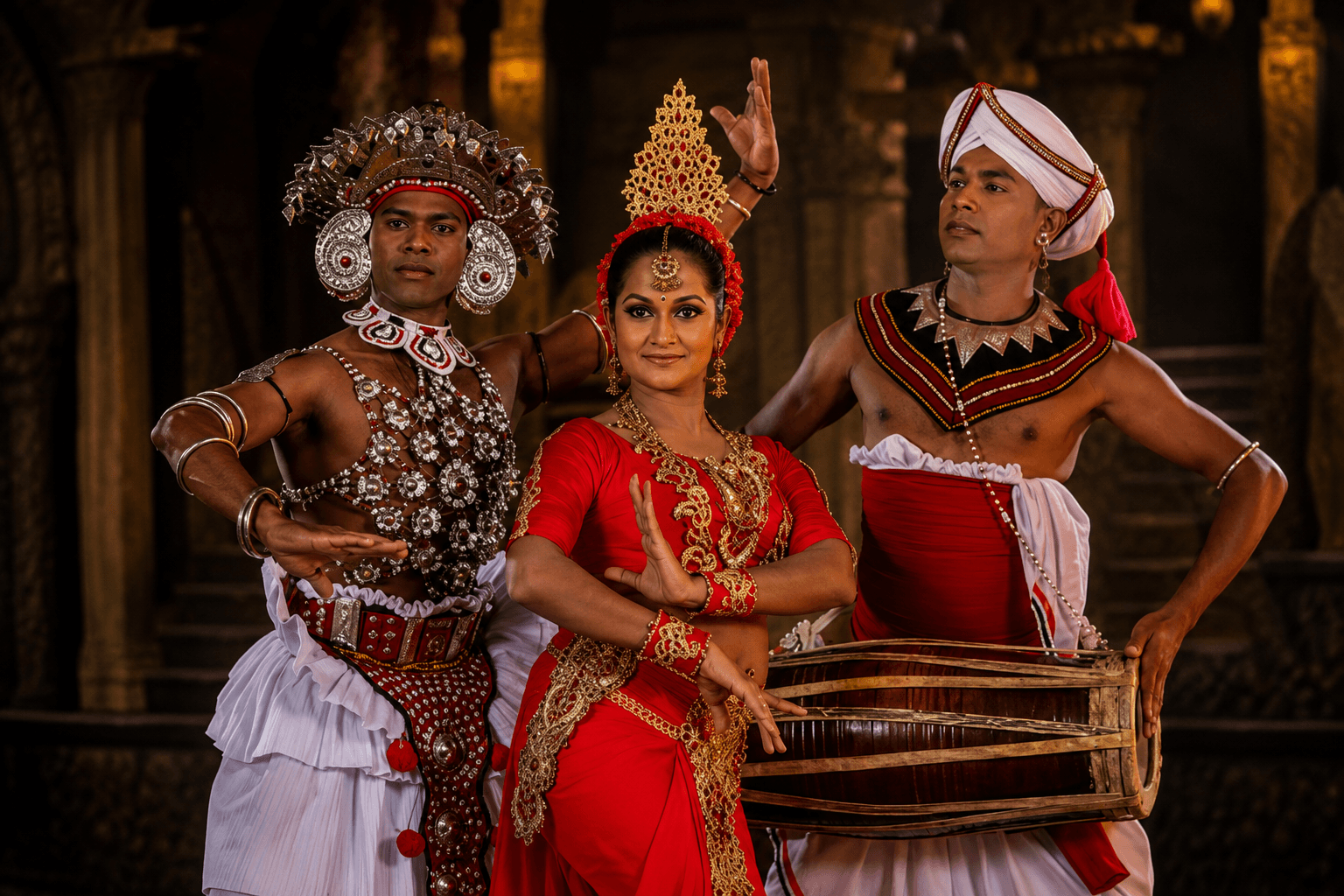
The Duruthu Perahera is held at Kelaniya, usually in January, commemorating the Buddha's first visit to Sri Lanka. Over several nights, processions of dancers, drummers, torch bearers and caparisoned elephants move around the temple. Dates shift each year with the lunar calendar, so confirm before planning.
The processions draw large crowds. Arrive early for a place to watch, keep valuables secure and be aware that elephants in processions raise welfare questions that some visitors prefer not to support.
Planning a Kelaniya visit
A tuk-tuk, a ride-hailing car or a private driver reaches Kelaniya in 20 to 40 minutes from central Colombo, depending on traffic. Avoid weekday rush hours, roughly 7.30 to 9.30 am and 4.30 to 7 pm. Lankan Stays & Trails can combine Kelaniya with a Colombo city day or a final morning before a flight.
Wear white or light clothing that covers shoulders and knees, remove shoes and hats at the entrance and carry socks for hot stone. Kelaniya is roughly 30 to 40 minutes from the airport, so it fits well on the way to or from a flight.
- →Combine with a Colombo city day.
- →Visit on the way to the airport.
- →White or light clothing, shoulders and knees covered.
Frequently asked questions
How far is Kelaniya temple from Colombo?
Kelaniya Raja Maha Vihara is roughly 10 km north-east of central Colombo, which takes 20 to 40 minutes by road depending on traffic. From the airport it takes roughly 30 to 40 minutes, so it fits easily on the way to or from a flight.
What should I wear to Kelaniya temple?
Wear white or light clothing that covers shoulders and knees when visiting Kelaniya Raja Maha Vihara. Remove shoes and hats at the entrance. A sarong or scarf in your bag solves most dress problems, and socks help on hot stone floors in the middle of the day.
When is the Duruthu Perahera?
The Duruthu Perahera at Kelaniya is usually held in January, around the Duruthu poya, commemorating the Buddha's first visit to Sri Lanka. Dates shift each year with the lunar calendar, so confirm before planning. The processions run over several nights and draw large crowds.
How long do you need at Kelaniya temple?
Allow one to two hours at Kelaniya Raja Maha Vihara for a relaxed visit, including 30 to 45 minutes for the Solias Mendis murals in the image house, time at the dagoba and Bo tree, and a walk by the Kelani river. Add travel time from Colombo.
Is Kelaniya temple worth visiting?
Kelaniya temple is worth visiting for its sacred status, its riverside setting and the mid-20th-century murals by Solias Mendis telling the story of the Buddha's visits and the island's history. It is the most important Buddhist temple within an hour of Colombo.
Can tourists visit Kelaniya on poya days?
Tourists can visit Kelaniya on poya days, when the temple is busy with worshippers dressed in white observing the precepts. It is a moving time to visit, but crowded. Dress modestly, move quietly and avoid photographing people at prayer without asking.
Is there an entrance fee at Kelaniya temple?
Kelaniya temple has traditionally been free to enter, though donations are welcome and some arrangements for foreign visitors may change. Confirm locally on arrival. Small stalls outside sell flowers and incense if you wish to make an offering at the dagoba or Bo tree.