
Quick answer
Sri Lanka's luxury east coast, centred on Trincomalee, Nilaveli, Uppuveli and Pigeon Island Marine National Park, is calmest roughly May to September, the reverse of the south and west coasts and a rare match for the Swiss summer school holiday window (roughly early July to mid-August, varies by canton). The luxury tier here means boutique beachfront resorts, eco-luxury tented and villa stays and private snorkelling or whale-watching charters, rather than the south coast's denser boutique hotel scene. It suits travellers who want quiet, uncrowded luxury paired with genuine marine wildlife.
Key takeaways
- The east coast's calm season runs roughly May to September, the direct inverse of the south and west coast's dry season, and the only Sri Lankan coastline whose peak overlaps the Swiss summer school holidays.
- Pigeon Island Marine National Park, a short boat ride from Nilaveli, offers some of Sri Lanka's best shallow-reef snorkelling, with coral gardens and reef sharks in water often only two to three metres deep.
- Luxury stays here run to boutique beachfront resorts, eco-luxury tented and villa properties and a small number of private villas, generally quieter and more spread out than the denser south-coast luxury scene.
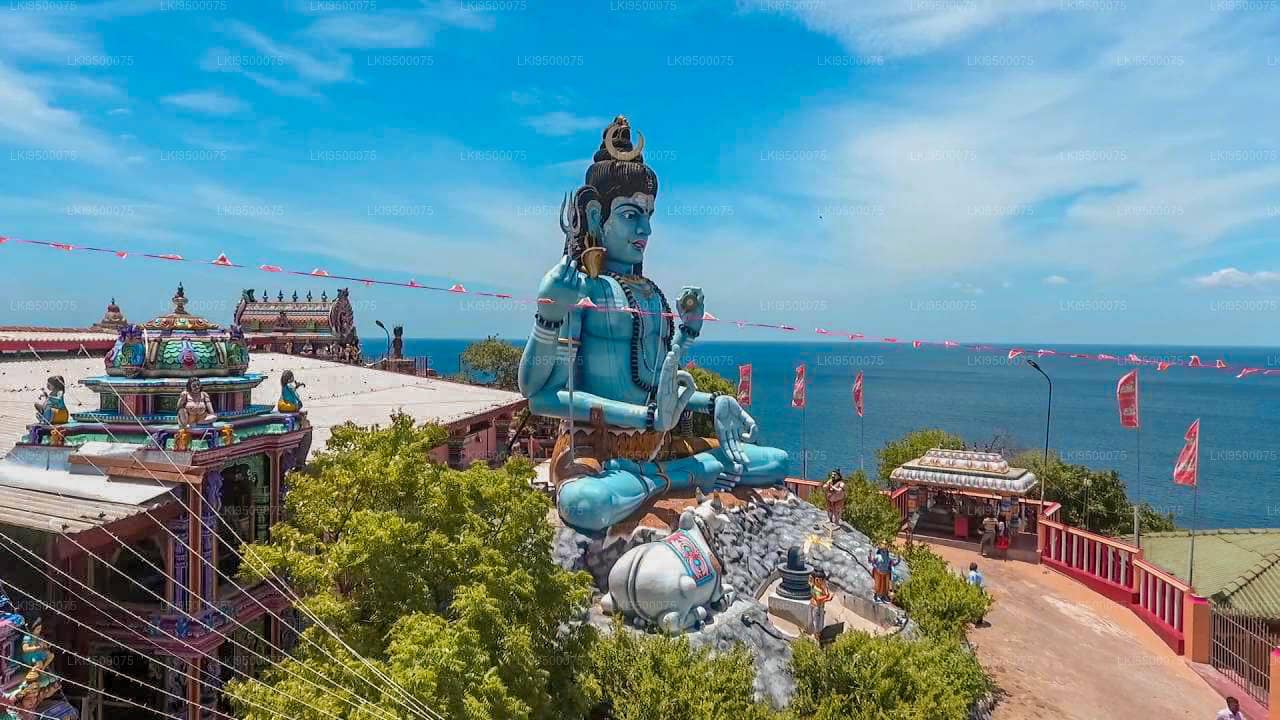
- Koneswaram Temple, on Swami Rock above Trincomalee harbour, is one of the island's most dramatically sited Hindu temples and pairs naturally with a coastal luxury stay.
- The east coast sits roughly four to five hours by road from Colombo, so most luxury itineraries pair it with the Cultural Triangle (Sigiriya, Dambulla) rather than treating it as a standalone base.
Why the east coast matters at the luxury tier
Sri Lanka's east coast around Trincomalee is the one region whose best season runs opposite to the rest of the island, calm and dry roughly from May to September while the south-west monsoon works through the south and west coasts. For a Swiss traveller booking around the summer school holidays, roughly early July to mid-August depending on canton, that makes it the natural coastal choice rather than a compromise.
At the luxury tier, the appeal is quiet rather than density. The south coast has grown into a fuller boutique hotel scene over recent decades; the east coast, by comparison, still feels comparatively undeveloped, with long stretches of Nilaveli and Uppuveli beach that rarely feel crowded even in season. That scarcity is itself part of the luxury proposition here.
The other draw is genuine marine wildlife rather than staged experience: shallow coral reefs a short boat ride offshore, and a whale and dolphin presence that, while less consistently documented than the south coast's Mirissa season, is a real part of planning a trip to this coast at the right time of year.
Luxury stay types around Trincomalee, Nilaveli and Uppuveli
The east coast's luxury accommodation leans toward boutique beachfront resorts set directly on Nilaveli or Uppuveli's sand, generally lower-rise and more spread out than equivalent south-coast properties, with open-air dining and pools that face the water rather than a busy beach road. A smaller number of eco-luxury tented or villa-style stays sit further from the main strip, aimed at travellers who want privacy above all else.
Private villas with staff exist on this coast but are fewer in number than on the south coast or around Galle, so booking lead time matters more here if a private villa specifically is the goal. Confirm exact inclusions, whether meals, a driver or a boat charter are part of the rate, directly with the property or through an operator before booking, since packages vary considerably.
- →Boutique beachfront resorts on Nilaveli or Uppuveli: open-air dining, sea-facing pools, generally lower density than the south coast.
- →Eco-luxury tented or villa stays: set back from the main strip, prioritising privacy and quiet over beach-road convenience.
- →Private villas with staff: fewer options than the south coast, so book further ahead if this is the priority.
Signature luxury experiences on this coast
Pigeon Island Marine National Park, a short boat ride from Nilaveli, is the coast's defining experience: shallow coral gardens, reef sharks and a wide range of reef fish in water often only two to three metres deep, making it accessible to snorkellers rather than only divers. A private boat charter, arranged through a luxury property or a private driver-guide, avoids the shared-boat queues that can build up around midday in peak season.
Koneswaram Temple, dramatically sited on Swami Rock above Trincomalee harbour, is one of the island's most striking Hindu temple settings and a natural half-day addition to a coastal stay. Kanniya's hot springs, a short drive inland, and diving beyond Pigeon Island for more experienced divers round out the coast's activity list.
Whale and dolphin sightings do occur off this coast in season, though the documented, established whale-watching industry remains centred on Mirissa on the south coast; a private charter here is a genuine possibility but should be framed as a hopeful addition rather than a guaranteed sighting, and confirmed with a local operator closer to the date.
- →Pigeon Island Marine National Park: shallow snorkelling, coral gardens, reef sharks, best by private boat charter to avoid midday crowds.
- →Koneswaram Temple on Swami Rock: a dramatic clifftop Hindu temple above Trincomalee harbour.
- →Kanniya hot springs: a short inland detour, easily paired with a temple visit.
Getting there and pairing it with the rest of a trip
The east coast sits roughly four to five hours by road from Colombo, typically covered with a private driver-guide rather than as a standalone flight, though small domestic charter flights to Trincomalee exist and are worth asking about for a genuinely time-pressed itinerary. Most Swiss luxury itineraries pair this coast with the Cultural Triangle, since Sigiriya and Dambulla sit roughly two to three hours from Trincomalee by road, a natural inland companion before or after the coast.
Because this coast turns calm precisely when the south-west is at its wettest, it also works well as the second half of a trip that opens inland in the Cultural Triangle and hill country before finishing on this coast, rather than trying to combine it with a south-coast stay in the same visit, which would mean crossing between two very different seasonal windows.
Choosing the east coast over the south coast
Choose the east coast if travel dates fall roughly between May and September, since this is precisely when the south and west coasts are in their wetter window and this coast is at its calmest and clearest. It also suits travellers who value quiet and space over a fuller resort and dining scene, and who want genuine reef snorkelling close to shore.
Choose the south coast instead if travel dates fall roughly between December and March, when it is in its own dry season and offers a denser choice of boutique hotels, fine dining and Galle Fort's colonial-heritage properties within reach. A luxury trip built around the December-March window, which also covers the Swiss Sportferien and Christmas/New Year school breaks, generally makes more sense based in the south rather than the east.
Planning a luxury east-coast stay
A luxury east-coast stay works best as a three- to five-night addition within a wider itinerary rather than the sole focus of a trip, paired with the Cultural Triangle and, time permitting, the hill country. Lankan Stays & Trails builds these as private, driver-guided routes for Swiss travellers, sequencing the Cultural Triangle's heritage sites with a genuinely quiet stretch of coast timed to the May-September window.
For the broader picture of what luxury travel in Sri Lanka looks like across regions and stay types, see our pillar guide to the best luxury Sri Lanka experiences for Swiss travellers, which this east-coast guide sits alongside.
Frequently asked questions
When is the best time for a luxury trip to Sri Lanka's east coast?
Roughly May to September, when the east coast is calm and dry, the opposite of the south and west coasts' season. This window also overlaps with the Swiss summer school holidays, making it the coast that best matches a July or August booking.
Is there luxury accommodation in Trincomalee?
Yes, though the scene is smaller and quieter than the south coast's. Expect boutique beachfront resorts on Nilaveli and Uppuveli, a handful of eco-luxury tented or villa stays, and fewer private villas than around Galle or the south coast.
Is Pigeon Island worth visiting?
Generally yes for snorkellers. Pigeon Island Marine National Park has shallow coral reefs and reef sharks in water often only two to three metres deep, close to Nilaveli. A private boat charter, arranged in advance, avoids the busiest midday hours.
Can I combine the east coast with the Cultural Triangle?
Yes, this is the most common pairing. Sigiriya and Dambulla sit roughly two to three hours from Trincomalee by road, making a combined inland-then-coast route, or the reverse, a natural fit for a private driver-guided itinerary.
How do I get to Trincomalee from Colombo?
Most luxury itineraries use a private driver-guide for the roughly four to five hour road journey. Small domestic charter flights to Trincomalee also exist; ask a specialist operator about current options if time is limited.
Is whale watching good on the east coast?
Sightings do occur in season, but the established, well-documented whale-watching industry remains centred on Mirissa on the south coast. Treat an east-coast charter as a genuine possibility rather than a guaranteed sighting, and confirm current conditions locally.
Should I choose the east coast or the south coast for a luxury trip?
It depends mainly on your travel dates. Choose the east coast roughly May to September; choose the south coast roughly December to March, when it is dry and offers a denser luxury hotel and dining scene, including Galle Fort.