
Quick answer
Luxury high tea in Sri Lanka's hill country typically takes place on hotel verandas overlooking tea estates, with scones, finger sandwiches and Ceylon tea served formally for roughly $15-35 per person. Local tea shop culture means small roadside kiosks selling milk tea (kiri thé) for well under a dollar, poured quickly for estate workers and passers-by throughout the day. Both draw on the same Ceylon tea industry, so American travellers interested in tea don't have to choose only one; a hotel high tea and a roadside cup on the same hill country day show two genuinely different sides of the same crop.
Key takeaways
- Sri Lanka's tea-growing hill country, centred around Nuwara Eliya and Ella, sits at elevations of roughly 1,200 to 2,000 metres, which gives Ceylon tea its distinctive character.
- A formal hotel high tea typically costs roughly $15-35 per person and includes scones, finger sandwiches and a pot of estate-grown tea served on a veranda or terrace.
- Local milk tea, called kiri thé, is sold from small roadside kiosks for well under a dollar and is a staple drink for estate and factory workers throughout the day.
- Several working tea estates in the hill country offer factory tours showing the plucking, withering and rolling process behind both the hotel and roadside cup.
- Ceylon tea's grading system (broken orange pekoe and similar terms) reflects leaf size and processing, not quality alone, which surprises many first-time American visitors.
Two very different tea experiences in Sri Lanka
Luxury high tea in Sri Lanka draws directly on the colonial-era tradition established by British planters, typically served on hotel verandas or terraces overlooking tea estates in Nuwara Eliya, Ella or Kandy's surrounding hills. Scones, finger sandwiches and a formal pot of estate-grown Ceylon tea are the standard format, often accompanied by live piano or a string quartet at the more established hotels.
Local tea shop culture is the everyday counterpart: small roadside kiosks and kade shops pouring milk tea, called kiri thé, for estate workers, tuk-tuk drivers and anyone passing through, usually consumed standing at the counter in a few minutes rather than lingered over. Both scenes exist within a short drive of each other in most hill country towns.
What a hotel high tea actually involves
A hotel high tea in the hill country typically runs roughly $15-35 per person and includes a tiered stand of sandwiches, scones with jam and cream, and pastries alongside a choice of estate teas, served over one to two hours in the afternoon. Several colonial-era hotels built by tea planters still operate exactly this format today, giving the experience genuine historical grounding rather than a manufactured theme.
Booking ahead is worth doing during peak season (roughly December to March and July to September), since the most well-known hotel verandas can fill, particularly around weekends.
- →Formal service, tiered stands, and a choice of estate-grown teas over one to two hours.
- →Typically roughly $15-35 per person, confirm current pricing with the specific hotel.
- →Best booked ahead in peak season at well-known hill country properties.
Local tea shop culture and kiri thé
Local tea culture in Sri Lanka centres on kiri thé, a strong milk tea served sweet and hot from roadside kiosks, tea shops (kades) and railway station stalls throughout the day, usually costing well under a dollar per cup. It functions socially the way a coffee break might in the USA, a quick pause between work rather than a leisurely occasion.
Trying kiri thé at a busy roadside stall gives a direct sense of how central tea is to daily Sri Lankan life, well beyond the export crop most American visitors associate with the word 'Ceylon tea'.
- →Kiri thé is strong, sweet, milky tea sold for well under a dollar per cup.
- →Roadside kiosks and railway stalls sell it throughout the day, especially in the hill country.
- →It's a quick, functional drink rather than a leisurely occasion, unlike hotel high tea.
What's behind both cups: the tea estates themselves
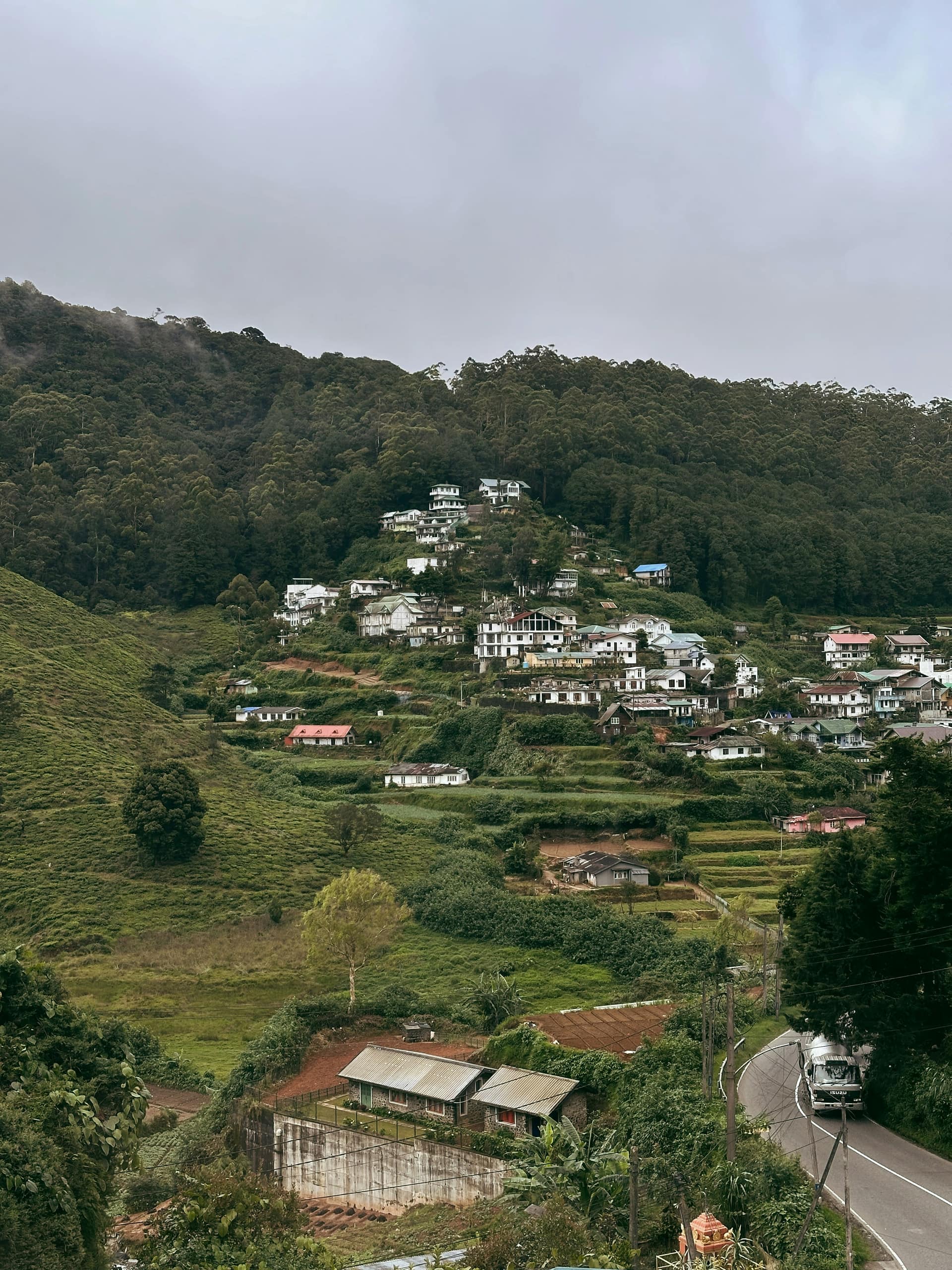
Sri Lanka's tea-growing regions sit at elevations of roughly 1,200 to 2,000 metres around Nuwara Eliya, Ella and the surrounding hill country, where cooler temperatures and regular rainfall give Ceylon tea its distinctive character. Several working estates offer factory tours showing the plucking, withering, rolling and drying process, usually ending with a tasting.
Understanding this process adds context to both ends of the tea experience: the same leaves processed at these estates end up in both a hotel's formal afternoon tea and a roadside kiosk's quick cup, priced entirely differently by setting rather than by the tea itself.
Why trying both makes sense
Choosing between luxury high tea and local tea culture isn't really necessary, since they take roughly an hour combined and cost very little on top of a hill country day already built around tea estate scenery. A factory tour and roadside cup in the morning followed by a hotel high tea in the afternoon shows the full range of Sri Lanka's tea culture in a single day.
This is a straightforward example of blending luxury and authentic experiences rather than treating them as opposing choices, and it costs little extra planning since both are usually available within the same hill country towns.
Planning a tea-focused day in the hill country
Nuwara Eliya and Ella are the two most practical bases for a tea-focused day, both offering estate tours, roadside tea culture and at least one well-regarded hotel high tea within a short drive. A private driver-guide makes moving between a working estate, a local tea kiosk and a hotel veranda straightforward within a single afternoon.
Lankan Stays & Trails often builds a tea estate visit and hotel high tea into hill country days, while also pointing guests towards a local kiosk for kiri thé along the way, so both sides of Sri Lanka's tea culture are covered without needing a separate day for each.
Frequently asked questions
How much does high tea cost in Sri Lanka?
As a rough guide, a formal hotel high tea in the hill country typically costs roughly $15-35 per person, including a tiered stand of sandwiches and scones alongside estate-grown tea. Confirm current pricing directly with the specific hotel, since it varies by property and season.
What is kiri thé?
Kiri thé is Sri Lanka's everyday milk tea, strong, sweet and hot, sold from roadside kiosks and tea shops for well under a dollar per cup. It's consumed throughout the day by workers and travellers alike and represents the local, functional side of Sri Lanka's tea culture.
Where is the best place for high tea in Sri Lanka?
Nuwara Eliya is the traditional home of colonial-era high tea, with several hotels built during the planter era still serving the format today. Ella and parts of Kandy's surrounding hills also offer well-regarded hotel high tea experiences overlooking tea estate scenery.
Can you visit a working tea estate in Sri Lanka?
Yes, several working tea estates around Nuwara Eliya and Ella offer factory tours covering plucking, withering, rolling and drying, usually finishing with a tasting. These tours give useful context for both the hotel high tea and the roadside cup found throughout the hill country.
Is Ceylon tea the same as the tea served at hotel high tea?
Yes, hotel high tea typically serves estate-grown Ceylon tea, the same crop sold internationally and used in roadside kiri thé, just processed and served differently. The grading terms used for Ceylon tea reflect leaf size and processing style rather than quality alone.
Do I need to book hotel high tea in advance in Sri Lanka?
It's worth booking ahead during peak season, roughly December to March and July to September, particularly at well-known hill country hotels, since the most established verandas can fill on weekends. Outside peak periods, walk-ins are often possible with shorter notice.
Does Lankan Stays & Trails include tea experiences in itineraries?
Yes, hill country itineraries commonly include a working tea estate visit and a hotel high tea, with drivers also pointing guests towards a local tea kiosk for kiri thé along the way. Both sides of the tea experience typically fit within a single day around Nuwara Eliya or Ella.