
Quick answer
Meal costs on the 12-day Alps-to-beach Sri Lanka itinerary vary by region: roughly USD 15-30 per person per day for meals in the Cultural Triangle and Kandy (largely hotel dining and local restaurants), roughly USD 10-20 per day in the hill country including tea-house stops, and roughly USD 20-40 per day on the south coast, where beachfront seafood restaurants push costs noticeably higher. All figures are hedged and depend heavily on whether meals are taken at hotels, local eateries or tourist-oriented restaurants.
Key takeaways
- South-coast meal costs (days 8-12) are typically the highest on the route, driven by beachfront seafood restaurants in Mirissa and Unawatuna that price closer to European casual dining than inland Sri Lankan restaurants.
- Hill-country meal costs (days 5-7) are often the lowest on the route, with modest local restaurant pricing supplemented by inexpensive tea-house stops built around Nuwara Eliya's tea-growing identity.
- Cultural Triangle hotels (days 1-2) frequently include breakfast and sometimes half-board in the room rate, which changes the effective daily meal cost compared with paying per meal elsewhere on the route.
- Kandy (days 3-4) sits in the middle of the route's meal cost range, with a mix of hotel dining and independent local restaurants around the lake and town centre.
- Bottled water volume needed given the climate swings between hot lowlands and cool hills adds a small but real daily cost that is easy to underbudget across 12 days.
Why meal costs shift so much across this route
This route passes through genuinely different dining environments in 12 days: hotel-centred meals in the relatively remote Cultural Triangle, a proper town with restaurant variety in Kandy, modest local eateries and tea houses in the hill country, and a beachfront tourist dining scene on the south coast. Each has a different baseline cost, so a single blended daily average understates some stages and overstates others.
Whether meals are pre-included in accommodation (common in the Cultural Triangle), eaten at independent local restaurants (common in Kandy and the hill country), or taken at beachfront establishments pricing for an international audience (common on the south coast) is the single biggest driver of cost variation, more so than the food itself.
Alcohol is a further variable worth flagging separately, since Sri Lanka's import duties make imported wine and spirits noticeably pricier than in Switzerland, while local beer and arrack (a local spirit distilled from coconut flower sap) cost considerably less. A traveller who enjoys wine with dinner regularly should budget for this specifically rather than assuming it folds neatly into the general meal figures below.
- →Hotel-included meals: common in the Cultural Triangle, reduces per-meal cash spend but is fixed once booked.
- →Local restaurants: the cheapest reliable option at every stop on the route.
- →Beachfront and tourist-oriented dining: the highest-cost category, concentrated on the south coast.
Days 1-2: Cultural Triangle hotel dining
Accommodation in the Habarana or Sigiriya area frequently includes breakfast, and many properties offer half-board given the relatively limited independent restaurant scene outside the hotels themselves. Where meals are paid separately, hotel dining here typically runs roughly USD 15-30 per person per day for a reasonable spread of breakfast, lunch and dinner.
Local rice-and-curry restaurants do exist around Sigiriya and Habarana and cost meaningfully less than hotel dining, generally a worthwhile stop for travellers wanting a more authentic and cheaper meal during the day 2 sightseeing between Sigiriya and Dambulla.
Bottled water and soft drinks at these local restaurants also cost noticeably less than the same items at a hotel bar or restaurant, a small saving that adds up given how much fluid the Sigiriya climb and general Cultural Triangle heat demand across day 1 and day 2.
- →Hotel breakfast and dinner: often included or offered as half-board in this area.
- →Local rice-and-curry restaurants near Sigiriya and Habarana: noticeably cheaper than hotel dining.
- →Roughly USD 15-30 per person per day where meals are paid separately from the room rate.
Days 3-4: Kandy's restaurant variety
Kandy, a proper town rather than a resort area, offers a genuinely wider range of restaurants than the Cultural Triangle, from simple local eateries around the lake to hotel restaurants with more polished menus. This variety puts Kandy roughly in the middle of the route's overall meal cost range, with plenty of scope to eat cheaply or more comfortably depending on preference.
The evening Kandyan dance performance is sometimes paired with a set dinner package by hotels or tour operators, worth checking in advance since it can be a convenient, reasonably priced option on an evening with a fixed schedule.
Street food and short-eats, small savoury snacks sold from local bakeries and stalls around Kandy's town centre, are a genuinely cheap way to try a wider range of Sri Lankan flavours without committing to a full sit-down meal, and many Kandy visitors use them to fill the gap between the Temple of the Tooth visit and the evening dance performance.
Days 5-7: hill-country tea houses and local restaurants
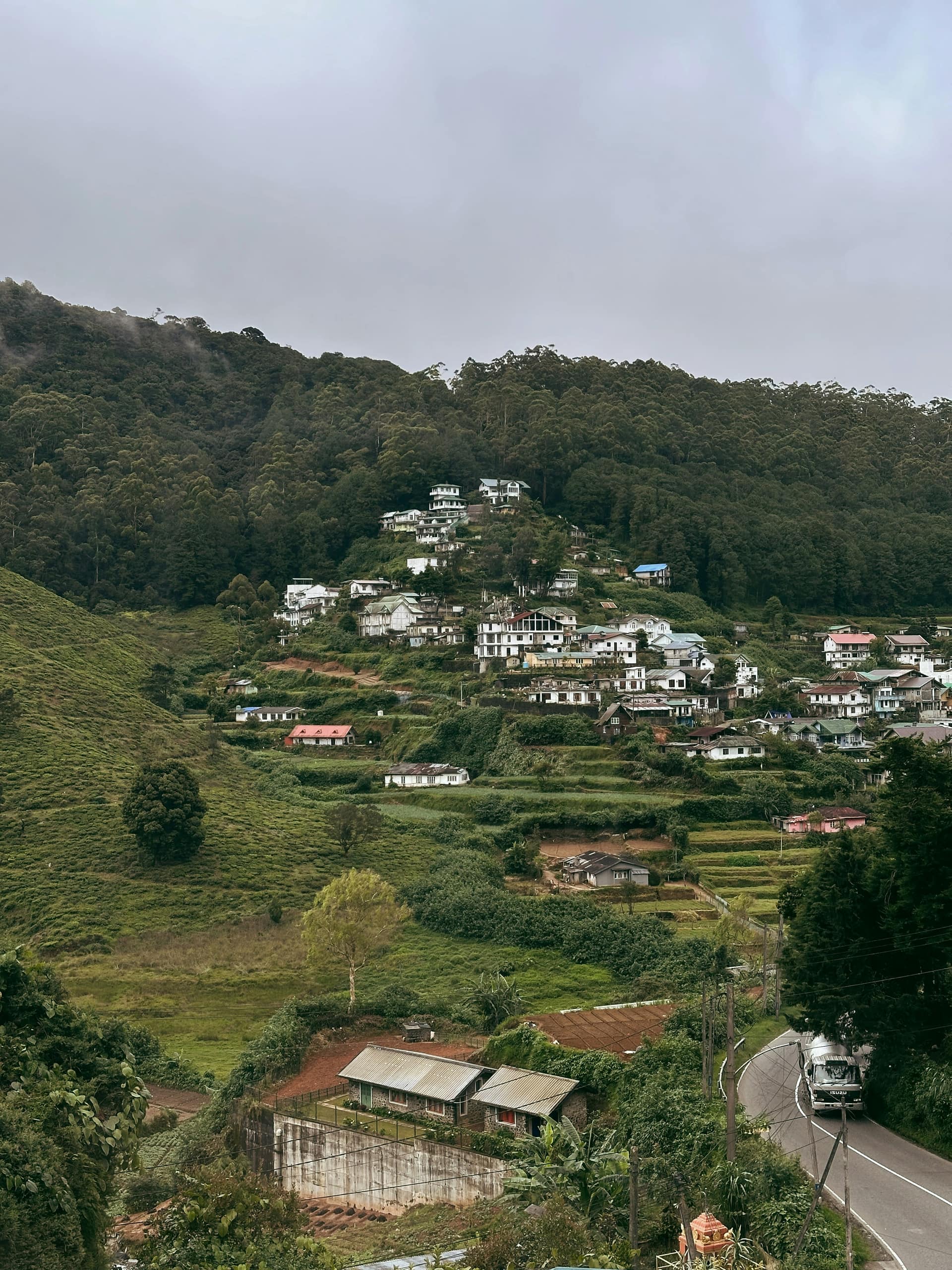
Nuwara Eliya and Ella generally offer the most affordable meals on the route, with local restaurants serving rice and curry, kottu and other Sri Lankan staples at modest prices, and tea-house stops built around the region's tea-growing identity adding an inexpensive, atmospheric extra rather than a significant cost. A tea factory visit on day 6 often includes a tasting, sometimes free or very low cost, and fresh strawberries, another Nuwara Eliya speciality tied to its cooler climate, are sold cheaply from roadside stalls nearby and worth trying alongside it.
Nuwara Eliya's colonial-era character also brings a few more polished restaurants and cafes than a typical hill-country town, useful for travellers wanting a change of pace after several days of similar local dining, though these still generally cost less than equivalent south-coast options.
Ella's small size means many of its restaurants sit along one main strip and cater heavily to travellers passing through on the same hill-country route, which keeps prices modest and comparisons between menus easy, a useful contrast to the more spread-out, harder-to-compare dining scene on the south coast a day later.
- →Local restaurants in Nuwara Eliya and Ella: generally the most affordable meals on the route.
- →Tea-house stops: inexpensive, often just the cost of a pot of tea and a small snack.
- →Roughly USD 10-20 per person per day for meals through this stretch.
Days 8-12: south-coast seafood
Mirissa and Unawatuna's beachfront dining scene caters heavily to an international audience, and fresh seafood restaurants here typically price noticeably higher than anywhere else on the route, closer to a casual European seaside restaurant than inland Sri Lankan pricing. A seafood dinner with drinks can comfortably form the largest single meal cost of the entire trip.
Cheaper options exist a short walk back from the beachfront, local restaurants serving Sri Lankan staples at a fraction of the beachfront seafood price, worth alternating with the seafood splurges to keep the 4 to 5 night south-coast stretch's food budget from running away.
Cocktails and imported drinks at beachfront bars are a further place where south-coast costs climb quickly, generally priced closer to a European beach resort than the rest of Sri Lanka, so travellers watching this stretch's food-and-drink budget closely often find alternating a cocktail evening with a local-beer evening keeps the average per-day spend more reasonable across the full 4 to 5 nights.
- →Beachfront seafood restaurants: the highest meal costs on the route, roughly USD 20-40 per person per day if eaten regularly.
- →Local restaurants a short walk from the beach: noticeably cheaper, a good balance against seafood splurges.
- →Bottled water and fresh juice: a small but real daily cost given the heat, worth budgeting separately.
Practical ways to manage meal costs across 12 days
Mixing hotel dining, local restaurants and the occasional splurge, rather than defaulting to one type of venue for the whole trip, generally gives the best balance of cost and experience on this route. Checking whether breakfast or half-board is included at each of the five accommodation stops before budgeting separately for those meals avoids double-counting.
We at Lankan Stays & Trails point clients toward specific local restaurants at each stop as part of planning this route, since the price difference between a beachfront seafood restaurant and a local eatery a few streets back is often larger than travellers expect.
Dietary requirements are worth flagging to hotels and restaurants in advance rather than navigating on the spot, particularly for vegetarian, vegan or allergy-related needs, since Sri Lankan cuisine already includes plenty of naturally vegetarian rice-and-curry options at every stop on this route, generally making accommodation easier than the cost itself.
Frequently asked questions
Where are meals most expensive on this Sri Lanka route?
The south coast, roughly days 8-12, generally has the highest meal costs, driven by beachfront seafood restaurants in Mirissa and Unawatuna that price closer to European casual dining than local Sri Lankan restaurants.
Where are meals cheapest on this itinerary?
Nuwara Eliya and Ella in the hill country, roughly days 5-7, generally offer the most affordable meals on the route, with local restaurants and inexpensive tea-house stops keeping daily food costs modest.
Is breakfast usually included at hotels on this route?
Often yes, particularly in the Cultural Triangle where some properties offer half-board given the more limited independent restaurant scene. Checking each hotel's inclusions before budgeting separately for those meals avoids double-counting costs.
How much should I budget per day for food on this trip?
Roughly USD 10-40 per person per day depending on the stage of the route and dining choices, with hill-country days at the lower end and south-coast seafood days at the higher end of that hedged range.
Is it worth eating at local restaurants instead of hotel restaurants?
Generally yes for both cost and variety. Local restaurants in Kandy, Nuwara Eliya and Ella in particular are noticeably cheaper than hotel dining and offer a more authentic taste of regional Sri Lankan food.
Do I need to budget separately for bottled water?
It is worth doing. Given the climate swings on this route, from Cultural Triangle heat to hill-country cool and back to coastal heat, water intake needs vary, and bottled water is a small but real daily cost across 12 days.
Are tea-house stops in Nuwara Eliya expensive?
No, tea-house stops are generally inexpensive, often just the cost of a pot of tea and a small snack, and are one of the more affordable and distinctive experiences on the hill-country stretch of this route.