
Quick answer
Nuwara Eliya suits Indian travellers for three reasons: the Seetha Amman Temple at Sita Eliya and nearby Hakgala are linked by tradition to Sita's captivity in the Ramayana; the cool climate at about 1,890 metres resembles Indian hill stations; and vegetarian food is widely available. Most Indian visitors stay two nights, often as part of a Ramayana trail with Kandy and Ella. January to March is clearest; April and May coincide with Indian summer holidays and are busy. Flights from Indian cities to Colombo are short.
Key takeaways
- The Seetha Amman Temple near Nuwara Eliya is one of the main stops on Ramayana trails in Sri Lanka.
- Nuwara Eliya's climate at about 1,890 metres is often compared by Indian visitors to Ooty, Munnar or Shimla.
- Vegetarian rice and curry is widely available in Nuwara Eliya, and many restaurants can prepare Jain-friendly meals on request.
- April and May, during Indian school holidays, overlap with Nuwara Eliya's busiest domestic season.
- Flights from Chennai, Bengaluru, Mumbai and Delhi to Colombo take roughly one to four hours.
Why Nuwara Eliya appeals to Indian travellers
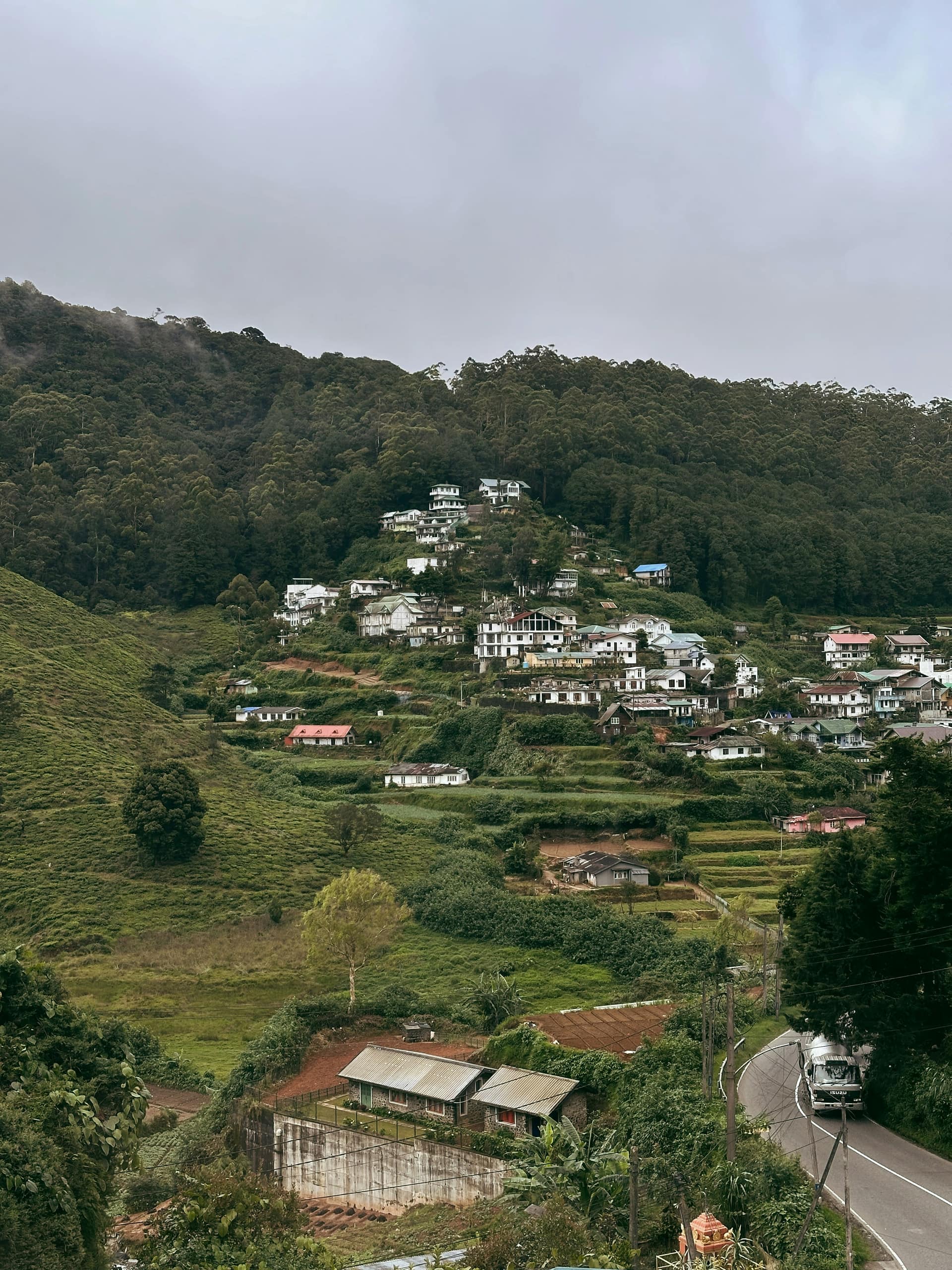
Nuwara Eliya appeals to Indian travellers because it offers a familiar idea, a hill station, in an unfamiliar setting. Like Ooty or Darjeeling, it was built by the British, has tea estates, a lake and cool evenings. But its Sri Lankan character, food and culture make it feel distinctly different.
Nuwara Eliya also matters spiritually. The Seetha Amman Temple and the surrounding valley are identified in tradition with Ashok Vatika, where Sita was held by Ravana. For many Indian visitors, standing beside the temple stream is a deeply moving moment.
- →Ramayana sites: Seetha Amman Temple, Hakgala.
- →Hill station feel: lake, tea, cool evenings.
- →Short flights from major Indian cities.
The Ramayana sites
The Seetha Amman Temple at Sita Eliya, roughly 5 to 6 kilometres from Nuwara Eliya, is the focus of the Ramayana tradition here. Pilgrims offer prayers, visit the stream where Sita is said to have bathed and see rock marks venerated as Hanuman's footprints.
Hakgala, a few kilometres further on, is linked in some accounts with part of the mountain carried by Hanuman and with the garden of Sita's captivity. Ramayana trails usually continue to sites near Ella, such as Ravana Falls and Ravana Cave, and other temples across the island.
- →Seetha Amman Temple: 30 to 45 minutes.
- →Hakgala Botanical Garden: two to three hours.
- →Continue to Ella: Ravana Falls and Ravana Cave.
Vegetarian and Indian food
Vegetarian food is easy to find in Nuwara Eliya. Rice and curry with dhal and hill vegetables is the staple, and dosa, idli and vadai are served at some Tamil-run restaurants, reflecting the Hill Country Tamil community. Several hotels offer Indian dishes on request.
Vegetarian and Jain travellers should explain needs clearly, as dried fish or Maldive fish flakes sometimes appear in sambols and curries. Hotels and guesthouses are usually happy to prepare meals without onion and garlic if asked in advance.
- →Ask: no fish, no Maldive fish, no egg.
- →Jain meals: request in advance.
- →South Indian breakfasts available in some places.
Families and pacing
Nuwara Eliya is popular with Indian families. Gregory Lake's boats, strawberry farms, Victoria Park's playground and tea factories suit all ages, and the cool weather is a novelty for children from the plains. Horton Plains suits older children and fit adults.
Nuwara Eliya's winding roads can cause car sickness, so plan breaks and carry remedies. Lankan Stays & Trails designs Ramayana and family routes for Indian travellers with comfortable vehicles, vegetarian-friendly hotels and temple timings built in.
When to go from India
Nuwara Eliya is clearest from January to March. April and May, during Indian school holidays, coincide with the Sri Lankan New Year season, when the town is crowded and expensive; book early. June to September is misty but quiet, and still cool when Indian plains are hot.
Nuwara Eliya around Diwali, usually in October or November, can be wet, but the Seetha Amman Temple may hold special pujas. Festival dates shift each year with the lunar calendar.
- →January to March: clearest.
- →April to May: Indian holidays, busiest.
- →June to September: misty, cool, quieter.
Frequently asked questions
Is Nuwara Eliya good for Indian tourists?
Nuwara Eliya is very good for Indian tourists, offering Ramayana sites such as the Seetha Amman Temple, a cool hill station climate, tea estates and easy vegetarian food. It is often combined with Kandy and Ella on a Ramayana trail.
Where is Ashok Vatika in Sri Lanka?
Popular tradition places Ashok Vatika, where Sita was held in the Ramayana, in the valley around the Seetha Amman Temple at Sita Eliya and Hakgala, near Nuwara Eliya. Historians treat this as tradition, but the site is deeply revered by pilgrims.
Is vegetarian food available in Nuwara Eliya?
Vegetarian food is widely available in Nuwara Eliya, with rice and curry, dhal and vegetable dishes everywhere and South Indian food at some restaurants. Ask about dried fish in sambols. Jain meals can be prepared on request.
How many days in Nuwara Eliya for Indian travellers?
Two nights in Nuwara Eliya suits most Indian travellers, allowing the Seetha Amman Temple, Hakgala, a tea factory and Gregory Lake, plus Horton Plains for active visitors. Families on a relaxed pace may enjoy three nights.
Is Nuwara Eliya like Ooty?
Nuwara Eliya is often compared to Ooty: both are British-built hill stations with lakes, tea estates and cool evenings. Nuwara Eliya is higher, at about 1,890 metres, and has its own Sri Lankan character, food and Ramayana sites.
When should Indian travellers visit Nuwara Eliya?
Indian travellers will find Nuwara Eliya clearest from January to March. April and May are popular for school holidays but crowded and expensive. June to September is misty and quiet, pleasant when Indian plains are hot.