
Quick answer
Nuwara Eliya's vegetable farms and market show how the hill town feeds much of Sri Lanka. Farmers grow carrots, leeks, cabbages, potatoes, beans and beetroot on steep terraces around the town, which sits at about 1,890 metres, and lorries take the harvest to Colombo daily. The central market in town sells this produce alongside spices and dried fish. An hour at the market and a short walk on the terraces near Kandapola or Sita Eliya make a good, low-cost morning.
Key takeaways
- Nuwara Eliya District is one of Sri Lanka's main sources of temperate vegetables such as carrots, leeks and cabbages.
- Many vegetable terraces around Nuwara Eliya are cut into slopes steep enough that all work is done by hand.
- The Nuwara Eliya central market is busiest in the morning, when farmers and traders arrive from the surrounding villages.
- Strawberries are also grown around Nuwara Eliya and sold fresh at farms and roadside stalls.
- Vegetable lorries leave Nuwara Eliya for Colombo's wholesale markets most afternoons and evenings.
Why Nuwara Eliya's farms are worth seeing
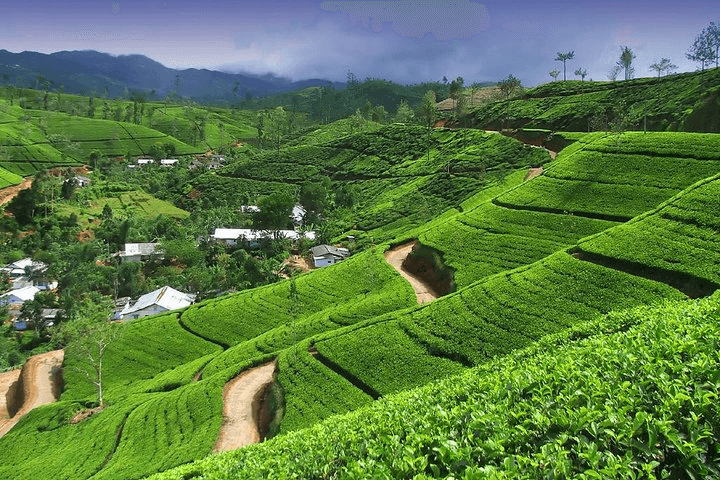
Nuwara Eliya's vegetable farms are worth seeing because they explain the landscape. Between the tea estates, every patch of reasonably sunny land is cultivated, often on terraces held up by stone walls. The patterns of green and brown are as striking as the tea, and far less often photographed.
Nuwara Eliya's farms also show a different rural Sri Lanka. Tea is an industry run by companies; vegetables are mostly grown by smallholders who own or rent a few plots. The pace, the tools and the worries about prices and rainfall are those of family farms everywhere.
- →Main crops: carrots, leeks, cabbages, potatoes, beans, beetroot and lettuce.
- →Where to see them: around Kandapola, Sita Eliya, Mipilimana and the Ambewela road.
- →Best light: early morning, before mist or cloud builds.
The Nuwara Eliya central market
The Nuwara Eliya central market sits near the bus station in the middle of town. Vegetable stalls dominate, piled with produce brought down from the terraces at dawn, and there are sections for fruit, spices, dried fish, household goods and warm clothes. It is a working market, crowded and noisy, not a tourist attraction.
The Nuwara Eliya market is best between about 7am and 10am. Ask before photographing stallholders, keep bags in front of you in the crowd, and expect to be offered tastes of fruit. Prices are fair and fixed for locals; a little gentle bargaining is normal for visitors buying more than a snack.
- →Go in the morning for the busiest scenes.
- →Buy fruit you can peel, or wash it in bottled water.
- →Wear closed shoes; floors can be wet and muddy.
Visiting a farm
A Nuwara Eliya farm visit is easiest with a local guide or driver who knows a family willing to show visitors their plots. The visit usually means a walk along the terraces, a look at how water is channelled from the hills, and often a cup of tea at the farmhouse. Agree a small payment or bring a gift.
Nuwara Eliya farmers are busy, and casual visitors walking into fields uninvited are not welcome. Stay on the bunds, avoid stepping on beds and never pick produce. Lankan Stays & Trails can arrange an informal farm visit on request, paying the family directly for their time.
Eating the harvest
Nuwara Eliya's vegetables appear in every meal in town. Leek and carrot curries, potato tempered with chilli and onion, and fresh beans in coconut gravy are standard in rice and curry. Hotels serve vegetable soups at dinner, a reminder of the British-era kitchens.
Nuwara Eliya's produce is also the main reason Sri Lankan salads and soups are possible at all. When heavy rain or landslides damage the terraces, vegetable prices across the island jump within days, which shows how much the country depends on this district.
- →Try: leek curry, potato tempered with chilli and fresh carrot sambol.
- →Hotels: vegetable soup is a standard evening starter.
- →Markets: buy carrots or beans to snack on the drive.
Farming, slopes and the environment
Nuwara Eliya's vegetable farming has costs. Steep cultivated slopes erode in heavy rain, and agrochemical run-off reaches streams that feed the reservoirs below. Some farmers are moving to terracing with grass strips and lower chemical use, often with government or NGO support.
Nuwara Eliya's farms are also close to protected areas, including Horton Plains and Hakgala Strict Nature Reserve. Encroachment has been a concern for decades. Visitors cannot fix this, but buying from local markets and choosing guides who explain the issues honestly helps keep the conversation open.
Frequently asked questions
What vegetables grow in Nuwara Eliya?
Nuwara Eliya grows temperate vegetables that struggle in the Sri Lankan lowlands: carrots, leeks, cabbages, cauliflower, potatoes, beans, beetroot, lettuce and radish. Strawberries are also grown around the town. Most of the produce goes by lorry to Colombo's wholesale markets.
Where is the market in Nuwara Eliya?
The Nuwara Eliya central market is in the town centre, near the bus station and the main road. It sells vegetables, fruit, spices, dried fish, household goods and warm clothes, and is busiest from early morning until about 10am.
Can tourists visit a vegetable farm in Nuwara Eliya?
Tourists can visit a vegetable farm in Nuwara Eliya, usually through a guide or driver who knows a farming family. Visits involve a terrace walk and often tea at the house. Do not walk into fields uninvited, and pay or bring a gift for the family's time.
Why does Nuwara Eliya grow vegetables?
Nuwara Eliya grows vegetables because its cool climate at about 1,890 metres suits temperate crops. British settlers introduced many of them in the nineteenth century, and the town became one of Sri Lanka's main suppliers of carrots, leeks and cabbages.
Is the Nuwara Eliya market worth visiting?
The Nuwara Eliya market is worth an hour for travellers interested in food and daily life. It is crowded, wet underfoot and not designed for tourists, which is the point. Go before 10am, ask before photographing people and keep valuables secure.
Are Nuwara Eliya vegetables safe to eat raw?
Nuwara Eliya vegetables are fine cooked, and most curries and soups use them that way. Salads in good hotels are generally washed in treated water. When buying produce to eat raw, wash or peel it with bottled water first.