
Quick answer
Photographing Ella well depends on early light, patience and responsibility. The Ella Gap and the ridges are clearest in the first two hours after sunrise, before haze rises. The Nine Arch Bridge is best photographed from the viewpoints above it, soon after dawn, with a train timed from the day's schedule. Tea slopes and estate life reward a short telephoto lens and asking before photographing people. Drone rules in Sri Lanka are strict and change, so check before flying, and never stand on the tracks.
Key takeaways
- The Ella Gap and surrounding ridges are clearest in the first two hours after sunrise, before haze and cloud rise.
- The Nine Arch Bridge photographs best from the viewpoints above the tracks, soon after dawn, with a train timed from the day's schedule.
- A short telephoto lens is the most useful single lens in Ella, compressing layered ridges and tea rows.
- Drone use in Sri Lanka requires permission and the rules change, so confirm current regulations before flying.
- Always ask before photographing tea pluckers, villagers or worshippers, and never stand on the railway tracks.
The light in Ella and why timing is everything
Light is the single biggest factor in photographing Ella. In the first two hours after sunrise, the low sun picks out the rows of tea, the ridges stand in layers towards the horizon and mist often lies in the valley bottoms. By mid-morning the same scenes flatten, and by late morning cloud and haze often fill the Ella Gap.
Evenings can be beautiful when the afternoon cloud clears, but they are less reliable. If you only have one chance at a view, make it a sunrise.
Cloud itself can be an asset. On wetter mornings, low cloud drifting through the Ella Gap or wrapping the tea slopes produces moodier, more distinctive images than a clear blue sky. Photographers who stay flexible and go out anyway often come back with their best frames of the trip.
- →Sunrise to roughly two hours after: layered ridges, mist, soft light.
- →Mid-morning: good for people and estate life, flatter for landscapes.
- →Midday: harsh light and haze; rest or shoot details.
- →Late afternoon: warm light when cloud allows, less predictable.
Subjects worth photographing in Ella
Ella offers a range of subjects beyond the obvious. The best portfolios mix wide landscapes with close details and people, which tells the story of the hill country better than another bridge shot.
- →The Ella Gap: from Little Adam's Peak or Ella Rock at sunrise.
- →Tea slopes: rows of bushes compressed with a telephoto lens.
- →The Nine Arch Bridge: from the viewpoints above, soon after dawn.
- →The railway: trains on curves and at small stations, from safe positions.
- →Estate and village life: pluckers, markets and temples, always with permission.
- →Details: tea leaves, spice stalls, weathered railway signs.
Photographing the Nine Arch Bridge well
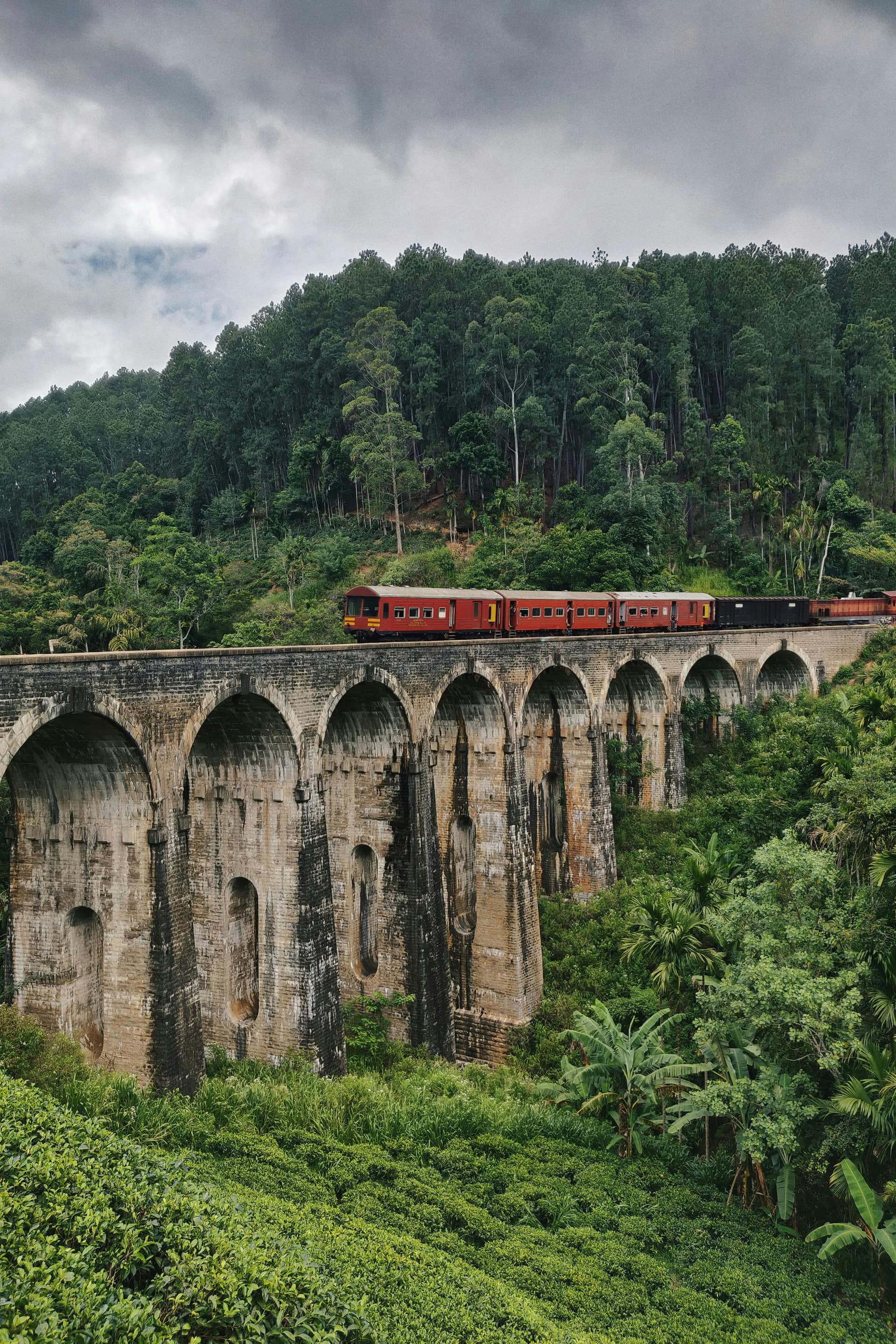
The Nine Arch Bridge is Ella's most photographed subject and the one where timing matters most. Arriving soon after dawn gives soft light, mist in the trees and far fewer people. Check the day's train times locally, since the crowd builds around each crossing and timetables shift.
The viewpoints on the slopes above the bridge give the classic elevated shot and keep you safely away from the tracks. Standing on the bridge or the rails for a photograph is dangerous and in places prohibited, and trains can appear with little warning around the curve.
What camera gear to bring to Ella
Ella rewards a small, flexible kit rather than a heavy one, because most photography happens on walks. A short telephoto zoom is the most useful single lens, compressing ridges and tea rows and allowing respectful distance from people. A wide lens helps at viewpoints and on the bridge.
Carry a rain cover or dry bag, because showers arrive quickly, and a microfibre cloth for mist on the lens. A lightweight tripod helps at sunrise, when light is low. Spare batteries matter, since cool mornings drain them faster.
- →Short telephoto zoom: the most useful single lens.
- →Wide-angle lens: viewpoints and architecture.
- →Rain cover or dry bag and a microfibre cloth.
- →Lightweight tripod for sunrise.
- →Spare batteries for cool mornings.
Photographing responsibly in Ella
Responsible photography in Ella means safety around trains and respect for people. Leaning from train doorways for photographs causes serious injuries on this line every year, and walking on the tracks is risky and in places prohibited.
Tea pluckers, villagers and worshippers are not scenery. Ask before photographing people, accept refusals and avoid paid, staged shots with pluckers on roadside slopes. Drone use in Sri Lanka requires permission and regulations change, so confirm current rules with the relevant authorities before flying anywhere near Ella.
Planning a photography-focused stay in Ella
Photographers should allow at least two, and ideally three, nights in Ella to have more than one chance at clear morning light. Use the first sunrise for the Ella Gap, the second for the Nine Arch Bridge, and middays for estate life, details and rest.
Lankan Stays & Trails can pair photographers with local guides who know the viewpoints, train times and estate communities, so shoots are well timed and respectful.
Frequently asked questions
What is the best time to photograph Ella?
The first two hours after sunrise are best. The Ella Gap and ridges are clearest, mist often lies in the valleys and the light is soft. By late morning haze and cloud usually rise. Evenings can be good but are less reliable.
Where is the best photo spot for the Nine Arch Bridge?
The viewpoints on the slopes above the bridge give the classic elevated shot and keep you off the tracks. Arrive soon after dawn for soft light and fewer people, and check the day's train times locally, since the crowd builds around each crossing.
Can I fly a drone in Ella?
Drone use in Sri Lanka requires permission, and the rules change. Check current regulations with the relevant authorities before your trip, and never fly near trains, crowds or religious sites without authorisation. Flying without permission can lead to confiscation or fines.
What lens is best for Ella?
A short telephoto zoom is the most useful single lens in Ella. It compresses layered ridges and tea rows and lets you photograph people from a respectful distance. A wide-angle lens is a useful second choice for viewpoints and the bridge.
Can I photograph tea pluckers in Ella?
Ask first and accept a refusal. Pluckers are working, often to daily targets, so keep interactions brief. Avoid paid, staged photographs on roadside slopes; a guided estate walk gives more natural and respectful opportunities.
Is it safe to take photos from the train to Ella?
Photographing from a window or from inside the carriage is safe. Leaning out of doorways causes serious injuries on this line every year, particularly on curves, bridges and in tunnels. No photograph is worth the risk.
What should I photograph in Ella apart from the Nine Arch Bridge?
The Ella Gap at sunrise, layered tea slopes, trains on curves at small stations, estate and market life, and close details such as tea leaves and spice stalls all make strong images. Quieter village paths often give more original photographs than the famous viewpoints.
How many days do photographers need in Ella?
At least two nights, and ideally three, to have more than one chance at clear morning light. Cloud can hide the Ella Gap on any given morning, so a spare sunrise makes a significant difference to results.