
Quick answer
A private driver in Sri Lanka, typically roughly $50-80 a day including the vehicle, suits American travellers who want door-to-door flexibility, luggage-free transfers and the ability to stop at viewpoints along the way. The public train, particularly the Kandy to Ella route covering roughly 140 kilometres in six to seven hours, suits travellers who want the scenery itself as the destination and don't mind fixed timetables and advance ticket booking for the best seats. Most American visitors use a private driver for point-to-point transfers and add the train as a standalone scenic experience on one specific leg, rather than treating it as their main mode of transport.
Key takeaways
- The Kandy to Ella train covers roughly 140 kilometres and takes roughly six to seven hours, considerably longer than the same route by road, roughly 3.5-4.5 hours by car.
- First class observation and reserved second class seats on the Kandy to Ella route generally need booking well in advance, sometimes 30 days ahead through official channels, since they sell out fastest in peak season.
- A private driver-guide in Sri Lanka typically costs roughly $50-80 a day including the vehicle, and is used across nearly every budget tier, not just luxury trips, mainly due to road and traffic conditions.
- Unreserved third class train travel is available on a walk-up basis but often means standing for part of the journey during busy periods, particularly around the Nine Arch Bridge stretch near Ella.
- A private driver can stop at viewpoints, tea factories and waterfalls along the Kandy-Ella road that the train passes without stopping, which matters if sightseeing along the route is part of the appeal.
Private driver or train: a real Sri Lanka decision
Private driver versus public train is one of the most common transport decisions on a Sri Lanka itinerary, particularly for the hill country stretch between Kandy and Ella where both options are genuinely good. Unlike some destinations where public transport is purely a budget fallback, Sri Lanka's train through this section is a legitimate highlight in its own right, not just a cheaper alternative to a car.
That's what makes the decision worth thinking through properly rather than defaulting to one option for the whole trip.
What the Kandy to Ella train actually involves
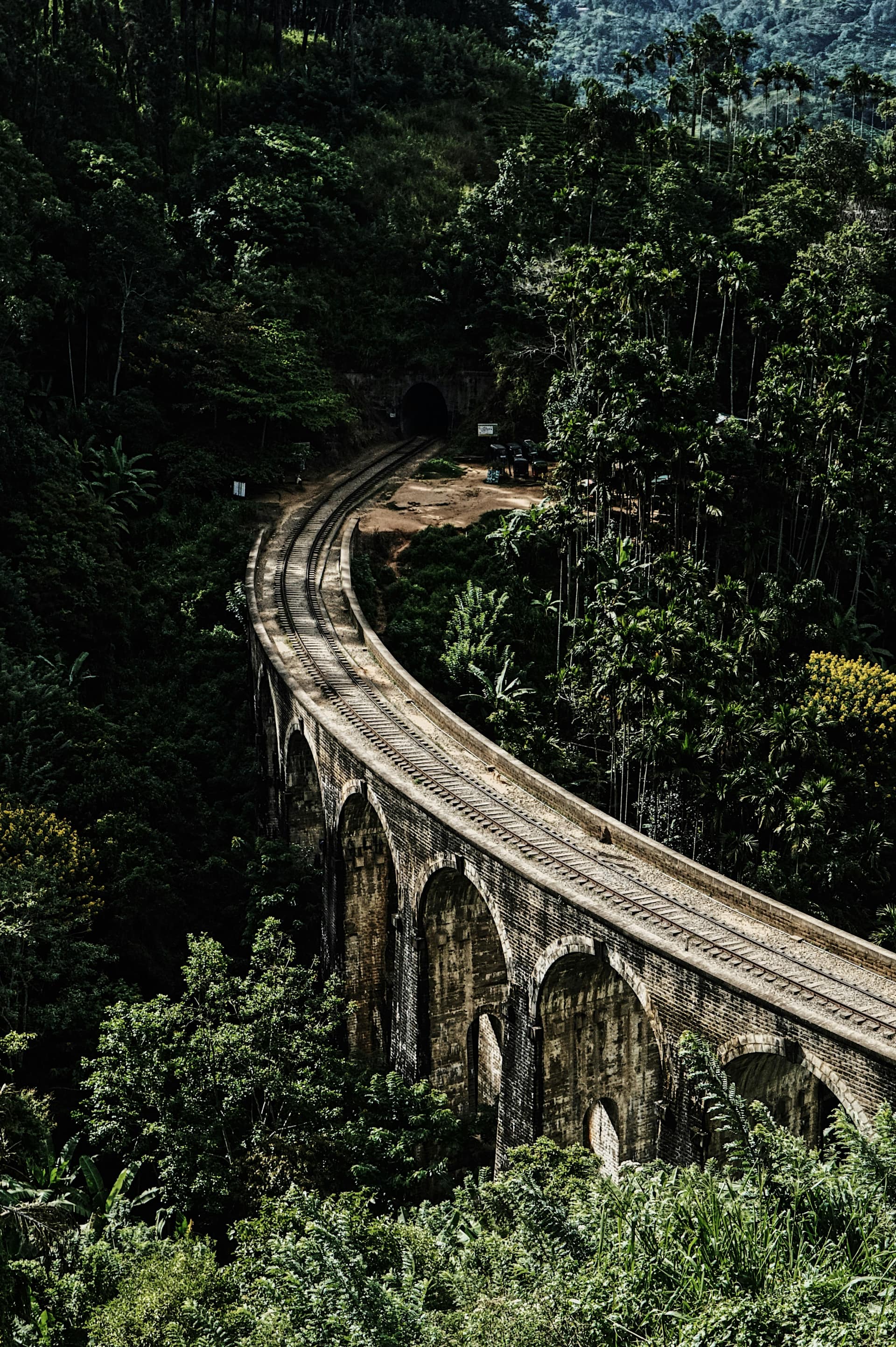
The Kandy to Ella train covers roughly 140 kilometres of track through tea estates, tunnels and mountain ridgelines, and takes roughly six to seven hours depending on the specific service and stops. The stretch near Ella, including the crossing of Nine Arch Bridge, is the most photographed section and the reason many travellers build a whole day around this single journey.
Seating comes in tiers: first class observation cars with large windows, reserved second class, and unreserved third class where seats aren't guaranteed. The best seats generally need booking well ahead, sometimes up to 30 days through official booking channels, particularly in the December to March peak season.
- →A journey of roughly six to seven hours covering roughly 140 kilometres, considerably slower than the equivalent road trip.
- →First class observation and reserved seats that typically require advance booking, especially in peak season.
- →Unreserved third class available on a walk-up basis, though standing room only is common on busy departures.
What a private driver offers instead
A private driver-guide, typically costing roughly $50-80 a day including the vehicle, covers the same Kandy to Ella road distance in roughly 3.5-4.5 hours, considerably faster than the train, and can stop wherever you like along the way: a tea factory, a waterfall, or a roadside viewpoint. This flexibility is the main reason a private driver, not just a luxury option, is used across almost every Sri Lanka budget tier.
The trade-off is that a road journey through the hill country's switchbacks doesn't offer quite the same immersive, side-on view of the tea terraces that the train's open windows and slower pace provide, and some travellers do get more carsick on the winding mountain roads than they would on the train.
- →A journey of roughly 3.5-4.5 hours by road, considerably faster than the train's six to seven hours.
- →Flexibility to stop at tea factories, waterfalls and viewpoints that the train passes without stopping.
- →Door-to-door pickup and drop-off, avoiding the walk to and from a train station with luggage.
The approach most American travellers actually use
The most common pattern isn't choosing one mode for the whole trip; it's using a private driver for point-to-point transfers generally, then specifically booking the Kandy to Ella (or a shorter section of it, such as Nanu Oya to Ella) train as a standalone scenic experience on one particular day. Your driver can meet you at the destination station with your luggage already there, removing the main practical downside of taking the train.
This hybrid approach captures the train's scenery without making it your primary transport method for the rest of the trip, where the private driver's flexibility generally matters more.
- →Use a private driver for the majority of point-to-point transfers across the itinerary.
- →Book the train specifically for the Kandy-Ella or Nanu Oya-Ella scenic stretch as a standalone experience.
- →Have the driver transport luggage separately and meet you at the destination station.
Booking practicalities for both options
Train tickets for the best seats, first class observation or reserved second class, are worth booking as early as your itinerary allows, since they're a known bottleneck for foreign visitors travelling in peak season. A private driver, by contrast, is typically arranged through a tour operator or agency well ahead of the trip and doesn't carry the same seat-availability risk.
If you're building your own itinerary rather than working with an operator, confirm current train booking windows and procedures directly, since ticketing systems and advance booking periods can change.
Choosing what fits your itinerary
Private driver versus train isn't really a luxury-versus-authentic choice in the usual sense; it's closer to a practical decision that most travellers, regardless of budget tier, resolve the same way by combining both. A private driver as the default, with the train added deliberately for its scenery, tends to serve American travellers better than committing fully to either mode.
Lankan Stays & Trails builds hill country legs this way as standard: a driver-guide for flexibility and luggage handling, with the train slotted in specifically for the Kandy-Ella or Nanu Oya-Ella stretch where the scenery earns the extra time.
Frequently asked questions
Is it better to take the train or a private driver from Kandy to Ella?
Many American travellers use both: a private driver for general transfers, and the train specifically for this scenic stretch. The train takes roughly six to seven hours for 140 kilometres and offers unmatched views; a driver covers the same road distance in roughly 3.5-4.5 hours with more flexibility to stop.
How much does a private driver cost per day in Sri Lanka?
Roughly $50-80 a day including the vehicle is a typical rough range, though it varies with vehicle type, route length and season. This is used across nearly every Sri Lanka budget tier, not just luxury trips, largely because of local road and traffic conditions.
How far in advance should I book the Kandy to Ella train?
For first class observation or reserved second class seats, book as early as your itinerary allows, sometimes up to around 30 days ahead through official booking channels, particularly for December to March travel. Unreserved third class tickets are available on a walk-up basis but standing is common on busy departures.
How long does the Kandy to Ella train take?
Roughly six to seven hours to cover approximately 140 kilometres, considerably slower than driving the same route, which generally takes roughly 3.5-4.5 hours by road. The extra time is largely the point, since the route's mountain scenery is the main draw.
Can a private driver meet me at the train station in Ella?
Yes, this is a common arrangement. Many travellers take the train one-way for the scenery, usually Nanu Oya or Kandy to Ella, while their driver transports their main luggage separately and meets them at the destination station.
Is the Sri Lanka train safe and comfortable for American tourists?
Generally yes, particularly in first class observation or reserved second class carriages. Unreserved third class can be crowded and involve standing during peak periods, so booking a reserved seat class in advance is worth the modest extra cost for most first-time visitors.
Do I need a private driver for the whole Sri Lanka trip if I take some trains?
Not necessarily, but most American travellers find a driver useful for the majority of transfers and add the train only for specific scenic stretches like Kandy to Ella. This hybrid approach balances the train's scenery against the driver's flexibility for luggage and stops.