
Quick answer
Private dawn access to Sigiriya means climbing the rock at or shortly after opening, roughly 7am, with a dedicated private guide, well ahead of the mid-morning tour-bus groups that build steadily from around 9 or 10am onward. The site itself, the frescoes, the Lion's Paw terrace and the summit ruins, is identical regardless of timing; what a dawn climb changes is crowding on the narrow stairways, cooler temperatures for the climb, and softer early light for photography.
Key takeaways
- Sigiriya generally opens to visitors around 7am, and climbing at or shortly after opening avoids the bulk of tour-bus groups that arrive from roughly mid-morning onward.
- The climb involves several narrow, steep stairway sections, including a spiral staircase to the Mirror Wall frescoes and open metal stairs near the summit, all considerably easier to manage without a crowd.
- Temperatures on the exposed upper sections climb quickly once the sun is fully up, making an early start meaningfully more comfortable, not just quieter.
- Sigiriya's entry ticket is one of the higher single entry fees on a typical Cultural Triangle itinerary, reflecting its status as a UNESCO World Heritage Site since 1982.
- A private guide, rather than joining a group tour, allows the pace and stops (frescoes, water gardens, summit ruins) to be set around the traveller rather than a fixed group schedule.
Why timing changes the Sigiriya experience
Sigiriya draws a steady flow of tour groups from around mid-morning, once buses from Kandy, Dambulla and further afield arrive together, and the narrow stairway sections, particularly the spiral staircase to the fifth-century frescoes and the final open metal stairs to the summit, can back up noticeably once several groups converge at the same point.
A private dawn climb, at or shortly after the roughly 7am opening, largely avoids this. The rock, frescoes and summit ruins are unchanged; what is different is the experience of moving through them without queuing on a narrow stair or waiting for a group ahead to clear a viewpoint.
What the climb itself involves
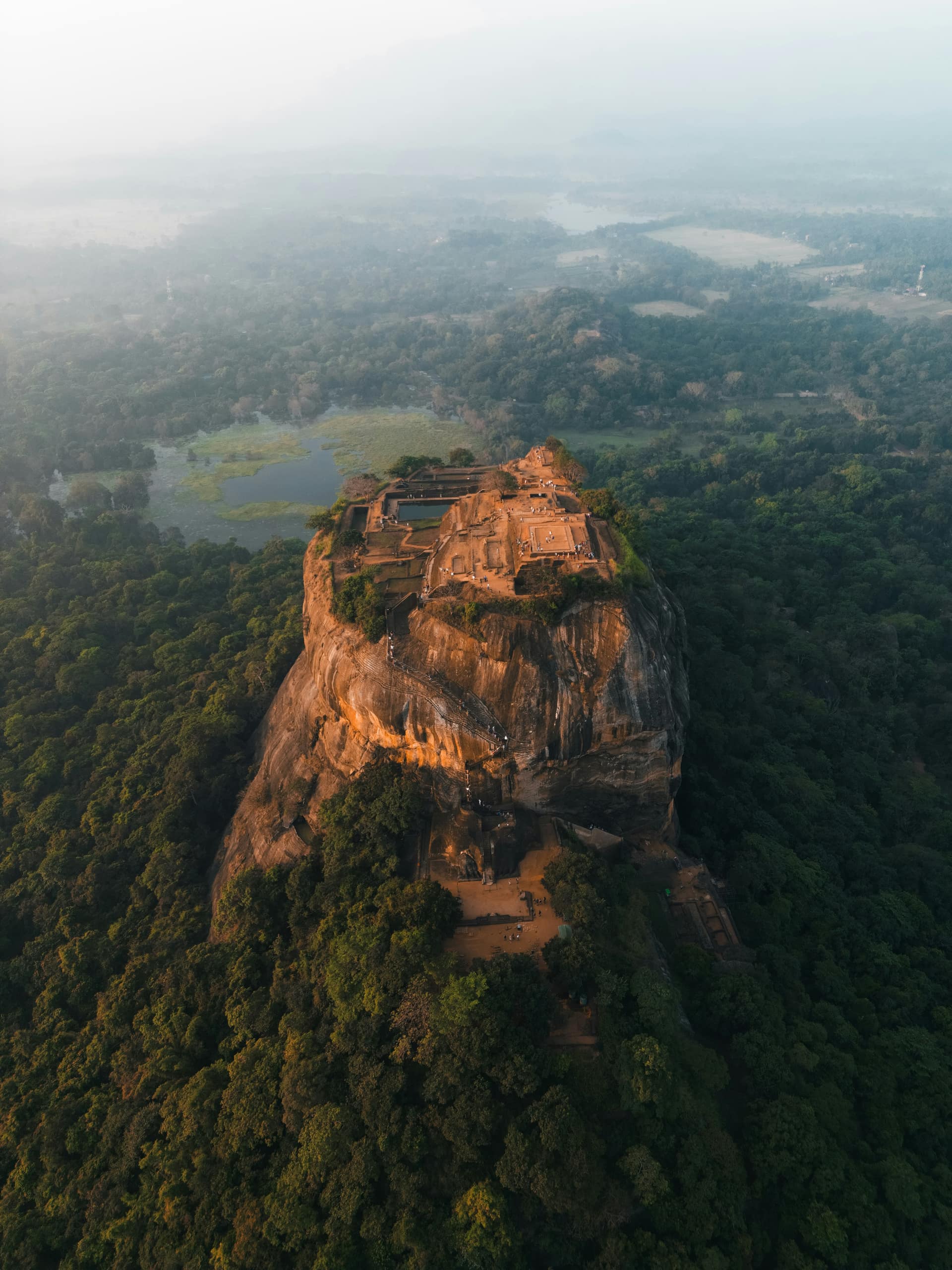
Sigiriya's ascent covers roughly 1,200 steps in total across several distinct sections: an initial approach through the water gardens at the base, a spiral metal staircase up to the Mirror Wall and its famous frescoes of the Sigiriya damsels, the Lion's Paw terrace partway up, and a final steep, open stairway to the summit ruins.
None of this changes with a dawn start; the physical climb is the same regardless of hour. What genuinely differs is temperature, the exposed upper sections heat up quickly once the sun is fully up, and light quality, with early morning generally giving softer, more even light across the plain below for photography.
- →Roughly 1,200 steps total across the full ascent, in several distinct sections.
- →Frescoes accessed via a spiral metal staircase partway up the rock.
- →Final summit approach: steep, open stairs with limited passing space, the section that benefits most from lower crowds.
A private guide versus joining a group climb
A private guide allows the visit to be paced around the traveller: lingering at the frescoes, taking photography stops at the Lion's Paw terrace, or resting on a hot section without holding up or being held up by a group with its own fixed schedule. This matters more on Sigiriya than on a flatter site, given the climb's physical demands.
A knowledgeable private guide can also place the climb in context, the fifth-century King Kashyapa's fortress-palace, the surviving frescoes' technique and condition, the site's water garden engineering, in a way that adds meaningfully to what would otherwise be an impressive but under-explained climb.
Tickets, timing and what to bring
Sigiriya's entry ticket is one of the higher single entry fees on a typical Cultural Triangle route, reflecting its UNESCO World Heritage status since 1982; confirm current pricing when booking rather than relying on a fixed figure. A dawn start generally still requires purchasing the ticket at the site or through a pre-arranged booking, so building in a few minutes for this before the climb itself is sensible.
Sturdy, closed shoes with good grip matter given the metal stairways and occasional loose surfaces, and water is worth carrying even on a cooler morning climb, since the ascent itself is still physically demanding regardless of temperature.
- →Typical opening: around 7am, with a private dawn climb starting at or shortly after this.
- →Footwear: closed, grippy shoes recommended for the metal stairways.
- →Bring water even on an early climb; the ascent remains physically demanding regardless of temperature.
Beyond the climb: the wider Sigiriya site
Sigiriya's base includes extensive water gardens and boulder gardens that are easy to rush past on the way to the rock itself but reward a slower look, particularly with fewer visitors around at dawn. A private guide can build in time here either before or after the climb, depending on which the traveller prefers to do while energy levels are freshest.
Nearby Pidurangala Rock offers an alternative, less regulated viewpoint looking back at Sigiriya itself, sometimes added as a second, shorter climb later the same morning for travellers wanting the classic photograph of the rock from a distance.
Fitting a dawn Sigiriya climb into an itinerary
A dawn Sigiriya climb generally means an early wake-up call from a Cultural Triangle base, most commonly Habarana or Sigiriya village itself, and works best as the first activity of a day rather than fitted in after other touring, given both the physical demands and the value of beating the crowds specifically.
Lankan Stays & Trails arranges private dawn Sigiriya climbs with an experienced local guide, timing the wake-up call and transfer so the climb genuinely starts at opening rather than an hour or two after it.
Frequently asked questions
What time does Sigiriya open for a dawn climb?
Sigiriya generally opens to visitors around 7am, though this can shift slightly, so confirming current opening times when booking is worthwhile. A private dawn climb aims to start at or shortly after opening, well ahead of the mid-morning tour-bus groups.
How many steps are there up Sigiriya?
Roughly 1,200 steps in total across the full ascent, including a spiral staircase to the frescoes and a final steep, open stairway to the summit ruins. This is unchanged regardless of what time the climb is done.
Is a private guide worth it for Sigiriya?
Many travellers find it worthwhile, since a private guide paces the climb around the traveller rather than a group schedule, and can explain the site's fifth-century history, fresco technique and water garden engineering in more depth than a passing group tour typically covers.
Why is climbing Sigiriya at dawn better than mid-morning?
Dawn largely avoids the tour-bus crowds that build from around mid-morning, which matters most on the climb's narrow stairway sections. It is also cooler for the physically demanding ascent and gives softer early light across the plain below for photography.
How difficult is the Sigiriya climb?
It is a genuinely physical climb involving roughly 1,200 steps, a spiral metal staircase and a final steep, open stairway near the summit, with limited shade throughout. A reasonable level of fitness and sturdy, closed footwear are recommended regardless of timing.
How much does Sigiriya entry cost?
Sigiriya's entry ticket is one of the higher single entry fees on a typical Cultural Triangle itinerary, given its UNESCO World Heritage status. Exact pricing changes periodically, so confirm current rates when booking rather than relying on a fixed figure.
Should I climb Sigiriya or Pidurangala Rock?
Sigiriya itself is the fifth-century royal citadel with frescoes and summit ruins; nearby Pidurangala offers a less regulated viewpoint looking back at Sigiriya from a distance. Many travellers do both, Sigiriya at dawn and Pidurangala later the same morning.