
Quick answer
A private tea estate nature walk in Sri Lanka moves beyond the standard factory tour to explore the working landscape itself: terraced tea rows, remnant shade and forest patches, streams and estate birdlife, guided by a planter or naturalist familiar with the estate's specific terrain. Walks typically run one to two hours, work well in the cooler hill-country air around Nuwara Eliya or Ella, and add genuine nature content to a stay otherwise focused on tea history and tasting.
Key takeaways
- A tea estate nature walk goes beyond the standard factory tour and tasting to explore the surrounding working landscape on foot, including terraced tea rows, remnant forest patches and estate streams.
- Many estates retain patches of older shade trees or forest at their margins, which support a distinct birdlife more varied than the open tea rows alone suggest.
- A guide with genuine estate knowledge, sometimes a working planter, adds meaningful context on how the landscape has been shaped by over a century of cultivation, distinct from a general nature guide's perspective.
- Walks typically run one to two hours, comfortably paced given the cool hill-country air, making them an easy addition to a Nuwara Eliya or Ella stay rather than a demanding excursion.
- This experience suits travellers who want a genuine nature component without leaving the hill country's tea-estate stays, complementing rather than replacing a cloud forest or waterfall hike elsewhere in the area.
Beyond the factory tour: the estate as a landscape
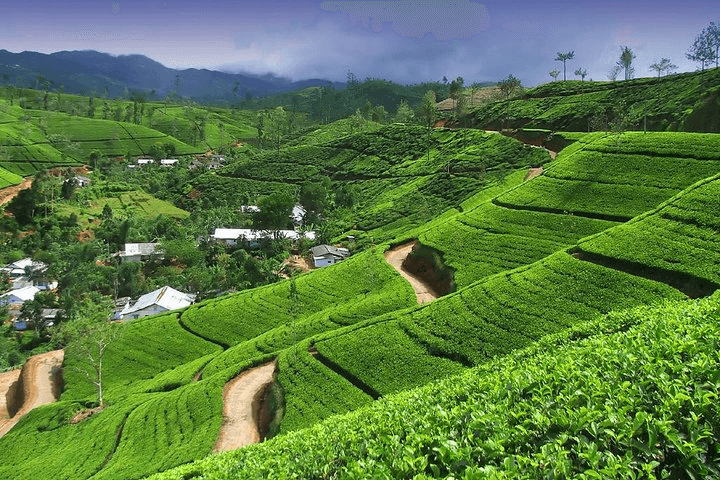
Most visitors to Sri Lanka's tea country experience the estate through its factory: withering lofts, rolling machines, a tasting at the end. A private nature walk instead treats the estate as a landscape in its own right, terraced rows climbing steep hillsides, remnant shade and forest patches at the margins, and streams cutting through the terraces toward the valley below.
This reframing matters because a tea estate, particularly an older one, is not simply agricultural monoculture; many retain surprising pockets of biodiversity at their edges, worth exploring on foot rather than only from a factory viewing platform.
The birdlife and biodiversity an estate can hold
Shade trees and forest patches retained at an estate's margins, often for soil and water conservation reasons rather than aesthetics, support a distinct birdlife more varied than the open tea rows alone would suggest, including several species also found in nearby cloud forest.
Streams and small wetland pockets within an estate add further variety, sometimes hosting amphibians and smaller wildlife alongside the birds, a level of detail a standard factory tour rarely mentions.
Walking with a planter's perspective
Some estates offer a guide with genuine planting experience, sometimes a current or former estate manager, who brings a working perspective on how the landscape has been shaped by over a century of cultivation, distinct from a general nature guide's more purely ecological focus.
This combination, working history and natural history together, is part of what makes a tea estate nature walk feel different from either a factory tour or a standalone forest walk elsewhere in the hills.
- →A planter's guide explains how cultivation practices have shaped the visible landscape over generations.
- →Shade trees and forest margins support birdlife distinct from the open tea rows.
- →Estate streams add further biodiversity, sometimes including amphibians and smaller wildlife.
Length, pace and what to expect underfoot
Walks typically run one to two hours, generally on established estate roads and paths rather than technical terrain, comfortably paced given the cool hill-country air that makes walking pleasant even at midday.
Sturdy shoes are still worth wearing given the terraced, sometimes uneven ground, and a light jacket for the cooler mornings and evenings typical of Nuwara Eliya and Ella.
Fitting a tea estate nature walk into a hill-country stay
This is one of the easiest nature experiences to add to a hill-country stay, since it typically happens on or near the grounds of a tea-estate bungalow already booked for the wider trip, requiring no separate transfer.
It complements a cloud forest walk or waterfall hike well as a gentler, shorter alternative on a day when a longer excursion is not planned, rounding out the nature content of a Nuwara Eliya or Ella stay.
Frequently asked questions
What is a tea estate nature walk?
A guided walk through a working tea estate's wider landscape, terraced rows, remnant shade and forest patches, and streams, distinct from the standard factory tour and tasting, focused on the estate's natural history rather than tea processing alone.
Is there wildlife on a tea estate?
Yes, particularly at the margins. Shade trees and forest patches retained at many estates support a distinct birdlife, and streams within the estate sometimes host amphibians and other smaller wildlife.
How long does a tea estate nature walk take?
Typically one to two hours, generally on established estate roads and paths, comfortably paced given the cool hill-country air of Nuwara Eliya or Ella.
What is a planter's guide?
A guide with genuine tea-planting experience, sometimes a current or former estate manager, who explains how the landscape has been shaped by over a century of cultivation alongside its natural history.
Is a tea estate walk different from a factory tour?
Yes. A factory tour explains tea processing, withering, rolling and tasting, while a nature walk explores the surrounding landscape on foot, its birdlife, shade trees and streams, a genuinely different focus.
What should I wear for a tea estate nature walk?
Sturdy shoes given the terraced, sometimes uneven ground, and a light jacket for the cooler mornings and evenings typical of Nuwara Eliya and Ella, even though the walk itself is not physically demanding.
Does Lankan Stays & Trails arrange private tea estate nature walks?
Yes. We arrange private nature walks with planter or naturalist guides on tea estates around Nuwara Eliya and Ella, added to a hill-country stay alongside factory tours and tastings.