
Quick answer
A rainy-day plan for a 10-day Sri Lanka family holiday rests on three habits: do outdoor activities before 10am, when rain is least likely; keep one covered activity in reserve at each stop; and swap days within a multi-night stay instead of cancelling. Dambulla Cave Temple, a village cooking session, Kandy's temple and dance show, a tea factory, a cooking class in Ella and Galle's museums all work in the rain. Sigiriya Rock, Pidurangala and the Ella walks should wait for a dry spell.
Key takeaways
- Rain in most of Sri Lanka falls mainly in the afternoon and evening, so mornings are the most reliable time for outdoor plans.
- Sigiriya Rock's metal staircases and Pidurangala's boulders are slippery when wet, and climbs are best postponed.
- A three-night stay at Sigiriya allows the climb to move to whichever morning is clear.
- Safaris run in the rain, with jeep canopies and side flaps, and elephants are often more active in cool, wet weather.
- Tropical showers typically last one to two hours; all-day rain is unusual outside tropical depressions.
How tropical rain behaves
A rainy-day plan for a 10-day Sri Lanka family holiday starts with understanding the rain. In most months it builds through the afternoon heat and falls as a thunderstorm between about 2 and 6pm. An hour later the air is cool and the sky clearing.
Monsoon rain on the affected coast is different: longer, windier and sometimes lasting days. A well-planned route avoids the monsoon coast in the first place. What remains is the afternoon shower, which a family timetable built around early starts and a midday rest hardly notices.
- →Outdoor plans: 6.30 to 10am.
- →Drives and rests: midday and early afternoon.
- →Covered activities: 3 to 6pm.
Wet days at Sigiriya
Rain at Sigiriya changes the order, not the content. Three nights there give three mornings, and Sigiriya Rock takes whichever is dry. Do not climb in rain with children: the upper staircases are steel, and the last section is exposed to wind.
Dambulla Cave Temple is the natural wet-weather swap, since the caves are under a rock overhang, though the stairway up is open. A village tour with cooking under a thatched roof works in showers, and elephant safaris continue under canvas canopies.
Wet days in Kandy and the hills
Kandy is the easiest stop on the route in rain. The Temple of the Sacred Tooth Relic is roofed apart from a short courtyard crossing, a Kandyan dance show takes place in a hall, and the Ceylon Tea Museum on the Hantana road fills an hour indoors.
The drive to Nanu Oya is unaffected, and a tea factory tour is entirely under cover. The train runs in all weathers. Mist hides the long views and gives the tea slopes and forest a different, closer beauty that children often find exciting.
- →Temple of the Sacred Tooth Relic: allow an hour.
- →Dance show: 5pm, about an hour.
- →Tea factory: 30 to 45 minutes, on the way to the train.
Wet days in Ella
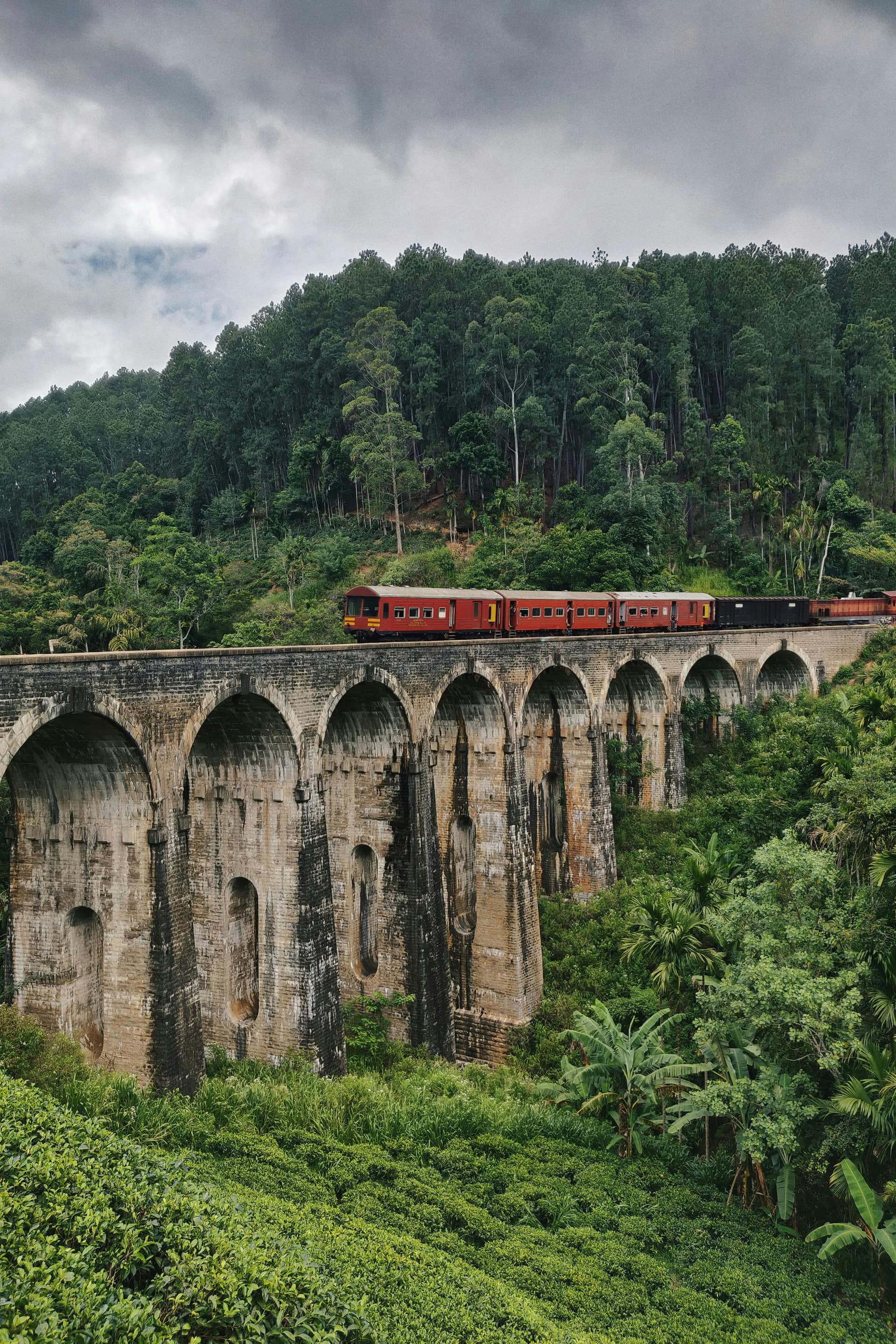
Ella in rain needs patience. Little Adam's Peak and the Nine Arch Bridge are best saved for a dry window, which most days provide before 10am. Paths turn to mud and leeches come out, so long socks and closed shoes matter.
Covered options in Ella are few and good. A cooking class of two to three hours has children grating coconut and rolling roti. A tea factory near town runs tours in any weather. Cafes on the main street have board games, and nobody minds a long lunch.
Wet days at Udawalawe and the coast
Udawalawe in rain is still worth the drive. Elephants do not shelter, the Elephant Transit Home feeds its calves on schedule, and jeeps have roofs and roll-down sides. Tracks can become muddy and slow, so allow extra time.
The south coast in rain turns families towards Galle. The Maritime Museum, the covered arcades of the old Dutch Hospital and a long ice cream fill an afternoon, and Koggala has a folk museum with carts and masks. Swimming in a warm pool in the rain is a pleasure of its own.
- →Do not swim in the sea during or just after a storm.
- →Leave the pool when lightning is close.
- →Keep a dry bag for phones and passports.
Kit and attitude
Kit for rain in Sri Lanka is light. A thin waterproof jacket for each person, quick-drying shorts, a second pair of shoes and a few zip bags are enough. Umbrellas are sold everywhere for a couple of US dollars and double as sunshades.
Attitude matters more than kit. Children take their cue from adults, and a downpour watched from a veranda with a pot of tea and a card game is a memory in its own right. Lankan Stays & Trails gives each family a covered alternative for every stop, so no day is left empty.
Frequently asked questions
What can you do in Sri Lanka with kids when it rains?
When it rains in Sri Lanka with kids, visit Dambulla's caves, the Temple of the Sacred Tooth Relic, a Kandyan dance show, a tea factory or Galle's museums, take a cooking class, or simply swim. Warm rain rarely stops a pool session.
Can you climb Sigiriya in the rain with children?
Climbing Sigiriya in the rain with children is not advisable. The metal stairs become slippery and the summit is exposed to wind and lightning. Wait for a dry morning; with three nights nearby, one almost always comes.
Do safaris run in the rain in Sri Lanka?
Safaris run in the rain in Sri Lanka unless tracks are flooded. Jeeps have canopies and side covers. Elephants are often active in wet weather, though birds and reptiles are less visible. Bring a light jacket, as an open jeep feels cool.
How often does it rain during a Sri Lanka family holiday?
In the main season from December to April, a family on the standard route might see a few short showers in ten days. In April, October and November, expect a storm on many afternoons. Rain seldom lasts a whole day.
Is the Ella train still worth it in the rain?
The Ella train is still worth it in the rain. Views are reduced by mist, but the tunnels, tea estates and station stops remain enjoyable, and the carriage is dry. Take the earliest train of the day for the best chance of clear spells.
What should we pack for rain in Sri Lanka with kids?
Pack a light waterproof jacket for each child, quick-drying clothes, a spare pair of shoes or sandals, long socks for leech country and zip bags for electronics. A small towel in the day bag is useful after sudden showers.