
Quick answer
Rainy days on a relaxing beach holiday in Sri Lanka are usually short-lived: in the dry season, showers often last an hour or two, typically in the afternoon. Use them for a massage or Ayurveda treatment, a long lunch, reading on a covered veranda, a cooking class, or a short trip to Galle Fort's museums and cafés. Choosing a hotel with covered outdoor spaces, a spa and a good restaurant makes rainy days easy anywhere.
Key takeaways
- In Sri Lanka's dry seasons, rain usually comes as short, heavy afternoon showers rather than all-day downpours.
- October is usually the wettest month island-wide; outside it, a fully rainy day on the coast in season is uncommon.
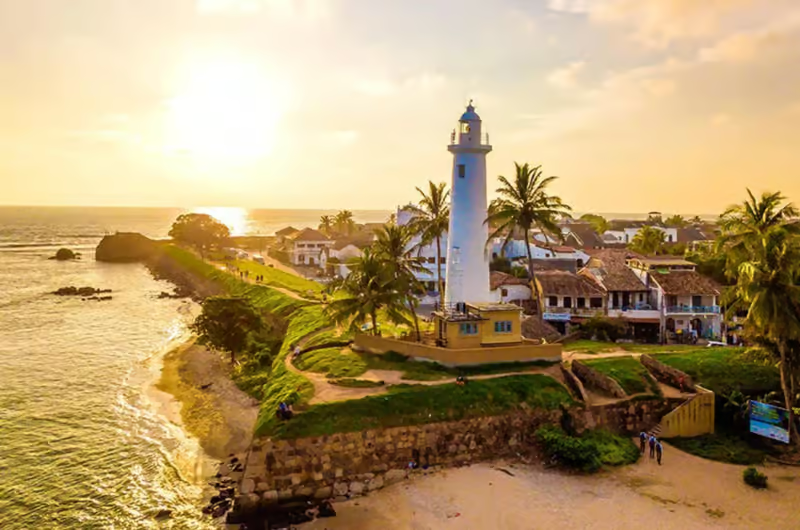
- Galle Fort, roughly 15 to 30 minutes from most south-coast beaches near Galle, has museums, galleries, cafés and covered walkways for wet days.
- Spa treatments, cooking classes and long lunches are the easiest rainy-day plans on any Sri Lankan beach.
- A hotel with covered verandas, a spa and a good restaurant makes rain far easier to enjoy.
How rain behaves on Sri Lanka's coast
Rain on Sri Lanka's coast behaves differently by season. In each coast's dry season, rain is uncommon and usually comes as a short, heavy shower, often in the afternoon or evening. Mornings are usually bright.
In inter-monsoon periods, especially October and parts of April and November, thunderstorms are more frequent and can last longer. During each coast's monsoon, rain is common and the sea is rough. Choosing the coast in season makes rainy days rare.
- →Dry season: occasional short showers; most days sunny.
- →Inter-monsoon: afternoon thunderstorms are common.
- →Monsoon: frequent rain and rough seas on that coast.
Slow things to do at the hotel
Slow things to do at the hotel are the best response to rain on a relaxing holiday. The point is not to fill the time but to enjoy it.
- →Book a massage or an Ayurveda treatment for the afternoon.
- →Take a long lunch of rice and curry, or a cooking lesson with the chef.
- →Read on a covered veranda and listen to the rain on the roof.
- →Swim in the pool in warm rain, when there is no thunder.
- →Sleep; rainy afternoons are made for it.
Short outings in the rain
Short outings in the rain work best when they are close and mostly indoors or covered.
- →Galle Fort: the National Maritime Museum, galleries, boutiques and cafés in old colonial buildings.
- →Martin Wickramasinghe Folk Museum at Koggala: village life and the novelist's home.
- →A tea or spice garden tour, some partly under cover.
- →Mask workshops at Ambalangoda, on the west coast.
- →A temple visit, many of which have covered halls and quiet interiors.
After the rain
After the rain, the coast is at its most beautiful. The air clears, the light turns golden, and the gardens glisten. A walk on the beach just after a storm, as the clouds break up over the sea, is one of the most memorable moments of many beach holidays.
After heavy rain, the sea can be murky and rougher for a day, especially near river mouths. Ask your hotel before swimming, and avoid lagoon outlets after storms.
Choosing a stay that is pleasant in rain
Choosing a stay that is pleasant in rain is wise in any month, and essential in shoulder seasons. Open-sided pavilions, covered verandas, a spa, a library or lounge, and a good restaurant all make wet afternoons enjoyable.
A beautiful room you would happily spend an afternoon in is worth more on a relaxing holiday than a spectacular beach you cannot use in the rain.
Planning for rain
Planning for rain starts with travelling in the right season for your coast, which makes rainy days rare. Beyond that, pack a light rain jacket, keep one or two indoor ideas in mind, and let showers change the day's plan rather than spoil it.
Lankan Stays & Trails chooses beach stays that are pleasant in all weathers and can rearrange outings around the forecast. The October guide in this series covers the wettest month in detail.
Frequently asked questions
What can you do on a rainy day at the beach in Sri Lanka?
Book a massage or Ayurveda treatment, take a cooking class, enjoy a long lunch, read on a covered veranda, or visit Galle Fort's museums, galleries and cafés. Most showers pass within an hour or two, so the beach is often usable again later.
Does it rain every day in Sri Lanka?
No. In each coast's dry season, most days are sunny, with occasional short showers. Rain is more frequent during the monsoons and the inter-monsoon months, especially October. Choosing the coast that is in season makes rainy days rare.
What is there to do in Galle when it rains?
Galle Fort has the National Maritime Museum, galleries, boutiques, cafés and restaurants in old colonial buildings, many with covered verandas. It is one of the best rainy-day outings on the south coast, roughly 15 to 30 minutes from most nearby beaches.
Is it safe to swim after rain in Sri Lanka?
After heavy rain the sea can be murky and rougher, especially near river mouths and lagoon outlets. Ask your hotel before swimming, and wait a day if conditions look unsettled. Never swim during thunderstorms.
How long do tropical showers last in Sri Lanka?
In the dry season, most showers last from a few minutes to an hour or two, often in the afternoon. During inter-monsoon periods, thunderstorms can last longer, and during the monsoons, rain can persist for much of the day.
Which month has the most rain in Sri Lanka?
October is usually the wettest month island-wide, during the second inter-monsoon period. Each coast also has its own monsoon: the south-west roughly May to September, and the north-east roughly November to January.