
Quick answer
Rainy days on a Sri Lanka honeymoon are best handled by doing outdoor things in the morning and keeping covered options for the afternoon, when most rain falls. At Sigiriya, visit the Dambulla Cave Temple. In Kandy, the Temple of the Sacred Tooth Relic is under cover. In the hills, tour a tea factory and sit by the fire. On the coast, explore Galle Fort's museums and cafes or book a spa treatment. Rain rarely lasts all day outside the peak of a monsoon.
Key takeaways
- Tropical rain in Sri Lanka usually falls in heavy bursts in the afternoon or evening, with bright mornings.
- The south-west monsoon runs from about May to September and the north-east from about November to January or February.
- October and November are the wettest months island-wide.
- Leeches appear on hill-country trails after rain; salt or repellent on socks keeps them off.
- Rooms with covered verandas and hotels with good restaurants matter most in wetter months.
How rain behaves in Sri Lanka
Rain in Sri Lanka follows patterns that are easy to live with. Outside the height of a monsoon, a typical wet day starts clear, clouds over by lunchtime and breaks in a thunderstorm between two and five. The air cools, the storm passes and the evening is fresh.
Monsoon rain is different in the region it affects. On the south-west coast in June or the east coast in December, it can be overcast for days, with showers at any hour. The answer to that is geographic: go to the other side of the island.
- →Morning: usually the driest part of the day.
- →Afternoon: the likeliest time for a storm.
- →Monsoon regions: avoid for beach days, enjoy for green scenery.
Wet-weather ideas inland
Inland stops have plenty to offer in the rain. Near Sigiriya, the five painted caves of the Dambulla Cave Temple are dry and atmospheric, and a village cooking session under a thatched roof fills a wet lunchtime. If the rock is slippery, wait a few hours; it dries fast.
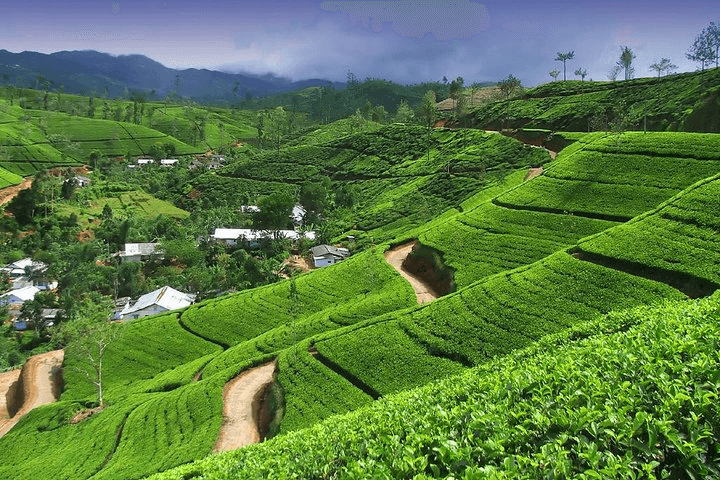
Kandy's temple, its small museums and the Ceylon Tea Museum at Hantane are all indoors. In the tea country, rain is part of the charm. Tour a working factory, taste the grades, then return to the bungalow for a fire, a book and a pot of tea.
- →Dambulla caves, about half an hour from Sigiriya.
- →Temple of the Sacred Tooth Relic and the tea museum in Kandy.
- →A factory tour and tasting in the hills.
Wet-weather ideas on the coast
The coast in the rain calls for a town or a treatment. Galle Fort is ideal, with covered arcades, the maritime museum, galleries, jewellers and cafes where you can sit out a downpour. From any beach between Hikkaduwa and Mirissa it is under an hour away.
Otherwise, stay in. A two-hour spa ritual, a cooking class in the hotel kitchen, a long lunch and an afternoon sleep to the sound of rain on the roof are hardly hardships. Swimming in a warm pool during a shower is a pleasure, though you should leave the water if there is lightning.
Building rain into the plan
Building rain into the plan is mostly about slack. Stay at least two nights at any stop with a weather-dependent highlight, so there is a second morning for Sigiriya, the safari or the whale trip. Avoid chains of single nights, where one wet day wipes out a place entirely.
Choose rooms with deep verandas or covered terraces, and hotels with restaurants you will be glad to eat in twice. A driver who can swap days around is the most useful asset of all in an unsettled month.
- →Two nights wherever the highlight needs good weather.
- →A covered outdoor space at every room.
- →Flexible days, with the driver free to reorder them.
Packing and attitude
Packing for rain is light work. A thin waterproof jacket, quick-drying clothes, sandals that tolerate water and a dry bag for phones and cameras are enough. Umbrellas are sold everywhere and hotels lend them. In the hills, add a warm layer, since wet weather at 1,900 metres is chilly.
Attitude does the rest. Lankan Stays & Trails reminds honeymooners that a storm watched from a veranda with a drink in hand is one of the tropics' great shows, and that some couples remember it more fondly than the sunny days.
Frequently asked questions
Does rain ruin a honeymoon in Sri Lanka?
Rain rarely ruins a honeymoon in Sri Lanka. Outside the monsoon-affected coast, it usually falls for an hour or two in the afternoon. With mornings used for sightseeing and a few indoor ideas ready, most couples are barely inconvenienced. Choosing the right coast for the month matters most.
What can couples do in Sri Lanka when it rains?
Couples can visit the Dambulla caves, the Temple of the Sacred Tooth Relic, tea factories and Galle Fort's museums and cafes. Spa treatments, cooking classes, tea tastings, gem workshops and long lunches all suit a wet afternoon. Many simply enjoy the storm from a veranda.
Which month has the most rain in Sri Lanka?
October and November are generally the wettest months across the island, during the second inter-monsoon. The south-west also has heavy rain in May and June, and the east in December and January. February and March are typically the driest months overall.
Can we climb Sigiriya in the rain?
Sigiriya stays open in light rain, though the steps and metal stairs become slippery and the summit view may be lost in cloud. It is better to wait for a dry spell. Early mornings are most often clear, even in the wetter months.
Are there leeches in Sri Lanka?
Leeches are found on damp trails in the hill country and rainforests, especially after rain. They are harmless but unpleasant. Wear long socks, apply repellent or salt to shoes and socks, and check your ankles after a walk. They are absent from beaches and dry-zone sites.
Is it safe to travel during heavy rain?
Travel is generally safe, though heavy rain can cause local flooding and occasional landslips in the hills, which may delay roads and trains. Follow your driver's advice, avoid swollen rivers and waterfalls, and build spare time into days with long transfers.