
Quick answer
The A5 from Nuwara Eliya runs east past Lake Gregory, the vegetable farms of the high plateau, the Seetha Amman Temple at Seetha Eliya and Hakgala Botanical Garden, then descends through hairpin bends to Welimada and on to Badulla. Ramayana stops include the temple, Hakgala and Divurumpola near Welimada. Viewpoints on the descent look over the Uva valleys. Nuwara Eliya to Welimada takes about an hour without stops, and Badulla about two hours.
Key takeaways
- The A5 runs east from Nuwara Eliya past the temple and Hakgala.
- The road descends through hairpin bends into the Uva country.
- Divurumpola lies near Welimada, a short detour from the road.
- Nuwara Eliya to Welimada takes about an hour without stops.
- Badulla is about two hours from Nuwara Eliya.
The route
Leave Nuwara Eliya past Lake Gregory and follow the A5 east. The road climbs gently across the high plateau, lined with terraced vegetable plots, before reaching Seetha Eliya and the Seetha Amman Temple on the roadside.
Just beyond, Hakgala Botanical Garden sits beneath its great rock. The road then begins a long, winding descent through forest and farmland towards Welimada, with sweeping views across the Uva basin on clear days.
From Welimada, the A5 continues to Badulla, the capital of Uva Province, while another road branches towards Bandarawela and Ella.
- →Lake Gregory and the plateau.
- →Seetha Eliya and Hakgala.
- →Descent to Welimada, then Badulla or Ella.
Seetha Amman Temple and Hakgala
The temple is the first major stop, 15 to 20 minutes from town. Allow 30 to 45 minutes for the shrines and the stream. Hakgala, a few minutes further, needs one to three hours depending on how far you walk.
Together, these two stops are the heart of the Ashok Vatika tradition. Pilgrims usually visit both, while travellers short of time may choose one.
Parking at the temple is roadside and limited; at Hakgala there is a car park near the entrance.
The descent and viewpoints
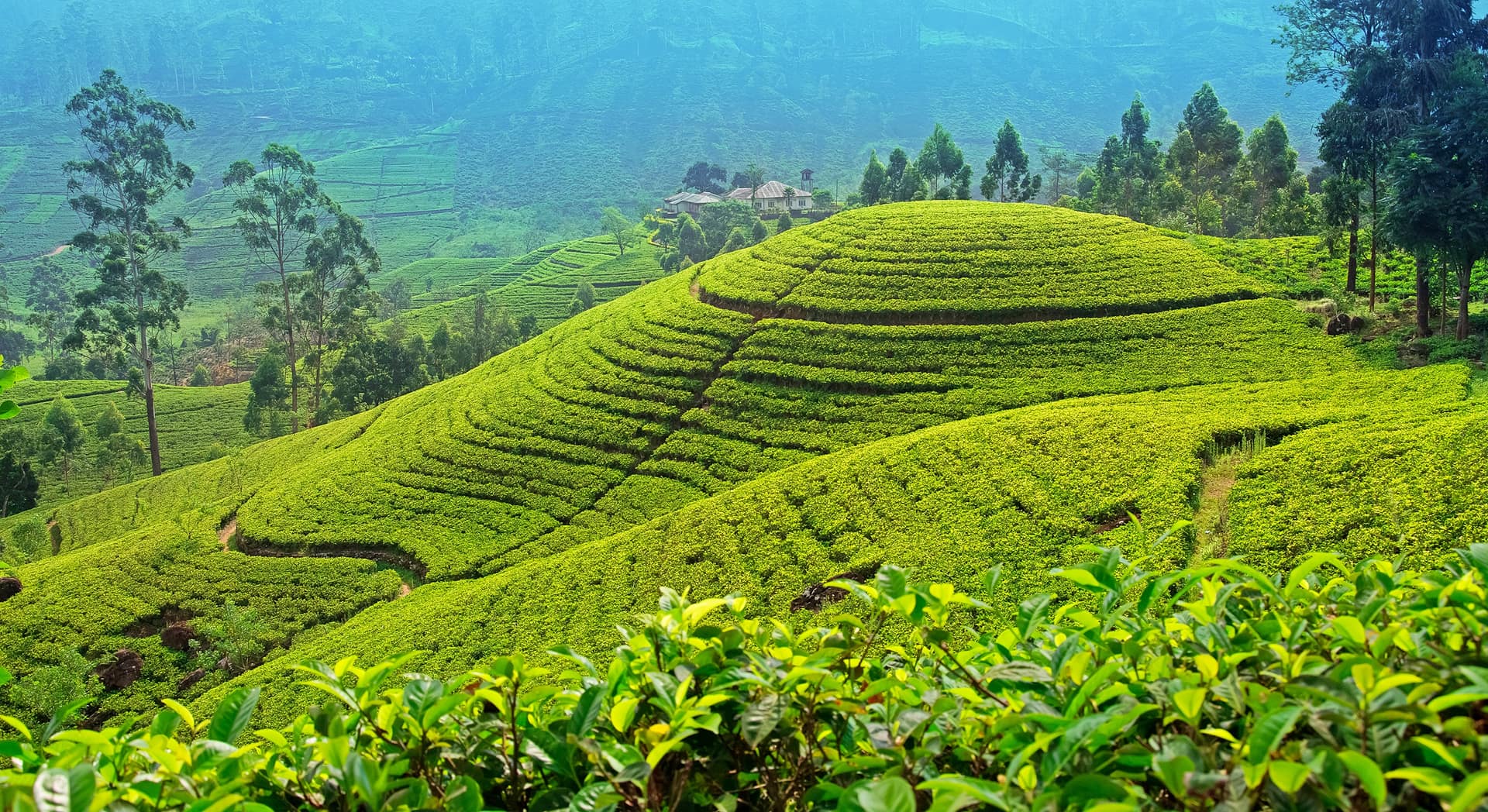
Beyond Hakgala, the road drops steeply through hairpin bends. On clear mornings, viewpoints look out over the valleys of Uva, with terraced fields, small towns and distant ridges. Your driver will know safe places to pull over.
The descent is spectacular but demanding, with buses and trucks on narrow bends. Travellers prone to motion sickness should sit in front and take breaks.
The climate changes as you descend: the cold, misty plateau gives way to the drier, brighter Uva side, often sunny when Nuwara Eliya is wrapped in cloud.
Vegetable lorries are a constant presence on this road, carrying carrots, leeks and cabbages from the plateau down to markets across the island. They move slowly on the bends, so expect to wait behind them now and then and let your driver choose safe places to overtake.
- →Hairpin bends below Hakgala.
- →Views over the Uva valleys.
- →Drier, brighter weather on the Uva side.
Welimada and Divurumpola
Welimada is a busy market town in a broad valley famous for vegetables and potatoes. Near it, Divurumpola is linked to Sita's trial by fire, with a Buddhist temple and a sacred tree where Hindu pilgrims pray. Allow 30 to 45 minutes.
Ishtripura caves, also near Welimada, are linked to Ravana in local belief but are harder to reach.
Welimada has simple restaurants and shops, useful for a tea stop or lunch.
The valley floor around Welimada is a patchwork of terraced fields, irrigation channels and small farmhouses, often busy with families at work. On market days the town is crowded with growers and buyers, which makes a lively scene but slows traffic through the centre.
- →Welimada: market town in a wide valley.
- →Divurumpola: Sita's fire ordeal.
- →Ishtripura: Ravana caves, harder to reach.
On to Badulla or Ella
Badulla, about two hours from Nuwara Eliya, is the end of the hill country railway and home to the Muthiyangana temple, Dunhinda Falls and a historic Kataragama devale. It suits travellers heading east towards Mahiyangana or the east coast.
Most visitors instead branch off at Welimada towards Bandarawela and Ella, reaching Ella in about two to two and a half hours from Nuwara Eliya with stops.
Lankan Stays & Trails drivers can shape the day around whichever destination you are heading for, with Ramayana stops timed for the clearest hours.
Driving tips
Start early to see the temple in calm conditions and the descent in clear morning light. Afternoon mist is common on the plateau, and rain can make the bends slippery.
The road is narrow in places, with heavy buses and trucks. A private car with an experienced driver is the safest choice. Self-driving is not recommended for visitors unfamiliar with Sri Lankan hill roads.
Carry warm layers for the plateau and lighter clothes for Uva, plus water and snacks.
- →Start early for clear views.
- →Use an experienced driver.
- →Layers for changing weather.
Frequently asked questions
Is the Seetha Amman Temple on the road to Badulla?
Yes. It stands on the A5, the main road from Nuwara Eliya towards Welimada and Badulla, about 5 to 6 km from Nuwara Eliya. Hakgala garden is a few minutes further along the same road.
How long is the drive from Nuwara Eliya to Badulla?
About two hours without stops, depending on traffic and weather. With stops at the temple, Hakgala and a viewpoint, allow four to five hours. Nuwara Eliya to Welimada takes about an hour.
Is the road dangerous?
It is narrow and winding, with steep hairpin bends below Hakgala and heavy buses and trucks. With an experienced driver it is safe. Avoid driving it yourself unless you are familiar with Sri Lankan hill roads, especially in mist or rain.
What Ramayana sites are on this road?
The Seetha Amman Temple and Hakgala, linked to Ashok Vatika, are on the road. Divurumpola, linked to Sita's fire ordeal, is near Welimada. Ishtripura caves near Welimada are linked to Ravana in local belief.
Where can I stop for lunch?
Nuwara Eliya before setting off has the most vegetarian choice. Welimada and Bandarawela have simple restaurants on the way. Ask your driver for reliable places that suit your diet. Carry water and snacks too, as the descent is slow.
Is the weather different on the Uva side?
Often, yes. The Uva side is usually drier and brighter than Nuwara Eliya, and can be sunny when the plateau is misty. Temperatures rise as you descend. Carry layers for both climates.
Should I go to Badulla or Ella?
Most travellers branch off at Welimada towards Bandarawela and Ella, which has more to see and more places to stay. Badulla suits those heading east towards Mahiyangana or the east coast, or wanting Dunhinda Falls.