
Quick answer
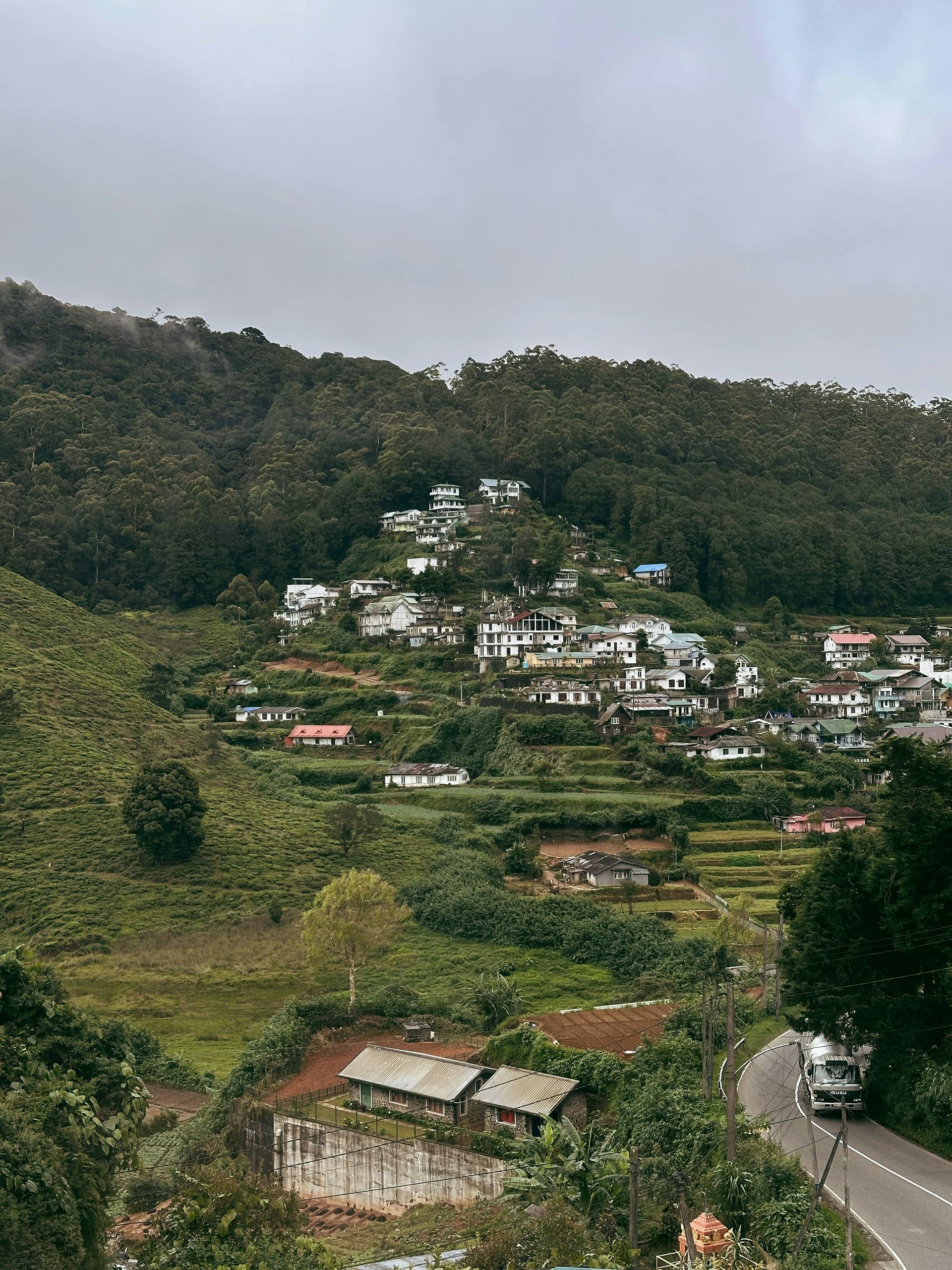
Seetha Eliya, also written Sita Eliya, is a small settlement on the A5 road about 5 to 6 km from Nuwara Eliya, between the town and Hakgala. It is known for the Seetha Amman Temple, its cool misty climate and terraced vegetable farms. Roadside stalls sell offerings, snacks and local produce. Visitors can walk a short stretch of the road, buy fresh vegetables and strawberries in season, and combine the village with Hakgala garden just beyond.
Key takeaways
- Seetha Eliya lies on the A5 about 5 to 6 km from Nuwara Eliya, towards Hakgala.
- The settlement is known for the Seetha Amman Temple and vegetable farms.
- The climate is cool and often misty, with frequent rain.
- Roadside stalls sell offerings, snacks and fresh local produce.
- Hakgala Botanical Garden lies a few kilometres further along the road.
Where Seetha Eliya is
Seetha Eliya sits on the A5, the main road from Nuwara Eliya towards Welimada, Badulla and Ella. The drive from town takes 15 to 20 minutes, passing market gardens and the edge of the forest. Hakgala Botanical Garden is a few kilometres further on, and the road then drops towards the Uva valleys.
The name is usually read as Sita's plain or Sita's open land, and the settlement takes its identity from the temple tradition. It is small: a string of houses, shops and farms along the road and up the slopes rather than a town.
Because it lies on a main road, buses and tuk-tuks pass frequently, making it easy to reach without a private car.
- →Road: the A5, Nuwara Eliya towards Badulla.
- →Drive from Nuwara Eliya: 15 to 20 minutes.
- →Next along the road: Hakgala garden.
Farms and produce
The slopes around Seetha Eliya are covered with terraced vegetable plots, some of the most productive in the island. Carrots, leeks, cabbages, potatoes, beans and other temperate vegetables grow here in the cool climate and are trucked down to markets across Sri Lanka.
Strawberries are grown in the Nuwara Eliya area too, and in season roadside stalls sell punnets of fresh fruit, alongside jams and sweets. Prices are reasonable and the produce is very fresh.
Farm work goes on from early morning, and you will see families tending plots on remarkably steep ground. Ask before photographing people at work, and keep to the road rather than walking into the fields.
- →Vegetables: carrots, leeks, cabbages, potatoes, beans.
- →Strawberries and jams in season.
- →Steep terraced plots on the slopes.
Stalls and shops
Near the temple, small stalls sell flowers, coconuts, incense, camphor, threads and other offerings for puja. Others sell tea, snacks, bottled water and simple souvenirs such as images of Rama and Sita.
Buying offerings here is easier than bringing them from home and supports local families directly. Prices are usually fixed and modest; there is little need to bargain over flowers or incense.
There are few sit-down restaurants in the settlement itself. Most visitors eat in Nuwara Eliya, where vegetarian options are plentiful, or carry snacks for the road.
Weather and what to bring
Seetha Eliya is high in the hills and often cooler and mistier than Nuwara Eliya town. Daytime temperatures are usually between about 10 and 20 degrees Celsius, and rain is possible at any time of year, with January to April generally the driest stretch.
Bring a warm layer, an umbrella or light rain jacket, and socks to wear after the temple, since floors and rocks are cold underfoot. Mornings are often clearer than afternoons, when mist rolls in.
The cool weather makes the temple visit pleasant for travellers coming from the hot plains or from India, but the cold catches many by surprise.
- →Temperatures: about 10 to 20 degrees by day.
- →Driest months: January to April.
- →Pack: warm layer, rain jacket, socks.
Spending longer in Seetha Eliya
To see more than the temple, walk a short stretch of the road in either direction, taking care with traffic. Views open across the farmed slopes, and the forested ridges of Hakgala rise above. Early mornings, with mist lifting off the valley, are especially beautiful.
Combine the village with Hakgala garden for a relaxed half day, or continue on the A5 to the viewpoints above Welimada. Some travellers stop for tea at a roadside stall and simply watch the life of the road for a while.
Lankan Stays & Trails drivers are happy to pause at a safe spot for photographs or a short walk, and can recommend the best viewpoints depending on the weather.
Being a good visitor
Seetha Eliya is a working village. Park only where your driver advises, keep the road clear and do not block driveways or field entrances.
Keep noise low near the temple and homes, especially early in the morning. Take litter with you; bins are limited and plastic quickly ends up in the stream.
A smile and a few words of Tamil or Sinhala are always appreciated. Vanakkam is the Tamil greeting most used at the temple, and ayubowan the Sinhala one.
- →Park safely and keep the road clear.
- →Take litter with you.
- →Greet with vanakkam or ayubowan.
Frequently asked questions
Where is Seetha Eliya?
Seetha Eliya is on the A5 road about 5 to 6 km from Nuwara Eliya, towards Hakgala, Welimada and Badulla. The drive takes 15 to 20 minutes. It is a small settlement best known for the Seetha Amman Temple and its vegetable farms.
What does Seetha Eliya mean?
The name is usually read as Sita's plain or Sita's open land, reflecting the tradition that links the area to Sita's captivity in the Ramayana. Spellings vary, and you will see Seetha Eliya and Sita Eliya on signs and maps.
Is there anything to do apart from the temple?
Yes, a little. Walk a short way along the road for views, buy fresh vegetables or strawberries in season, stop for tea at a stall and continue to Hakgala garden. Most visitors spend one to two hours in the area.
Are there restaurants in Seetha Eliya?
There are few sit-down restaurants in the settlement itself, mostly small stalls selling tea and snacks. Nuwara Eliya, 15 to 20 minutes away, has many vegetarian restaurants. Carry water and snacks if you plan a longer stop.
Is Seetha Eliya colder than Nuwara Eliya?
It is often similar or slightly cooler and mistier, depending on the day. Expect about 10 to 20 degrees Celsius by day and colder mornings. Bring a warm layer and a rain jacket, especially between May and December.
Can I stay in Seetha Eliya?
Most visitors stay in Nuwara Eliya, which has a wide range of hotels and guesthouses close by. A few small guesthouses exist along the road towards Hakgala. Our guide to stays on the Ramayana trail covers the main options.
Is Seetha Eliya safe for walking?
Generally yes, but the A5 is a busy road with narrow verges and fast buses. Walk only short stretches, keep to the side, wear something visible in mist and avoid walking after dark. Your driver can drop you at safe viewpoints.