
Quick answer
A three-week Sri Lanka itinerary for American travellers covers the full island unhurried: the Cultural Triangle including Anuradhapura, Jaffna and the north, the east coast around Trincomalee, the hill country and train, a wildlife safari, and the south coast, with genuine rest days built in. Because US annual leave averages roughly 10 to 15 days, this length suits retirees, remote workers and career-break travellers far more than a first-time booking, and only makes sense given the roughly 19 to 22 hour flight if the extra week is spent slowing down, not adding more stops.
Key takeaways
- The average American worker has access to roughly 10-15 days of paid annual leave, making 3 weeks a genuine outlier trip length, not a default one.
- Three weeks is long enough to include Jaffna, the east coast and the south with genuine rest days, something a 14-day or 16-day trip cannot fit together.
- This length disproportionately suits retirees, remote workers and travellers combining paid leave with a career break or sabbatical.
- The flight's fixed cost, roughly 19-22 hours and close to two full travel days, is proportionally smaller relative to a 21-day trip than to a 7-day one.
- Three or four night stays in key bases, rather than a new hotel every night, are essential at this length to avoid the trip becoming exhausting rather than restorative.
Why 3 weeks is a rare trip length for Americans
Unlike the UK or Australia, where four to six weeks of annual leave is the norm, most US employers offer meaningfully less, commonly cited estimates put average American paid leave in the 10 to 15 day range, and a large share of that leave is often unused. A three-week Sri Lanka trip therefore usually requires either an unusually generous employer, a specific life stage such as retirement, or a deliberate decision to combine paid leave with unpaid time or remote work.
That context matters for how this article is framed. A three-week Sri Lanka itinerary written for a UK or Australian audience can reasonably assume it's a normal, if long, holiday. For an American traveller, it's closer to a once-in-several-years undertaking, and the itinerary should be judged against that higher bar: does the extra time genuinely improve the trip, or does it just add more places for their own sake.
- →US paid annual leave commonly averages roughly 10-15 days, well short of what a 3-week trip requires.
- →This trip length typically requires retirement, remote work flexibility, or a deliberate combination of paid and unpaid time.
- →The relevant question isn't just what to see in 3 weeks, it's whether the extra week beyond a 14-day trip is worth the leave it costs.
Who actually takes this trip
Retirees are the clearest fit, since they aren't constrained by a fixed leave allowance and often prefer the slower pace a longer trip naturally allows, with three or four nights in each base rather than a rushed circuit. Remote workers are the second group, particularly those who can work several days from a coastal or hill-country base and treat the trip as a partial working stay rather than pure touring throughout.
The third group is travellers on a genuine career break or sabbatical, where the usual leave-allowance math doesn't apply. For everyone else, a 14-day or 16-day trip usually delivers most of the value at a fraction of the leave cost, and it's worth reading the shorter itinerary guides before committing to three weeks by default.
- →Retirees: not bound by a fixed leave allowance, generally suited to the slower pace this length allows.
- →Remote workers: can combine touring with several working days from a fixed base.
- →Career-break and sabbatical travellers: the usual leave-allowance constraint doesn't apply.
- →Most other American travellers are better served by a 14-day or 16-day trip; see the dedicated guides for those lengths.
Day-by-day route
This route runs the full island: the Cultural Triangle including a proper visit to Anuradhapura, the north, the east coast, the hill country and the south, with rest days deliberately built in rather than added as an afterthought.
The direction and exact pacing should shift with the season, since Sri Lanka's two monsoons mean the south-west and the north-east are rarely both at their best at the same time.
- →Days 1-2: land, transfer to Negombo, rest.
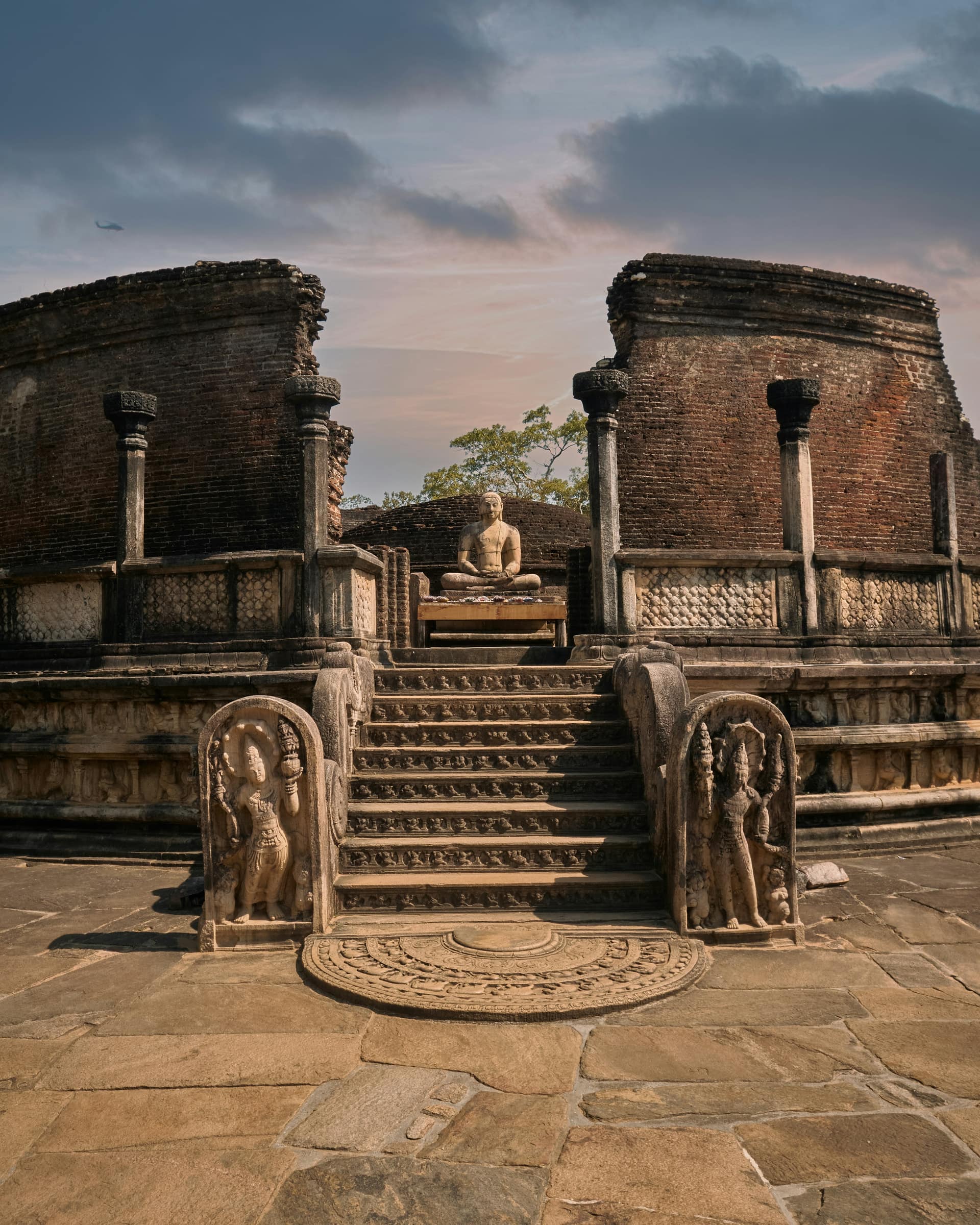
- →Days 3-7: Cultural Triangle, Sigiriya, Dambulla, Polonnaruwa, and a full day at Anuradhapura, one of the island's oldest ancient cities.
- →Days 8-10: Jaffna and the northern peninsula, including a day trip to Delft or Nainativu by ferry.
- →Days 11-13: Trincomalee and Nilaveli, Pigeon Island snorkelling, a whale-watching trip if in season.
- →Days 14-16: Kandy and Ella, including the hill-country train, with a genuine rest day in Ella.
- →Days 17-18: Yala National Park, two safari game drives.
- →Days 19-21: south coast at Mirissa or Tangalle, an overnight in Galle Fort, then transfer to the airport.
Building in genuine rest, not just more stops
The single biggest failure mode of a three-week itinerary is treating the extra time as an invitation to add more destinations rather than to slow down. A 21-day trip with a transfer every single day is more exhausting than a well-paced 10-day trip, not less, and it defeats the entire purpose of taking that much leave in the first place.
Build in at least three to four days across the trip with no transfer at all: one in the hill country, one on the east coast, and one on the south coast at minimum. These days also function as weather insurance, since a missed viewpoint or rained-out safari drive becomes a reschedule rather than a lost experience when there's slack in the schedule.
- →At least 3-4 days with no transfer at all, spread across the hill country, east coast and south coast.
- →Rest days double as weather insurance against Sri Lanka's genuinely variable microclimates.
- →A 21-day trip with daily transfers is more exhausting than a well-paced 10-day trip, not less.
Why Anuradhapura earns a full day at this length
Anuradhapura, one of Sri Lanka's ancient capitals and now a UNESCO World Heritage site, is routinely rushed or skipped entirely on shorter American itineraries, which tend to prioritise Sigiriya and Polonnaruwa given their more compact sites. A three-week trip has the time to give it a full day, covering its dagobas, the sacred Sri Maha Bodhi tree, and the quieter monastic ruins that a half-day visit typically misses.
This is a useful example of what the extra week genuinely buys: not a new region tacked on, but real depth at a site most shorter trips only glimpse.
Practicalities for a 3-week trip
Pack for roughly five to seven days rather than twenty-one, since laundry is inexpensive and quick nearly everywhere on the route. Consider a domestic flight for the Jaffna leg if schedules allow, since it turns a road transfer of several hours into a much shorter journey and buys back time elsewhere in the trip.
Confirm your Electronic Travel Authorisation before departure, and discuss a hybrid arrangement with your operator, a private driver-guide for the touring legs, combined with the hill-country train and independent time on the coast, which often works better than a single fixed vehicle for the entire three weeks.
Is 3 weeks worth it from the USA
Given the roughly 19 to 22 hour flight, the fixed travel cost of getting to Sri Lanka is largely the same whether the trip is 10 days or 21, which means the per-day value of the journey actually improves the longer you stay. For the specific traveller who can take this much time, retirees, remote workers, career-break travellers, three weeks is genuinely the length at which Sri Lanka stops feeling like a circuit and starts feeling like a country.
We build these longer itineraries as private, driver-guided trips at Lankan Stays & Trails, and for a three-week booking we deliberately push back on any route that has a transfer every morning, since that's the most common way a trip this length goes from memorable to draining.
Frequently asked questions
Is 3 weeks too long for Sri Lanka?
Not for the island itself, which comfortably supports three weeks of unhurried travel across the north, east, hill country and south. The real constraint is US annual leave, which averages roughly 10-15 days, making this a rare rather than a default trip length.
Who should take a 3-week Sri Lanka trip from the USA?
Retirees, remote workers who can combine touring with working days, and travellers on a career break or sabbatical are the groups this length most realistically suits, given typical US paid leave allowances fall well short of three weeks.
What does a 3-week Sri Lanka itinerary include that a 2-week one doesn't?
Jaffna and the northern peninsula, the east coast around Trincomalee, and a full day at Anuradhapura are the additions most 14-day trips have to cut. It also allows 3-4 genuine rest days rather than a transfer nearly every day.
Is it worth taking 3 weeks off work for Sri Lanka?
For travellers with the flexibility, many find it worthwhile, since the fixed cost of the roughly 19-22 hour flight is spread over more days, improving its per-day value. For most Americans with standard leave, a 14 or 16-day trip delivers most of the experience at a lower leave cost.
How many rest days should a 3-week Sri Lanka trip include?
At least 3-4 days with no transfer at all, spread across the hill country, the east coast and the south coast. Without them, a three-week trip with daily transfers can end up more tiring than a well-paced 10-day one.
Should I fly or drive to Jaffna on a 3-week itinerary?
Flying, where schedules allow, turns a road transfer of several hours into a much shorter journey and buys back time elsewhere in the trip. Confirm current domestic routes and frequency with your operator before booking, as schedules change.
Is a private driver-guide necessary for 3 weeks in Sri Lanka?
It's the standard and generally most cost-effective arrangement for a trip this length, though many travellers combine a driver-guide for touring legs with the hill-country train and independent time on the coast for a change of pace.