
Quick answer
Sri Lanka is not a significant culture shock for most Indian visitors, given the shared food traditions, Hindu and Buddhist religious sites, warm hospitality and identical time zone. The real, smaller differences are a noticeably slower and more relaxed pace of service, a distinct Sinhala-Buddhist majority culture alongside a Tamil-Hindu minority concentrated in the north and east, Sri Lankan cuisine's heavier use of coconut and greater overall spice heat, and a separate currency that looks confusingly similar to the Indian rupee but isn't interchangeable.
Key takeaways
- Sri Lanka and India share the UTC+5:30 time zone exactly, so there is no jet lag or time adjustment for Indian visitors, unlike Western markets.
- Sri Lankan cuisine shares a rice-and-curry foundation with South Indian food but uses considerably more coconut, curry leaf and Maldive fish, and runs generally hotter.
- Sri Lanka's roughly 70 percent Sinhala-Buddhist majority and Tamil-Hindu communities concentrated in the north and east create a genuinely different religious and linguistic balance from most of India.
- Service in Sri Lanka runs at a noticeably slower, more unhurried pace than many Indian cities, which some visitors read as inefficiency rather than the deliberate, relaxed norm it actually is.
- The Sri Lankan rupee is a completely separate currency from the Indian rupee, despite the similar name and symbol, and the two are not interchangeable at any exchange counter.
Why Sri Lanka isn't much of a culture shock for Indian visitors
Sri Lanka sits closer to India, geographically, historically and culturally, than almost any other international destination Indian travellers consider. Shared food roots, widely practised Hinduism and Buddhism, comparable dress norms at religious sites and a broadly similar sense of hospitality mean most Indian visitors report settling in almost immediately, without the disorientation that Western visitors often describe.
This isn't a marketing line, it genuinely shows in what Indian travellers report noticing: fewer language barriers than expected, temple etiquette that feels instinctive rather than learned, and a general rhythm of daily life, markets, tea stalls, temple bells, that doesn't require the recalibration a longer-haul trip demands.
This matters for how to plan the trip, too: there's little need for the kind of extensive pre-trip cultural briefing a longer-haul destination might warrant, and the time is better spent on route planning than anxiety about fitting in.
What genuinely differs, and why it's worth knowing anyway
The absence of a big shock doesn't mean there's nothing to notice, and pretending otherwise would be dishonest. The most commonly reported difference is pace: service in restaurants, shops and even government offices in Sri Lanka runs at a distinctly slower, more relaxed tempo than many Indian cities, particularly Mumbai, Delhi or Bengaluru, and visitors expecting Indian-city efficiency sometimes read this as inefficiency rather than the deliberate, unhurried norm it actually is.
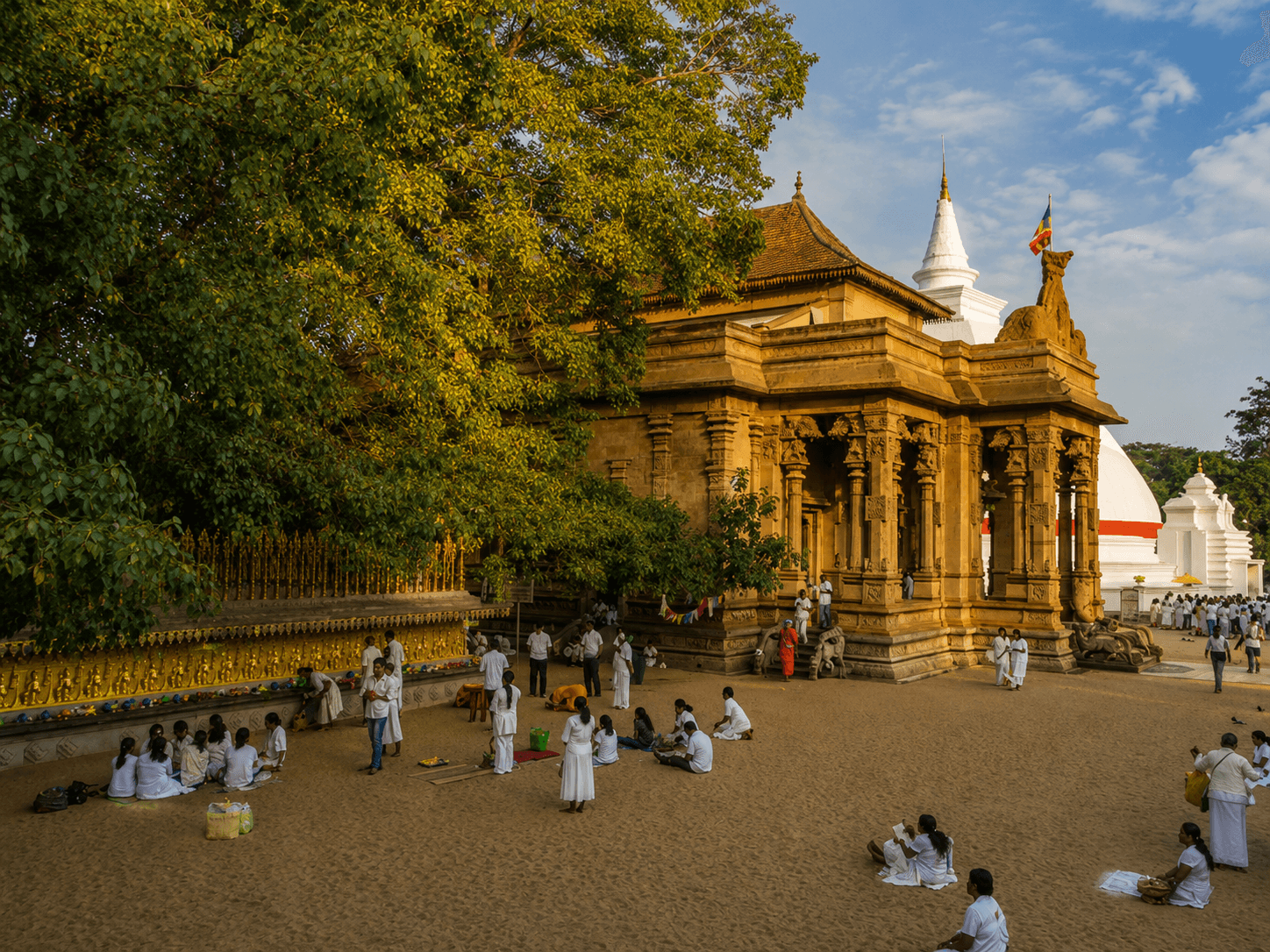
The religious and linguistic balance is also genuinely distinct. Sri Lanka is roughly 70 percent Sinhala-Buddhist, with a significant Tamil-Hindu population concentrated in the north and east around Jaffna and Trincomalee, a different demographic pattern from most of India and one that shapes everything from temple architecture to festival calendars in ways worth understanding rather than assuming are identical to home. A visitor moving from Kandy to Jaffna within the same trip will genuinely notice the shift in language, cuisine and religious atmosphere, which is part of what makes travelling the length of the island worthwhile.
- →Pace of service is slower and more relaxed than most Indian cities; this is the norm, not a flaw.
- →Sri Lanka's Sinhala-Buddhist majority and Tamil-Hindu communities in the north and east create a distinct religious and linguistic geography.
- →Sri Lankan cuisine uses considerably more coconut, curry leaf and Maldive fish than most Indian regional cuisines, and runs generally hotter.
Language: closer than expected, not identical
Sinhala and Tamil are Sri Lanka's official languages, and English is widely spoken in tourist-facing businesses, hotels and by most guides, which makes communication considerably easier than in many other international destinations. Tamil-speaking Indian visitors, particularly from Tamil Nadu, often find genuine mutual intelligibility with Sri Lankan Tamil speakers in the north and east, though the dialect and vocabulary have diverged in places.
Hindi is not widely spoken or understood outside major hotels catering specifically to Indian tour groups, so Hindi-speaking visitors from northern India should expect English, rather than Hindi, to be the practical common language in most everyday interactions. A few common Sinhala courtesies, ayubowan as a greeting, bohoma sthuthi for thank you, are appreciated but far from necessary.
Food: familiar structure, different flavour
Rice and curry forms the backbone of Sri Lankan cuisine much as it does across South India, and dishes like dosai, idli and coconut sambols will feel immediately recognisable to visitors from Tamil Nadu and Kerala specifically. The genuine differences are in seasoning and technique: Sri Lankan cooking leans more heavily on coconut milk, pandan leaf, cinnamon and Maldive fish (umbalakada), a dried, smoked fish flake used in sambols and curries, and the average spice heat tends to run higher than most Indian regional cuisines.
Vegetarian and Jain-friendly food is genuinely easy to find throughout the island, in hotels, roadside eateries and dedicated vegetarian restaurants, particularly in areas with a strong Tamil-Hindu presence. Vegans should specifically ask that Maldive fish be left out of sambols, since it's a common ingredient that isn't always obvious from the dish's appearance, and travellers with strict dietary needs generally find Sri Lanka considerably easier than many other international destinations in this respect.
- →Rice-and-curry, dosai and idli give an immediately familiar structure, especially for visitors from Tamil Nadu and Kerala.
- →Sri Lankan cooking uses more coconut milk, pandan and Maldive fish, and generally runs hotter than Indian regional cuisines.
- →Vegetarian food is widely available; vegans should specifically request no Maldive fish in sambols.
Practical everyday differences worth knowing
The Sri Lankan rupee looks and sounds similar to the Indian rupee but is an entirely separate currency at a different exchange rate, and the two are not interchangeable at any bank or exchange counter, a genuinely easy mix-up for first-time visitors to make mentally even if not financially. Vehicles in Sri Lanka drive on the left, the same side as India, so this specific adjustment that trips up many Western visitors doesn't apply here at all.
Sri Lanka remains a cash-first economy for tuk-tuks, small eateries, markets and entry tickets at many sites, even though cards are increasingly accepted at hotels and larger restaurants, which is broadly similar to the mixed cash-and-digital reality many Indian visitors already navigate at home.
- →The Sri Lankan rupee is a separate currency; Indian rupees are not accepted anywhere in Sri Lanka.
- →Vehicles drive on the left, the same as India, so this common adjustment for Western visitors doesn't apply.
- →Cash-first economy for tuk-tuks, markets and many entry tickets, broadly similar to daily life in much of India.
Settling in
For most Indian visitors, whatever adjustment exists settles within the first half-day, usually somewhere around noticing that the tea tastes slightly different or that the tuk-tuk driver's English is better than expected. There's little value in over-preparing for a shock that, for this particular market, genuinely doesn't tend to materialise the way it does for long-haul visitors from further afield.
A private driver-guide can still add real value here, not to buffer culture shock, but to explain the genuine local distinctions, Sinhala versus Tamil regions, the significance of a particular temple, why the pace slows down south of Colombo, which is how we frame these trips for Indian travellers at Lankan Stays & Trails.
What most Indian visitors describe afterwards isn't shock at all, it's recognition, of a familiar-feeling country that still manages to surprise with its own distinct history, landscape and pace, worth visiting on its own terms rather than as a smaller version of home.
Frequently asked questions
Is Sri Lanka a culture shock for Indian tourists?
Generally no. Shared food roots, Hindu and Buddhist religious sites, familiar hospitality norms and the same time zone mean most Indian visitors settle in quickly. The genuine differences are smaller: pace of service, regional cuisine, and a distinct Tamil-Sinhala balance.
Do people in Sri Lanka speak Hindi?
Not widely, outside hotels specifically catering to Indian tour groups. English is the practical common language for most visitors, and Tamil speakers from South India often find some mutual intelligibility with Sri Lankan Tamil in the north and east.
Is Sri Lankan food similar to Indian food?
Structurally yes, rice and curry, dosai and idli give an immediately familiar base, especially for visitors from Tamil Nadu and Kerala. Sri Lankan cooking uses more coconut, pandan and Maldive fish, and generally runs hotter than most Indian regional cuisines.
Do vehicles drive on the same side of the road in Sri Lanka as India?
Yes. Both countries drive on the left, so this common adjustment for Western visitors doesn't apply to Indian travellers at all.
Can I use Indian rupees in Sri Lanka?
No. The Sri Lankan rupee is a completely separate currency, despite the similar name, and the two are not interchangeable at exchange counters or banks. Exchange or withdraw Sri Lankan rupees on arrival instead.
What is the biggest difference between Sri Lanka and India?
Most visitors report the pace of service as the main day-to-day difference, noticeably slower and more relaxed than many Indian cities. Sri Lanka's Sinhala-Buddhist majority alongside Tamil-Hindu communities in the north and east is also a genuinely distinct religious and linguistic balance.
Is Sri Lanka easy for a first-time Indian traveller?
Yes, it's widely considered one of the easiest international first trips for Indian travellers, thanks to the short flight, shared time zone, familiar food and no significant culture shock compared with longer-haul destinations.