
Quick answer
Sri Lanka is one of the most accessible international destinations from India, with direct flights from Chennai, Bengaluru, Mumbai, Delhi, Kochi, Hyderabad and other cities to Colombo, taking around one and a half hours from Chennai and roughly four from Delhi. Indian passport holders require an electronic travel authorisation or visa, which should be applied for through the official Sri Lankan government portal. The most popular routes for Indian travellers are the Ramayana trail, the Buddhist pilgrimage circuit, and the classic culture, hills and beach loop.
Key takeaways
- Chennai to Colombo takes around one and a half hours, making Sri Lanka the shortest international hop from South India.
- Indian travellers require an ETA or visa, applied for through the official Sri Lankan government portal.
- The Ramayana trail links sites associated with Ravana, Sita and Hanuman across the island.
- Buddhist pilgrimage circuits centre on Anuradhapura, Mihintale, Kandy and the Sri Maha Bodhi.
- Seven to ten days is the realistic minimum for a satisfying first trip.
Flights and access
Sri Lanka is exceptionally well connected to India. Direct flights to Colombo operate from Chennai, Bengaluru, Mumbai, Delhi, Kochi, Hyderabad, Tiruchirappalli, Madurai and Thiruvananthapuram among others, with schedules varying by season and carrier. Chennai to Colombo is roughly an hour and a half, Bengaluru around two, and Delhi around four.
There have also been periodic ferry services between Nagapattinam or Rameswaram and Kankesanthurai in Jaffna, though these have started and stopped repeatedly and should not be planned around without confirming they are currently operating. For most travellers, flying is the practical option.
- →Direct flights from Chennai, Bengaluru, Mumbai, Delhi, Kochi and others.
- →Chennai to Colombo: roughly 90 minutes. Delhi: around four hours.
- →Ferry services to Jaffna have operated intermittently; confirm before planning.
- →Bandaranaike airport is at Katunayake, about 45 minutes from Colombo.
Visa and entry
Indian passport holders require an electronic travel authorisation or visa to enter Sri Lanka. Requirements and fees have changed several times in recent years, including periods of waivers for certain nationalities, so check the current position on the official Sri Lankan immigration portal shortly before travelling.
Apply through the official government site, not through the many lookalike agency websites that charge a markup for the same service. At immigration you will need your passport, the ETA or visa, proof of onward travel and an address for your first night.
- →An ETA or visa is required; confirm current requirements before travel.
- →Apply through the official government portal, not agency lookalike sites.
- →Carry passport, ETA, onward ticket and first-night address at immigration.
- →Requirements have changed repeatedly; do not rely on older guidance.
The Ramayana trail
For many Indian visitors this is the reason for the trip. Sri Lanka holds a network of sites associated with the Ramayana: locations identified with Ravana's kingdom, with Sita's captivity, and with Hanuman's search. The Sita Amman temple at Seetha Eliya near Nuwara Eliya, Ravana Falls and Ravana Cave near Ella, Munneswaram and Manavari near Chilaw, Ussangoda on the south coast, and Rumassala near Unawatuna are the principal stops.
How literally to take the identifications is a matter of belief rather than archaeology, and the sites vary considerably in scale and atmosphere. What is not in doubt is that the trail links a genuinely varied route across the island, taking in the hill country, the west coast and the south, and that it is a coherent way to structure a first visit.
- →Sita Amman temple at Seetha Eliya, near Nuwara Eliya.
- →Ravana Falls and Ravana Cave near Ella in the hill country.
- →Munneswaram and Manavari temples near Chilaw on the west coast.
- →Ussangoda on the south coast and Rumassala near Unawatuna.
- →The trail conveniently structures a route across most of the island.
The Buddhist pilgrimage circuit
Sri Lanka is central to Theravada Buddhism and holds sites of the first importance. The Jaya Sri Maha Bodhi at Anuradhapura grew from a cutting of the Bodh Gaya tree, brought by Sanghamitta and planted in 236 BCE, making it the oldest human-planted tree with a recorded planting date. Mihintale nearby marks the arrival of Buddhism on the island.
The Temple of the Tooth at Kandy houses the Tooth Relic, the traditional symbol of legitimate kingship, and Dambulla's cave temples hold the largest concentration of Buddhist murals and statuary in the country. Nagadeepa at Nainativu in the north is one of the sixteen holiest sites. A pilgrimage circuit covering these needs about a week.
- →Jaya Sri Maha Bodhi, Anuradhapura: planted 236 BCE from the Bodh Gaya tree.
- →Mihintale: where Buddhism arrived in Sri Lanka in the third century BCE.
- →Temple of the Tooth, Kandy: houses the Tooth Relic.
- →Dambulla cave temples and Nagadeepa at Nainativu in the north.
The classic route for a first visit
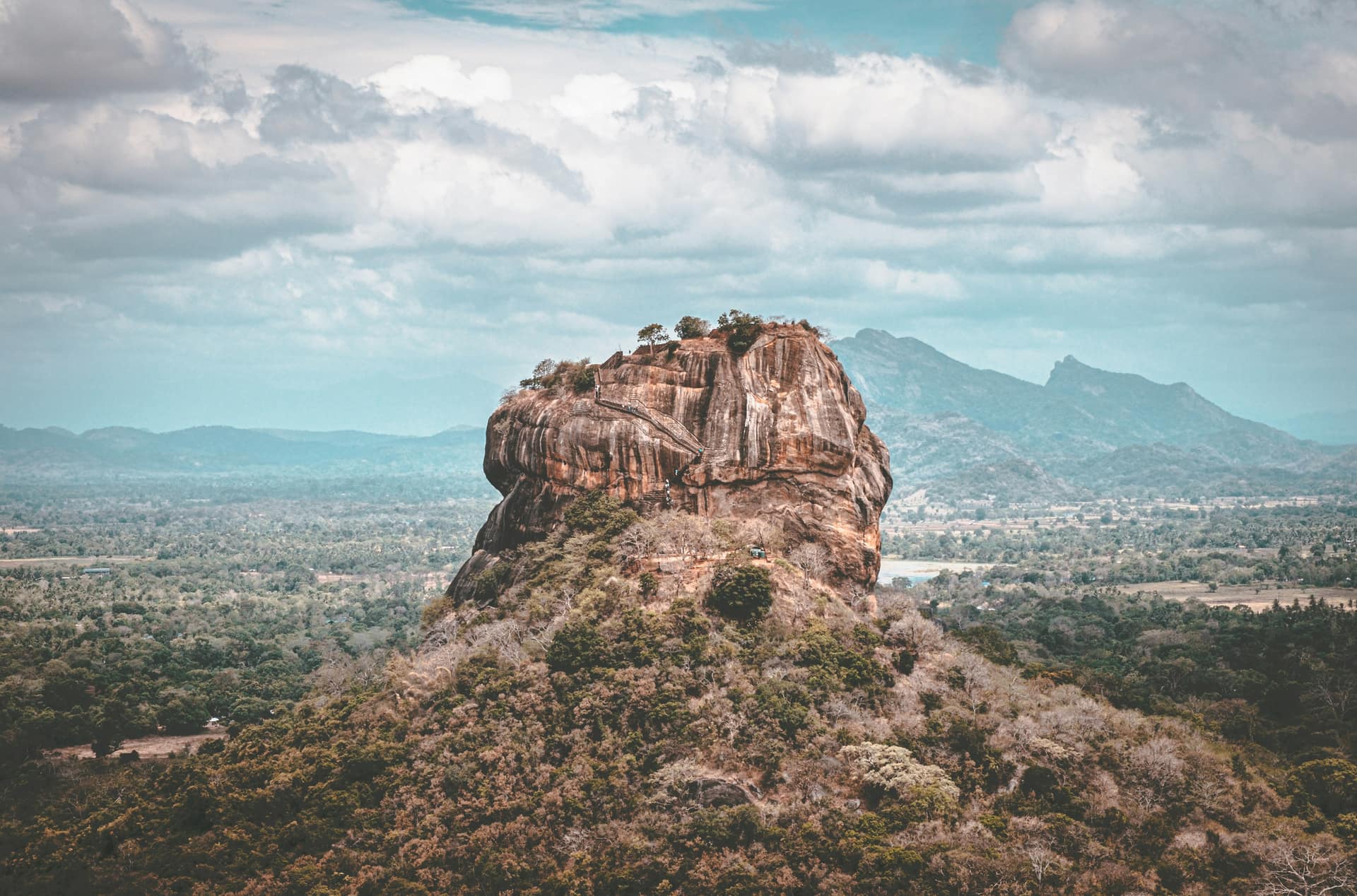
If you are not travelling for a specific pilgrimage, the standard loop works well and covers what makes Sri Lanka distinct from India: arrive at Colombo, north to the Cultural Triangle for Sigiriya, Dambulla and Polonnaruwa, down through Kandy into the hill country for the tea estates and the Ella train, then to the south coast for Yala safari, whale watching at Mirissa and Galle Fort.
Ten days covers this comfortably; seven does it at pace. What surprises most Indian visitors is the hill country: cool, green, colonial in feel and completely unlike the plains, and the Kandy to Ella train journey is worth building the itinerary around.
- →Cultural Triangle, Kandy, hill country, south coast is the standard loop.
- →Ten days comfortable; seven at pace; fourteen adds the east or north.
- →The Kandy to Ella train is worth planning the route around.
- →Yala safari and Mirissa whale watching are the wildlife highlights.
Money, food and practicalities
Currency is the Sri Lankan rupee, distinct from the Indian rupee and not interchangeable. Cards are accepted in hotels and larger establishments but Sri Lanka remains cash-first for tuk-tuks, entry tickets, markets and small eateries, so carry cash and change on arrival at the airport, where rates are reasonable.
Food will feel simultaneously familiar and different. Rice and curry, dosai and idli in the north, and shared spice vocabulary give a foundation, but Sri Lankan cooking uses far more coconut, pandan, curry leaf and Maldive fish, and is generally hotter. Vegetarian food is easy everywhere. Vegans should specify no Maldive fish, umbalakada, which appears in sambols without being flagged.
- →Sri Lankan rupee is a separate currency; Indian rupees are not accepted.
- →Cash-first economy for tuk-tuks, tickets, markets and small eateries.
- →Food is familiar in structure but heavier on coconut and generally hotter.
- →Vegetarian food is easy; vegans should specify no Maldive fish.
When to go from India
Sri Lanka has two monsoons on opposite coasts, which means there is always a good side of the island. December to March suits the south and west coasts, the hill country and the Cultural Triangle. May to September suits the east and north, including Trincomalee, Nilaveli and Arugam Bay.
For Indian travellers this aligns conveniently. The Diwali and Christmas holiday periods fall in the south coast's best season, and summer holidays in May and June fall in the east coast's. Avoid mid-April if you dislike closures, as the Sinhala and Tamil New Year shuts much of the country for several days.
- →December to March: south and west coasts, hill country, Cultural Triangle.
- →May to September: east and north, including Trincomalee and Arugam Bay.
- →Indian winter holidays align with the south coast's best season.
- →Avoid mid-April: the Sinhala and Tamil New Year closes much of the country.
How to plan it
The most common mistake Indian visitors make is treating Sri Lanka as a long weekend. It is a small island but the roads are slow, and a three-day trip means two days in a car. Seven days is the realistic minimum, ten is comfortable.
Lankan Stays & Trails builds private, driver-guided itineraries for travellers from India, including dedicated Ramayana trail and Buddhist pilgrimage routes, and will pace them for family groups travelling with older relatives or young children rather than assuming everyone wants to climb Sigiriya at seven in the morning.
Frequently asked questions
How long is the flight from India to Sri Lanka?
Around ninety minutes from Chennai, about two hours from Bengaluru and roughly four from Delhi. Direct flights to Colombo operate from Chennai, Bengaluru, Mumbai, Delhi, Kochi, Hyderabad, Tiruchirappalli, Madurai and Thiruvananthapuram, with schedules varying by season and carrier.
Do Indians need a visa for Sri Lanka?
Indian passport holders require an electronic travel authorisation or visa. Requirements and fees have changed several times in recent years, so check the current position on the official Sri Lankan immigration portal shortly before travelling, and apply there rather than through agency sites.
What is the Ramayana trail in Sri Lanka?
A network of sites associated with the Ramayana across the island, including the Sita Amman temple at Seetha Eliya near Nuwara Eliya, Ravana Falls and Ravana Cave near Ella, Munneswaram and Manavari near Chilaw, Ussangoda on the south coast, and Rumassala near Unawatuna.
How many days do you need in Sri Lanka from India?
Seven days is the realistic minimum and ten is comfortable. The island is small but the roads are slow, so a three or four day trip means spending most of it in a car. Fourteen days allows you to add the east coast or the north.
Can you use Indian rupees in Sri Lanka?
No. The Sri Lankan rupee is a separate currency and Indian rupees are not accepted. Change money or withdraw on arrival at Colombo airport, where rates are reasonable, and carry cash, as Sri Lanka remains cash-first for tuk-tuks, entry tickets, markets and small eateries.
What are the Buddhist pilgrimage sites in Sri Lanka?
The Jaya Sri Maha Bodhi at Anuradhapura, grown from a cutting of the Bodh Gaya tree and planted in 236 BCE, Mihintale where Buddhism arrived, the Temple of the Tooth at Kandy, the Dambulla cave temples, and Nagadeepa at Nainativu in the north.
When is the best time to visit Sri Lanka from India?
December to March for the south and west coasts, hill country and Cultural Triangle, which aligns with Indian winter holidays. May to September for the east and north including Trincomalee and Arugam Bay. Avoid mid-April, when the Sinhala and Tamil New Year closes much of the country.