
Quick answer
A Sri Lanka cycling itinerary for Canadian travellers typically runs 8 to 10 days, combining flat, bicycle-friendly rides through the ancient cities of Anuradhapura and Polonnaruwa with a hill-country or coastal backroad stretch for more scenic, undulating terrain. Bicycles are hired locally at both ancient cities rather than brought from Canada, and a support vehicle carrying luggage between overnight stops is the standard arrangement for the longer touring days, so cyclists ride unloaded rather than carrying panniers the full distance.
Key takeaways
- Anuradhapura and Polonnaruwa are both flat, well-suited to cycling, and considerably more pleasant to explore this way than on foot in the heat.
- A support vehicle carrying luggage between stops is standard on a multi-day Sri Lanka cycling itinerary, so riders don't carry full touring loads.
- Hill-country backroads around Kandy and Nuwara Eliya offer more demanding, scenic riding for those wanting a genuine cycling challenge rather than flat sightseeing.
- Main roads carry fast, sometimes erratic traffic; quieter backroads and early-morning starts are the standard way experienced local operators route around this.
- December to March offers the most reliable dry conditions for cycling across the Cultural Triangle and hill country alike.
What a Sri Lanka cycling itinerary looks like
A cycling-focused itinerary mixes two distinct riding experiences: flat, easy exploration of the ancient cities at Anuradhapura and Polonnaruwa, and more demanding, scenic riding through hill-country or coastal backroads. The two are complementary rather than duplicative, giving both an easy cultural riding day and a genuine physical one.
A support vehicle carrying luggage between overnight stops is the standard arrangement on a multi-day touring itinerary, allowing cyclists to ride unloaded and covering longer transfer distances by road when a full day's ride isn't practical.
A sample 9-day route
This sample pairs the ancient cities with a hill-country backroad stretch.
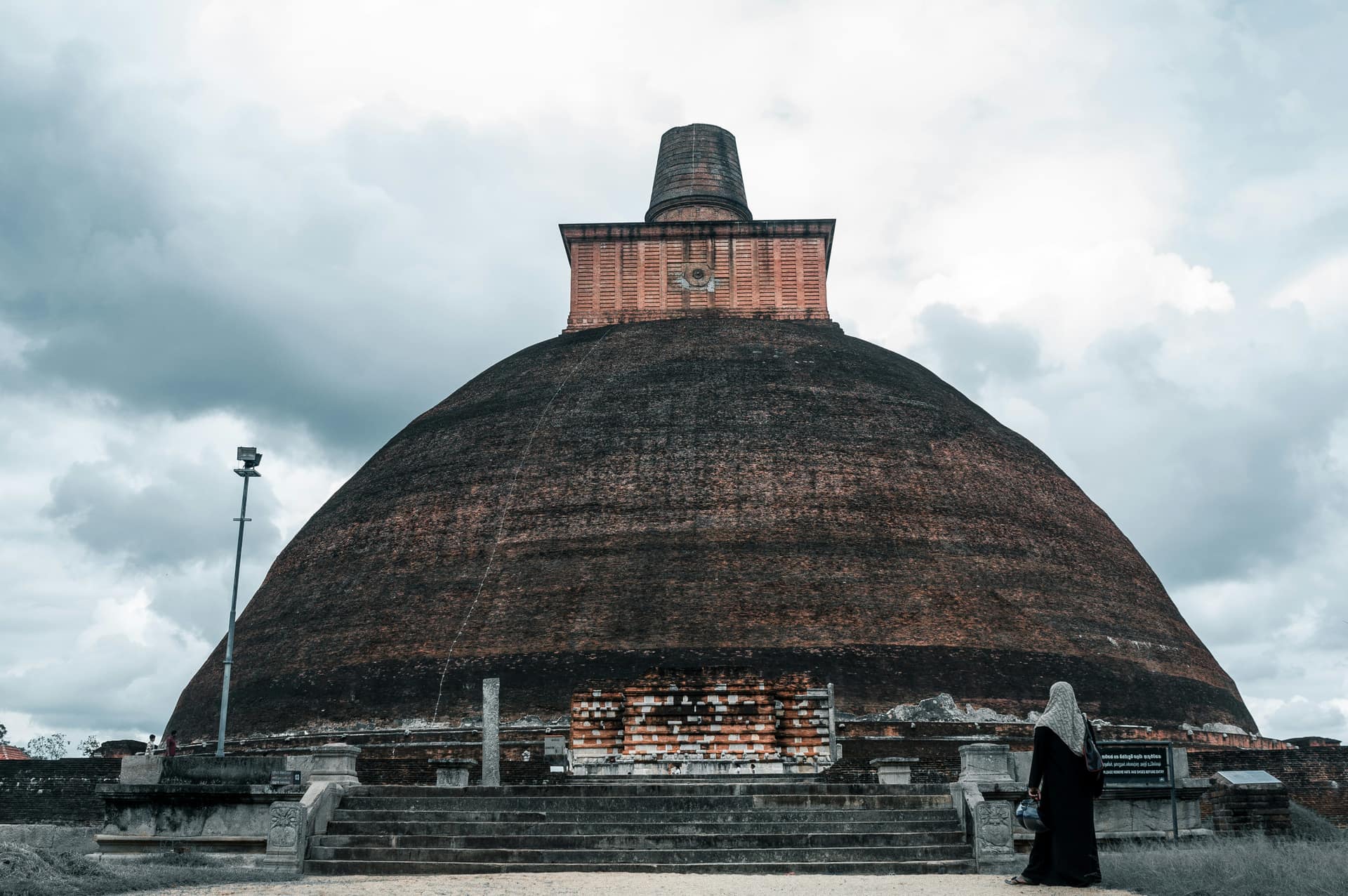
- →Days 1 to 3: Anuradhapura, exploring the sprawling ancient city by hired bicycle, with the Sacred Bo Tree as the anchor site.
- →Days 4 to 5: Polonnaruwa, a more compact ancient city, again explored by bicycle, with the Gal Vihara rock-carved Buddhas as the highlight.
- →Days 6 to 8: hill-country backroads around Kandy or Nuwara Eliya, a more demanding, scenic ride through tea estates with a support vehicle for transfers.
- →Day 9: a rest day or a short transfer to the coast to close the trip.
Riding conditions and where to be careful
Sri Lanka's main roads carry fast, sometimes erratic traffic, buses in particular, and are not well suited to leisure cycling. Experienced local operators route around this using quieter backroads and villages rather than the main arteries, and time longer riding days for early morning, both for cooler temperatures and lighter traffic.
Anuradhapura and Polonnaruwa are both genuinely flat and well suited to a hired single-speed or basic gear bicycle, no specialist equipment needed. Hill-country backroads are more demanding, with sustained climbs, and suit riders with at least moderate cycling fitness.
Bicycles, gear and booking
Bicycles are hired locally at both ancient cities and through tour operators for the wider touring route, so bringing a bicycle from Canada is unnecessary for most riders; those with specific equipment needs for longer touring days should confirm hire-bike specifications with the operator in advance. A helmet, sun protection and plenty of water are worth confirming are provided or need to be brought.
December to March offers the most reliable dry conditions for cycling across both the Cultural Triangle and hill country; wetter months increase the risk of muddy backroads and reduced visibility on hill-country descents specifically.
Planning your cycling itinerary
Anuradhapura and Polonnaruwa for flat, easy ancient-city riding, plus a hill-country backroad stretch for a genuine cycling challenge, with a support vehicle carrying luggage between stops, is the framework that makes a Sri Lanka cycling trip work well. Early starts and quieter backroads matter more than total distance covered.
Lankan Stays & Trails arranges bicycle hire and support-vehicle logistics for Canadian cyclists, routing around Sri Lanka's busiest roads in favour of quieter backroads.
Frequently asked questions
How many days should a Sri Lanka cycling itinerary be?
8 to 10 days is typical, combining flat ancient-city riding at Anuradhapura and Polonnaruwa with a more demanding hill-country or coastal backroad stretch.
Do you need to bring your own bicycle to Sri Lanka?
No. Bicycles are hired locally at both ancient cities and through tour operators for wider touring routes, which is the standard arrangement for most Canadian cyclists visiting.
Is cycling in Sri Lanka safe?
Main roads carry fast, sometimes erratic traffic and are not well suited to leisure cycling. Experienced operators route around quieter backroads and villages, and schedule longer rides for early morning when traffic is lighter.
Is Anuradhapura or Polonnaruwa better for cycling?
Both are flat and well suited to cycling. Anuradhapura is larger and more spread out; Polonnaruwa is more compact, making it a shorter, easier ride if time is limited.
Is Sri Lanka's hill country good for cycling?
Yes, for riders with at least moderate fitness. Backroads around Kandy and Nuwara Eliya offer scenic, more demanding riding with sustained climbs through tea estates, a different experience from the flat ancient cities.
When is the best time to cycle in Sri Lanka?
December to March offers the most reliable dry conditions across both the Cultural Triangle and hill country, reducing the risk of muddy backroads and slippery hill-country descents.