
Quick answer
Sri Lanka's best markets are Colombo's Pettah district, a dense grid of streets each specialising in a different trade, and the Negombo fish market, where the morning auction begins around dawn as the outrigger fleet lands its catch. Kandy's central market is the best in the hill country, and Dambulla hosts the country's largest wholesale vegetable market, busiest through the night. Go early: most markets are effectively finished by mid-morning. Cash only, and always ask before photographing people.
Key takeaways
- Negombo's fish market and auction run from around dawn and are largely finished by mid-morning.
- Colombo's Pettah is organised by street, with each specialising in a different category of goods.
- Dambulla's wholesale vegetable market is the country's largest and operates mainly at night.
- Markets are cash-only; carry small notes and expect no card facilities.
- Always ask before photographing traders; a purchase first makes the answer more likely to be yes.
Negombo fish market and the auction
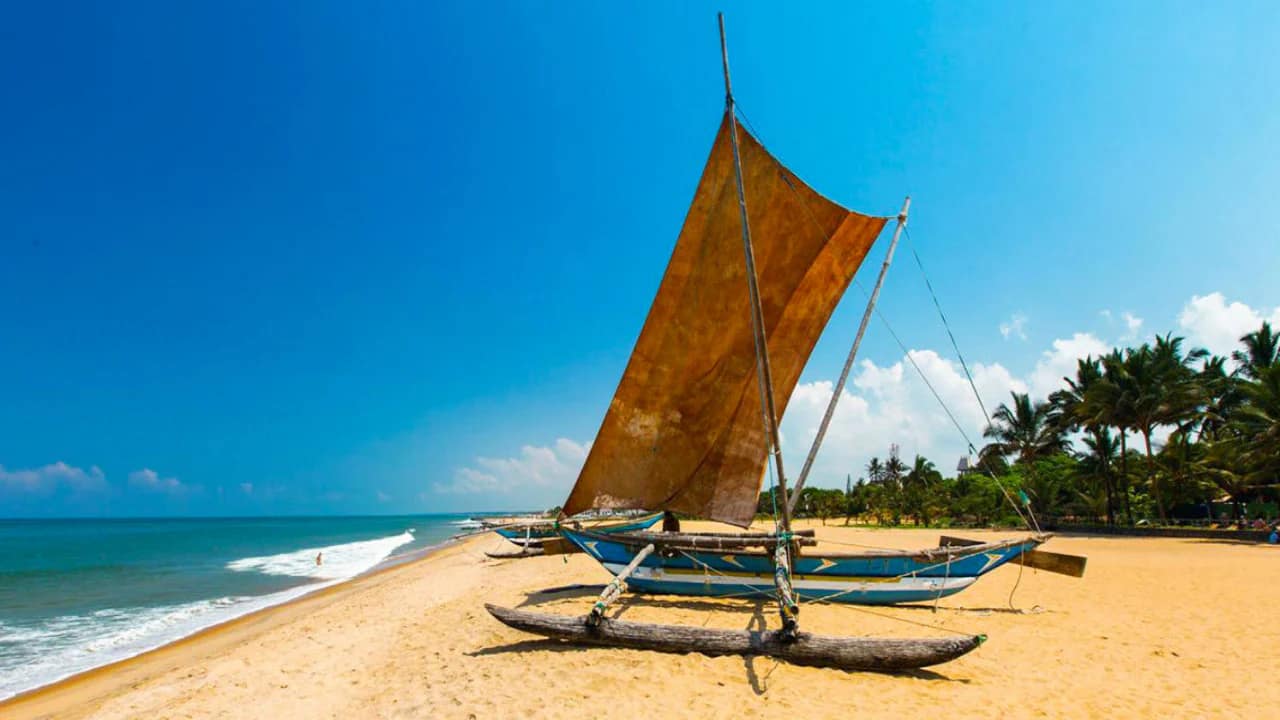
Negombo's Lellama fish market, at the northern end of the lagoon, is the most accessible working fishing scene in Sri Lanka and one of the best early mornings available to a visitor. The outrigger canoes and larger boats come in from around first light, and the catch is landed directly onto the beach and sand: seer fish, tuna, skipjack, prawns, crab, cuttlefish, sprats.
The auction is conducted at speed and volume, with buyers crowding around each heap. Nearby, racks of fish are laid out to dry in the sun for karuvadu, dried fish, which is a staple ingredient rather than a delicacy. The smell is considerable and the ground is wet and slippery; wear shoes you do not mind ruining.
- →Boats land from around first light; the auction is over by mid-morning.
- →Roughly 15 minutes from Bandaranaike airport, making it an easy first morning.
- →Drying racks for karuvadu, dried fish, line the beach nearby.
- →Wet, slippery and strongly smelling; wear appropriate footwear.
Pettah, Colombo
Pettah is not one market but a district, immediately east of Colombo Fort, organised on an old principle: each street sells one category of thing. There is a street for textiles, one for electronics, one for hardware, one for stationery, one for shoes, and, most usefully for visitors, streets for spices, dried goods and produce.
Manning Market, the main wholesale produce market, has been relocated but the surrounding streets remain dense with fruit, vegetables and spices. The Old Town Hall area, the red and white striped Jami Ul-Alfar mosque, and the Dutch Period Museum sit within the same few blocks, which makes Pettah a genuinely good half day rather than only a shopping errand.
- →A district organised by street, with each specialising in one trade.
- →Spice, dried goods and produce streets are the most interesting for visitors.
- →Jami Ul-Alfar mosque and the Dutch Period Museum are within the same blocks.
- →Extremely crowded; go in the morning and keep valuables in front pockets.
Kandy central market
Kandy's municipal market building near the lake is compact, covered and considerably easier to navigate than Pettah, which makes it the best introduction to a Sri Lankan market for anyone who finds Colombo overwhelming. The upper level holds spice and dry goods stalls; the ground floor is fruit, vegetables and meat.
It is a working market rather than a tourist one, though the spice stalls are used to visitors and will explain what things are. Prices for spices here are generally better than at the spice gardens on the Kandy road, which are set up specifically for tour groups and price accordingly.
- →Compact, covered and far easier to navigate than Pettah.
- →Spices and dry goods upstairs; produce and meat on the ground floor.
- →Better spice prices than the tour-oriented spice gardens on the main roads.
- →A good first market for anyone finding Colombo overwhelming.
Dambulla wholesale market
Dambulla Dedicated Economic Centre is Sri Lanka's largest wholesale vegetable market and it operates on a scale that is genuinely startling: lorries arriving through the night from across the island, entire halls of a single vegetable, and trading that peaks in the small hours.
It is not a tourist attraction and there is nothing curated about it, which is exactly the appeal for anyone interested in how food actually moves. Visiting at two or three in the morning is possible with a driver and worth doing if you are in the Cultural Triangle and awake anyway for a Sigiriya sunrise.
- →Sri Lanka's largest wholesale vegetable market, in the Cultural Triangle.
- →Operates mainly through the night, peaking in the small hours.
- →Entirely uncurated; a working logistics operation, not an attraction.
- →Feasible to visit before a pre-dawn Sigiriya climb.
Other markets worth finding
Jaffna's market is the place to buy palmyrah products, odiyal flour, Jaffna curry powder and dried fish, and it feels distinctly different from southern markets. Galle's municipal market inside and around the fort area is small and convenient. Nuwara Eliya's market has hill country produce including strawberries, leeks and carrots that do not grow in the lowlands.
Almost every town also has a weekly pola, an open-air market on a fixed day, which is where rural trade happens. Ask locally which day, because a pola is a considerably more interesting hour than the permanent market in the same town.
- →Jaffna: palmyrah products, odiyal flour, Jaffna curry powder, dried fish.
- →Nuwara Eliya: hill country produce including strawberries and leeks.
- →Weekly pola markets happen in almost every town on a fixed day.
- →Ask locally which day the pola falls; it is better than the permanent market.
Timing, cash and getting around
Go early. Fish markets are effectively finished by mid-morning, produce markets are at their best before nine, and the heat after ten makes any market considerably less pleasant. Dambulla is the exception, operating at night.
Everything is cash, and small notes are essential. There are no card facilities and change for large denominations is difficult. Markets are crowded, so keep valuables in front pockets or a bag worn in front. Wear closed shoes: floors are wet, and at fish markets they are wet with things you would rather not think about.
- →Fish markets: dawn to mid-morning. Produce: before nine.
- →Cash only, in small notes; no card facilities anywhere.
- →Crowded conditions; keep valuables in front pockets.
- →Closed shoes; floors are wet and slippery.
Etiquette and photography
Markets are workplaces. People are doing a job on a narrow margin and a visitor blocking an aisle with a camera is an obstruction rather than a novelty. Move with the flow, step aside for anyone carrying, and do not handle produce you are not buying.
On photography: ask. Sri Lankans are generally relaxed about it and the answer is usually yes, particularly if you have bought something first. Photographing someone without asking, especially at close range, is where resentment starts. A purchase, a smile and a gesture at the camera works better than any language.
- →Move with the flow and step aside for anyone carrying goods.
- →Do not handle produce you are not intending to buy.
- →Always ask before photographing; buying something first helps.
- →Bargaining is normal at markets but should stay friendly and proportionate.
Building a market into a trip
Negombo's fish market is the easy one, fifteen minutes from the airport, which makes it an excellent first or last morning when jet lag has you awake at five anyway. Pettah works as a Colombo half day combined with the Dutch Hospital and Galle Face Green. Kandy market pairs with the Temple of the Tooth's morning puja.
Lankan Stays & Trails builds market mornings into itineraries and will get you to Negombo at the right hour, which is earlier than most people expect.
Frequently asked questions
What time does the Negombo fish market start?
Boats land from around first light and the auction runs through the early morning, with the whole thing largely finished by mid-morning. Arrive around dawn for the landing and the auction. It is roughly fifteen minutes from Bandaranaike airport, making it an easy first morning.
What is Pettah market in Colombo?
A district immediately east of Colombo Fort organised so that each street specialises in a single trade: textiles, electronics, hardware, stationery, shoes, and streets for spices, dried goods and produce. The Jami Ul-Alfar mosque and Dutch Period Museum are within the same blocks.
Where is the best place to buy spices in Sri Lanka?
Town markets, particularly Kandy's central market and the spice streets of Pettah, offer better prices and quality than the roadside spice gardens on tourist routes, which are set up for groups and price accordingly. Jaffna market is the place for Jaffna curry powder.
Can you take photographs in Sri Lankan markets?
Usually, if you ask. Sri Lankans are generally relaxed about photography and the answer is often yes, particularly if you buy something first. Photographing traders at close range without asking is where resentment starts. Markets are workplaces, so avoid blocking aisles.
Do Sri Lankan markets take cards?
No. Markets are entirely cash, and small notes are essential because change for large denominations is difficult. There are no card facilities and ATMs may not be immediately nearby, so withdraw before you go and keep valuables in front pockets in the crowds.
What is the Dambulla market?
Sri Lanka's largest wholesale vegetable market, in the Cultural Triangle, receiving lorries through the night from across the island with trading peaking in the small hours. It is entirely uncurated and not a tourist attraction, which is precisely its appeal.
What is a pola in Sri Lanka?
A weekly open-air market held on a fixed day in almost every town, where rural trade happens. Ask locally which day the pola falls in the town you are in, as it is generally a more interesting hour than the same town's permanent market on any other day.